
GW faced a convergence of challenges in 2025, contending with a yearslong structural deficit as President Donald Trump’s actions targeting universities and D.C. compounded budget cuts.
Trump’s return to power in January ushered in a series of policy changes that forced officials to accelerate their response to the University’s preexisting budget troubles as they braced for hits to international student enrollment, federal research funding, graduate school affordability and diversity, equity and inclusion initiatives. GW began negotiations with the hospital’s owner and operator to cut the University’s financial support for the Medical Faculty Associates after it recorded its second-highest annual loss to date in fiscal year 2025, and a third-party investigation confirmed former GW Police Department officers’ reports of gun safety violations before officials hired a new police chief who’s working to rebuild community trust.
Here’s a look at the top stories at GW from 2025:
GW implements University-wide budget cuts, staff layoffs to curb structural deficit
Officials cut campus operations, resources and personnel over the last few months to reduce the University’s FY2026 expense budget amid a structural deficit and mounting Trump-era pressures on higher education.
Officials in April announced plans to slash the FY2026 budget by 3 percent, including halting merit salary increases, citing years of GW’s expenses outpacing revenue. In July, officials implemented a hiring freeze until Oct. 13 and foreshadowed layoffs, a step they said they “tried to avoid but cannot any longer” as Trump’s threats to federal research funding, international student enrollment and financial aid programs further strained GW’s budget.
Officials laid off 43 staff members at the end of FY2026’s first quarter on Sept. 30, marking the first round of University-wide layoffs since the COVID-19 pandemic. They also eliminated several vacant positions, ended the hiring freeze and reinstated the position management review process officials initially implemented in February.
The Hatchet contacted more than 230 staff, faculty and administrators to track the schools impacted by the layoffs after University spokesperson Shannon McClendon declined to disclose the terminated positions, citing privacy reasons. Community members confirmed that GW’s law, business, medical and professional studies schools, along with GW Athletics, were among the units hit by layoffs.
Vice President for Finance and Assistant Treasurer Hemant Bakshi told the Faculty Senate this month GW expects to operate at or near break-even in FY2026 after operating expenses exceeded revenue by $75 million in FY2025 and the University is making progress reversing its structural deficit which officials last reported stood at $24 million in July. He did not share the current deficit figure, and no faculty senators pressed for the number at the meeting.
Chief Financial Officer Bruno Fernandes reaffirmed to the Staff Council this month that officials aren’t currently planning to conduct additional University-wide layoffs, a stance officials have held since October. He also said officials are committed to reinstating merit salary increases in FY2027.
Other cuts to operations across the University have included terminating 24/7 security presence in upperclassmen residence halls, discontinuing weekend operations for District House and the University Student Center dining venues and ending of the Counseling and Psychological Services’ walk-in hours.
As GW faced broader University-wide budget cuts, officials began “right-sizing” efforts in the Graduate School of Education and Human Development — which has faced a decade of falling enrollment amid declining in interest in education graduate degrees — including consolidating classes, cutting programs and laying off faculty and staff. Officials in June sent notices of possible termination at the end of this academic year to 25 percent of GSEHD’s contract faculty members, a move the school’s faculty argued excluded community input.
A University spokesperson confirmed in November that officials sent 15 letters to contract faculty, with nine stating officials would not renew their contract and three “special service” termination letters, though the spokesperson did not specify the terms. They said all faculty will remain employed by the University until the end of the academic year.

Trump’s higher education crackdown hits GW’s diversity initiatives, research funding, international enrollment
Since January, Trump’s administration has targeted perceived “wokeness” and left-leaning bias in higher education, issuing executive orders that restrict federal funding for universities with DEI programs and making cuts to federally funded research.
Trump signed an executive order in March directing the Secretary of Education to strip federal funds from universities that do not eliminate DEI programs, and the Justice Department issued a July memo warning recipients of federal funds would face “significant legal risks” if they continued to promote or engage in “discriminatory” DEI practices.
Since January, GW has paused or scaled back several diversity initiatives — halting the search for the Office of Diversity, Equity and Community Engagement’s top post, quietly shuttering the law school’s DEI website and twice postponing the University’s annual diversity summit to “reimagine” it — actions students warned signaled a wide-reaching rollback of DEI on campus. Interim Provost John Lach in late November said officials were considering renaming the Diversity Summit as they work to incorporate broader themes like civil discourse.
The DOJ’s Civil Rights Division in August found GW acted deliberately indifferent to campus antisemitism during the April 2024 pro-Palestinian encampment in University Yard.
The August letter states the DOJ would enact enforcement measures against the University “in the near future” unless GW entered into a voluntary resolution agreement. University President Ellen Granberg said at a Faculty Senate meeting earlier this month she has no “definitive” update on interactions with the DOJ, but the department is “definitely showing signs of life.”
The National Institutes of Health in March canceled at least five grants totaling more than $3 million for studies by GW researchers, which examined the effects of HIV on racial minority populations in the United States, after the Trump administration ordered federal agencies to flag grants for studies on issues he considered related to DEI.
The Department of Education also canceled over $1 million in foreign language grants for the academic year that they deemed didn’t advance “American interests or values,” which affected three GW programs that supported research and courses in Middle East studies, East Asian studies and international business education.
Trump-era visa and immigration changes — like visa restrictions placed on citizens from 19 countries — delayed the return to campus for as many as three dozen international students and ultimately prompted a decline in international enrollment, with Vice Provost for Enrollment and Student Success Jay Goff announced in December GW’s international enrollment dropped more than 10 percent from 2024 to 2025.
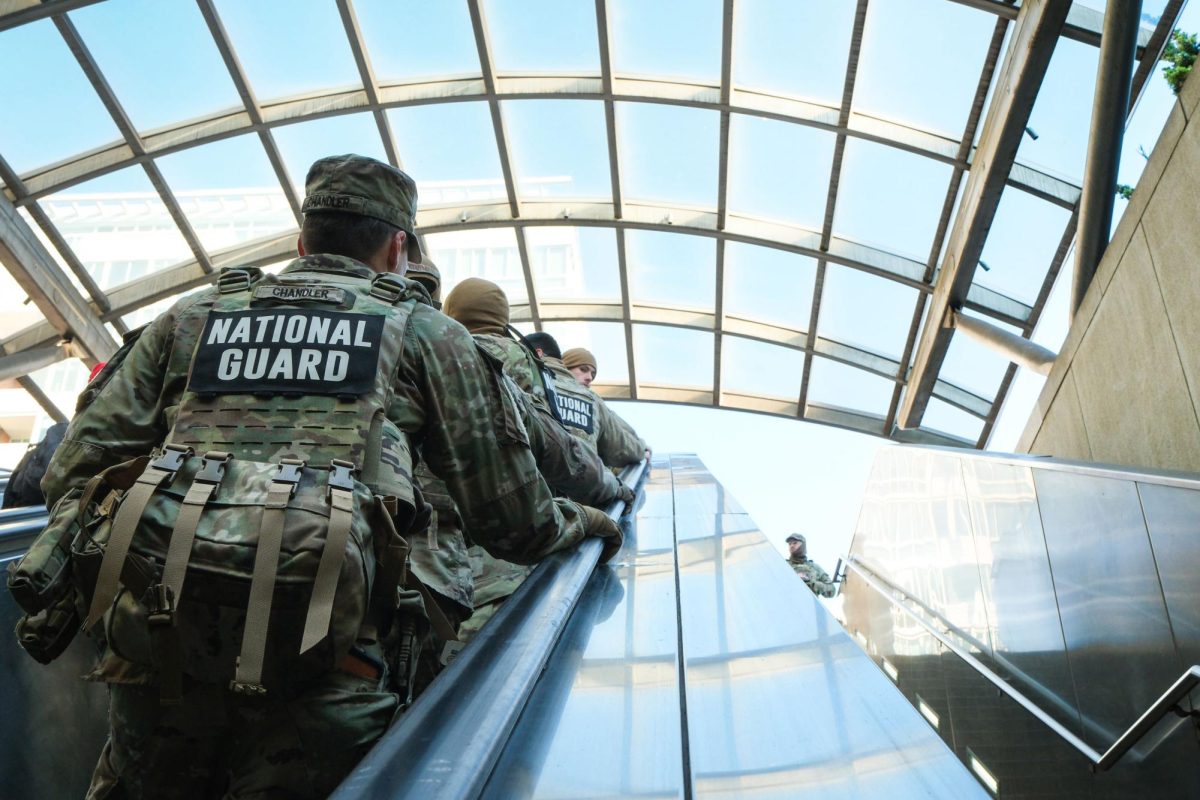
Trump deploys National Guard to the District, takes federal control of D.C. police to combat crime, unhoused encampments
Trump in August announced the federal government would take control of the Metropolitan Police Department and deploy 800 D.C. National Guard troops to “rescue” the city from violent crime, claiming it had been taken over by “bloodthirsty criminals” and “drugged out maniacs.” The District’s violent crime hit a 30-year low in 2024 after a peak in the early 1990s, according to a DOJ report.
At Trump’s directive, local law enforcement cleared four unhoused encampments near GW’s campus days after the takeover as part of larger sweeps across the District aiming to preserve “order” and promote beautification in the city.
Trump’s 30-day MPD takeover expired in early September, but D.C. Mayor Muriel Bowser ordered local officials to cooperate with federal agencies indefinitely. Then-D.C. Police Chief Pamela Smith, who resigned Dec. 8, also issued an executive order in August permitting limited information sharing between MPD and Immigration and Customs Enforcement officers.
The deployment has led to heightened immigration enforcement and troop presence in Foggy Bottom since the start of the fall semester. In September, ICE agents raided Circa Foggy Bottom, detaining and questioning several people.
GW students reported a surge in National Guard presence around campus beginning in October, with some students snapping pictures of troops inside tap-access-restricted buildings like Duques Hall. In response, officials reaffirmed they do not allow federal troops on GW’s private property, and posted signage in buildings like the student center reminding community members that certain floors were accessible only to GWorld card holders and their guests.
Students, local leaders, activists and D.C.’s attorney general have protested and legally challenged the takeover and Trump’s policies over the last few months. Following the federalization of MPD, thousands of protesters flooded D.C.’s streets calling for an end to federal control of local police and the removal of National Guard troops. Local leaders also slammed the takeover as unlawful and unprecedented, as advocates moved to assist unhoused people under threat and protect immigrants with undocumented status.
D.C. Attorney General Brian Schwalb in September also sued to end the National Guard deployment. A D.C. District Court ruled late last month that the troops’ presence was unlawful, but an appeals court paused that ruling earlier this month to grant the judges time to hear additional arguments, leaving the National Guard in D.C. until the end of February.
Trump ordered 500 additional troops to the District following the shooting of two members of the West Virginia National Guard near Farragut Square allegedly by a 29-year-old Afgahn national. There are currently over 2,600 troops from at least ten states and D.C. across the District as of mid-December, the Washington Post reported.
A 43-day federal government shutdown, which began Oct. 1 after Congress failed to approve a new budget, slowed D.C.’s economy and upended opportunities for GW students. Undergraduates interning on Capitol Hill reported feeling disappointed their professional opportunities were cut short and organizations like the Student Bar Association created relief funds for law students facing financial difficulties during the shutdown.

GW strikes initial deal with UHS to co-fund MFA after $100 million loss in FY2025
The MFA bled $100 million in FY2025, bringing the enterprise’s debt to GW to $371 million. Officials announced in October they struck an initial agreement with Universal Health Services — GW Hospital’s owner and operator — to co-fund the MFA as the University works to disentangle itself from the debt-ridden medical enterprise.
In late October, officials announced UHS will establish a new non-profit physician practice group to directly hire a “significant number” of MFA physicians, clinicians and staff if ongoing negotiations succeed. The initial deal stipulates that GW will continue to fund the MFA’s clinical education.
FY2025’s $100 million loss marked the sixth consecutive fiscal year officials have reported the MFA operated in a deficit of tens of millions of dollars. GW had in total loaned $370,904,000 to the MFA by the end of FY2025 — including $99 million in FY2025, according to financial documents.
The continued loss came after officials pledged numerous times that bringing in Bill Elliott — the MFA’s current CEO, who has served in the role for over a year and a half — would help them solve the MFA’s debt issues. The enterprise reduced losses between FY2024 and FY2025 by $7 million.
Fernandes told the Staff Council earlier this month officials hope to reach a resolution on the MFA within the next month or two, adding that the process is “not going as quickly” as officials anticipated because of “concerns in terms of the physicians,” though he did not elaborate further.
University Controller Neena Ali also said this month in an FY2025 financial update that the MFA halted its monthly payments, including rent to the GW-owned building and shared parking spaces, after December 2024, citing the MFA’s “financial difficulties” as the reason for it stopping payments.
The ongoing negotiations with UHS mark the third time GW has restructured its relationship with the MFA over the last 30 years. Most recently, GW under then-University President Thomas LeBlanc in 2018 brought the MFA — which previously operated as an independent entity — under its governance, giving the University control over its budget and leadership. LeBlanc touted the move as an effort to strengthen SMHS’ national ranking.
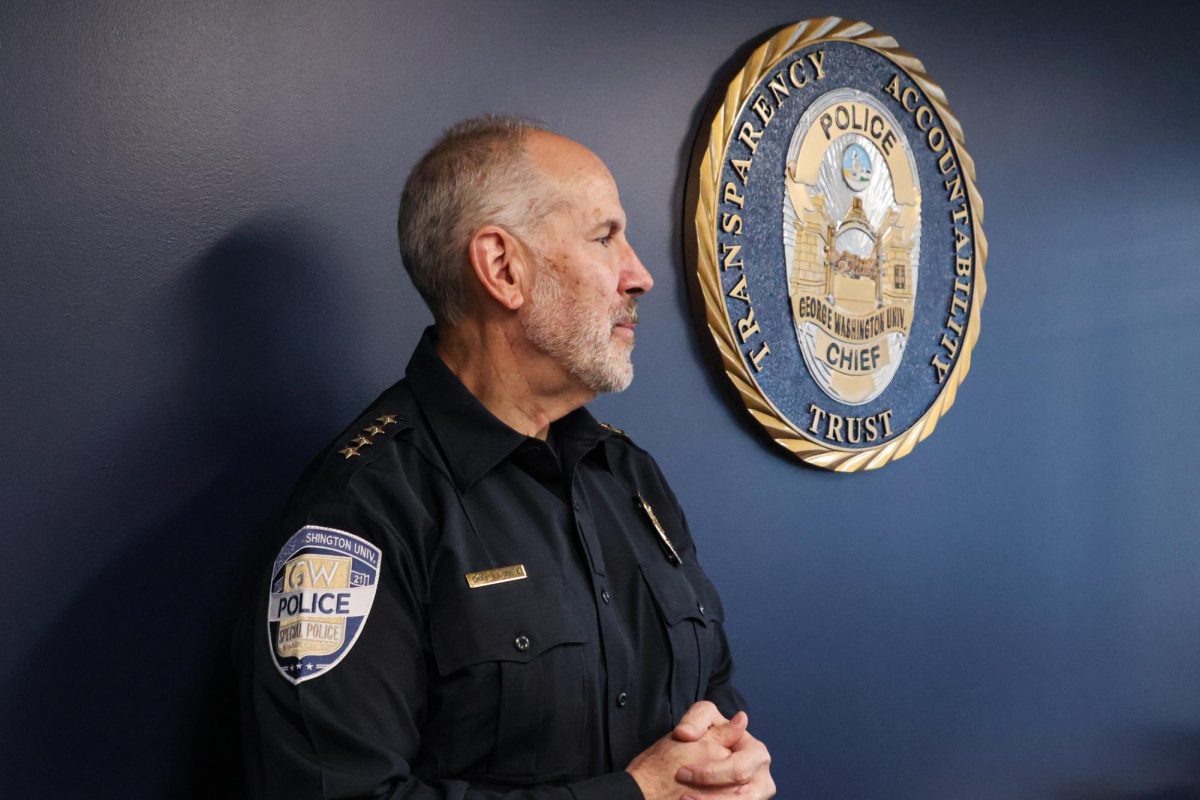
Third-party confirms former GWPD officer reports of safety concerns; new chief vows to rebuild community trust
Granberg in March released findings from a third-party investigation of the GWPD’s arming rollout, confirming reports from former officers last fall of departmental gun safety concerns and officials’ disregard for community input on the decision to arm GWPD officers.
The report, which came in the wake of The Hatchet’s reporting from September 2024 on firearm safety violations and turnover within GWPD that prompted former GWPD Chief James Tate to resign weeks later, found that University officials chose not to seek community feedback before the Board of Trustees directed GWPD to arm officers in April 2023 because they expected opposition to the decision.
Some of the report’s recommendations included encouraging officials to consider arming all GWPD officers to “more adequately protect public safety,” instead of the department’s current hybrid model with some armed and unarmed, but GWPD Chief Victor Brito confirmed in an interview with the Hatchet he had no plans to implement that recommendation. The report also recommended moving all campus security services under GWPD instead of hiring a third-party security contractor and creating a specialized mental health response team.
Associate Vice President for Campus Safety Katie McDonald told the Student Government Association in September only eight officers are armed, far short of the department’s 22-officer goal, and officials do not have plans to expand arming in the future.
Officials named Victor Brito, a 37-year police veteran and the former chief of police in Rockville and Hagerstown, Maryland, as GWPD’s next chief in July. In a sit-down interview with the Hatchet in October, Brito outlined his plans to rebuild trust with the community, focusing on building relationships with key campus stakeholders, hiring quality officers and bolstering officer training, after years of high turnover, low officer morale and reports of insufficient training in the department.

Officials roll out strategic framework, win community support despite financial roadblocks
Granberg and Lach launched GW’s new strategic framework in late October, the first University-wide directional blueprint since 2020, with an initial focus on three initiatives as they seek funding to support “fancy” initiatives that require more funding.
The strategic framework outlines three key priorities and 12 goals officials plan to accomplish in the next five to seven years, including meeting the full demonstrated financial need of residential undergraduate students. The launch also included a website that details the two overarching principles of GW’s new roadmap — increasing student success and growing GW’s research enterprise — and three initial working groups charged with overseeing the implementation of its first phase initiatives, including enhancing GW’s interdisciplinary research, better incorporating D.C. experiences in student learning and improving academic and career advising.
The website states that officials’ move to adopt a framework — rather than a plan, as GW did under LeBlanc — permits them to focus on overarching priorities instead of specific steps. This will give officials flexibility amid ongoing changes in higher education, the website states.
Student, faculty and staff leaders told The Hatchet in October the strategic framework reflects the feedback they provided during the framework’s planning process over the last year and a half, marking a shift from the community backlash LeBlanc faced for his 2019 plan, which drew backlash for its stated goal of cutting undergraduate enrollment by 20 percent and increasing STEM majors by 30 percent. The divergence in public perception from community members in October also came after concerns last year from some members that officials did not reflect their input in the draft framework.