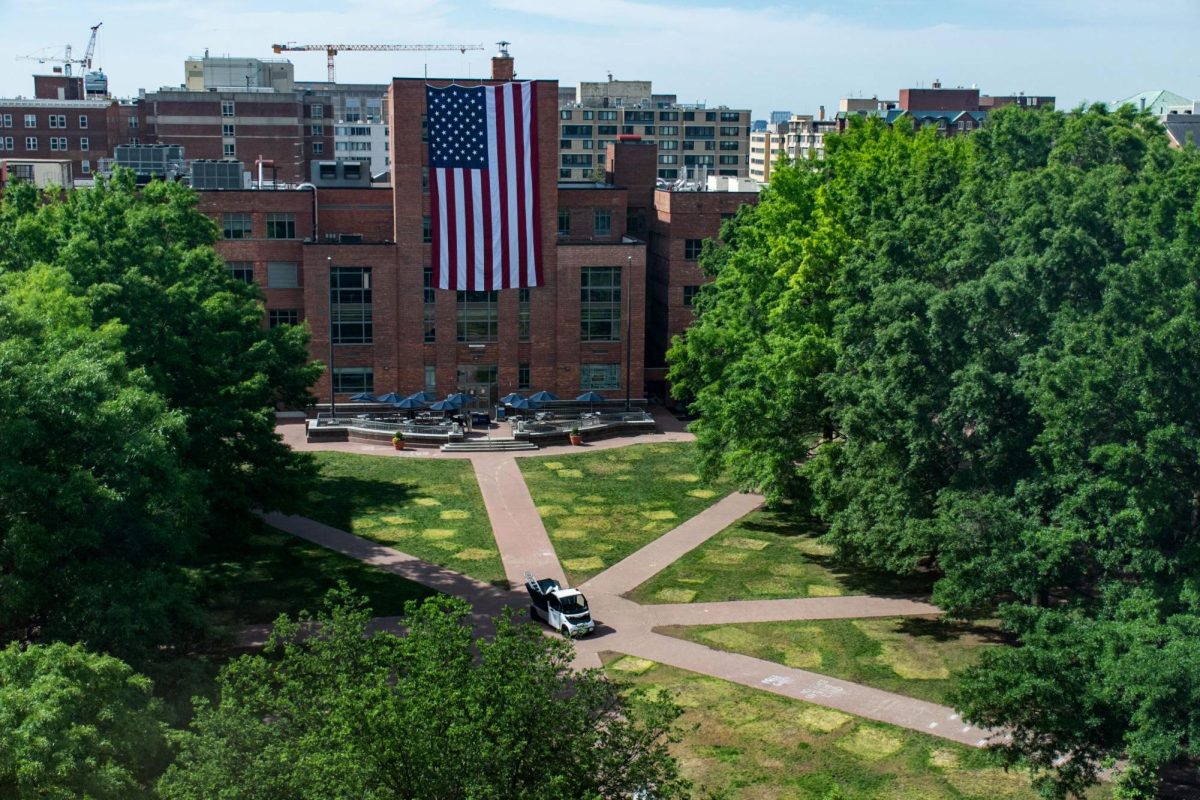


On the morning of April 25, 2024, pro-Palestinian protesters pitched tents in University Yard, commencing a 13-day encampment thats memory still permeates campus culture, discourse and physical landscape a year after local police dismantled the demonstration.
The 13-day encampment exposed underlying issues that began festering at the onset of the war in Gaza, like free speech, shared governance and GW’s alleged financial connections to companies with ties to Israel. Community, Congressional and now federal scrutiny has forced the University to begin reckoning with the lasting campus divisions.
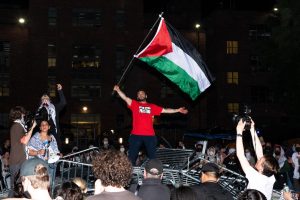
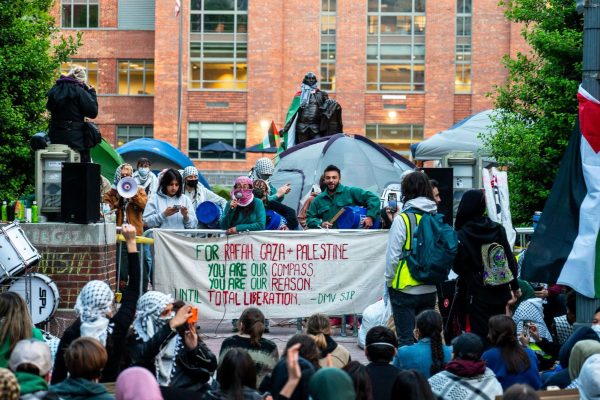
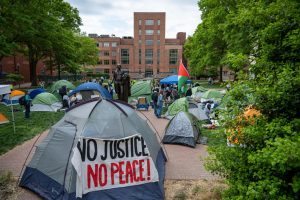
About 50 protesters initially pitched tents in U-Yard early Friday as part of the nationwide pro-Palestinian student protest movement, following a wave of campus protests sparked by the onset of the war in Gaza. The demonstration swelled to hundreds of protesters who pitched about 100 tents, including dozens on H Street before protesters knocked down the barricades — which officials set up on second day of the encampment — around U-Yard on the fourth day.
Throughout the encampment, protesters called on University leaders to drop prior disciplinary charges against pro-Palestinian student demonstrators, protect free speech on campus and disclose and divest from companies with ties to Israel, saying they would not leave U-Yard until their demands were met by officials.
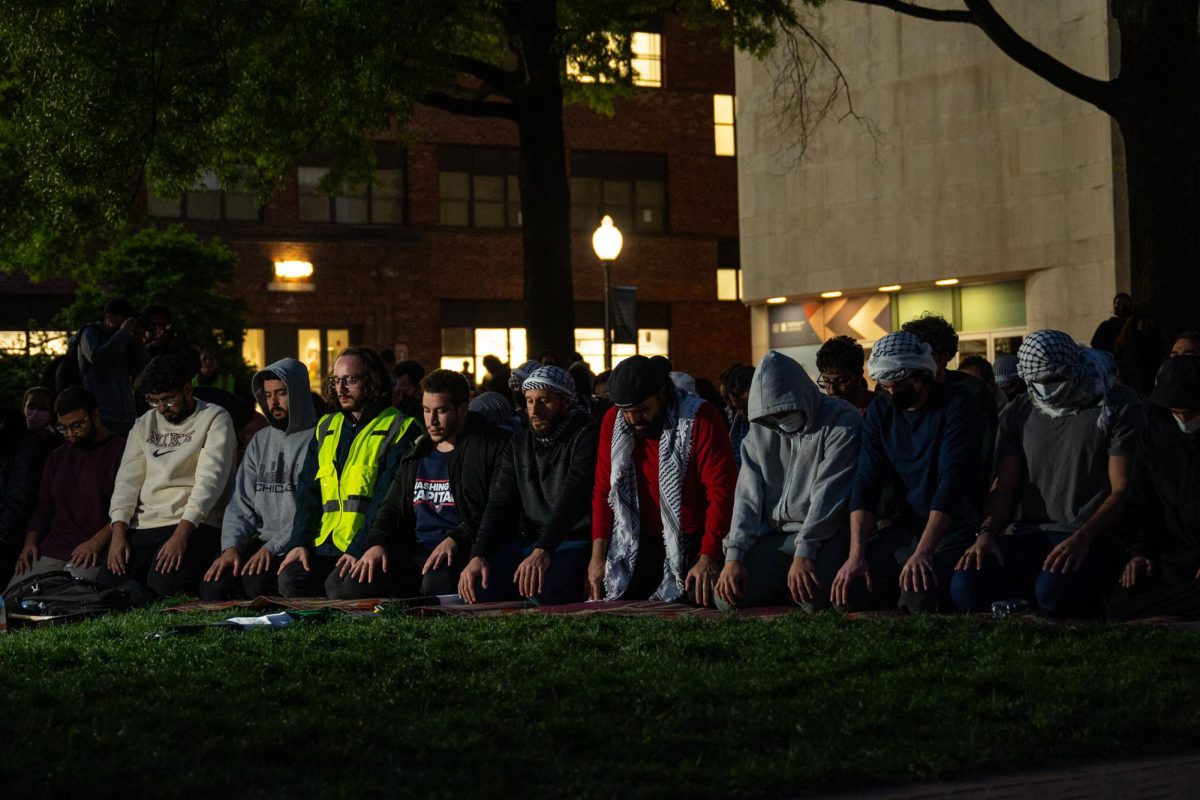
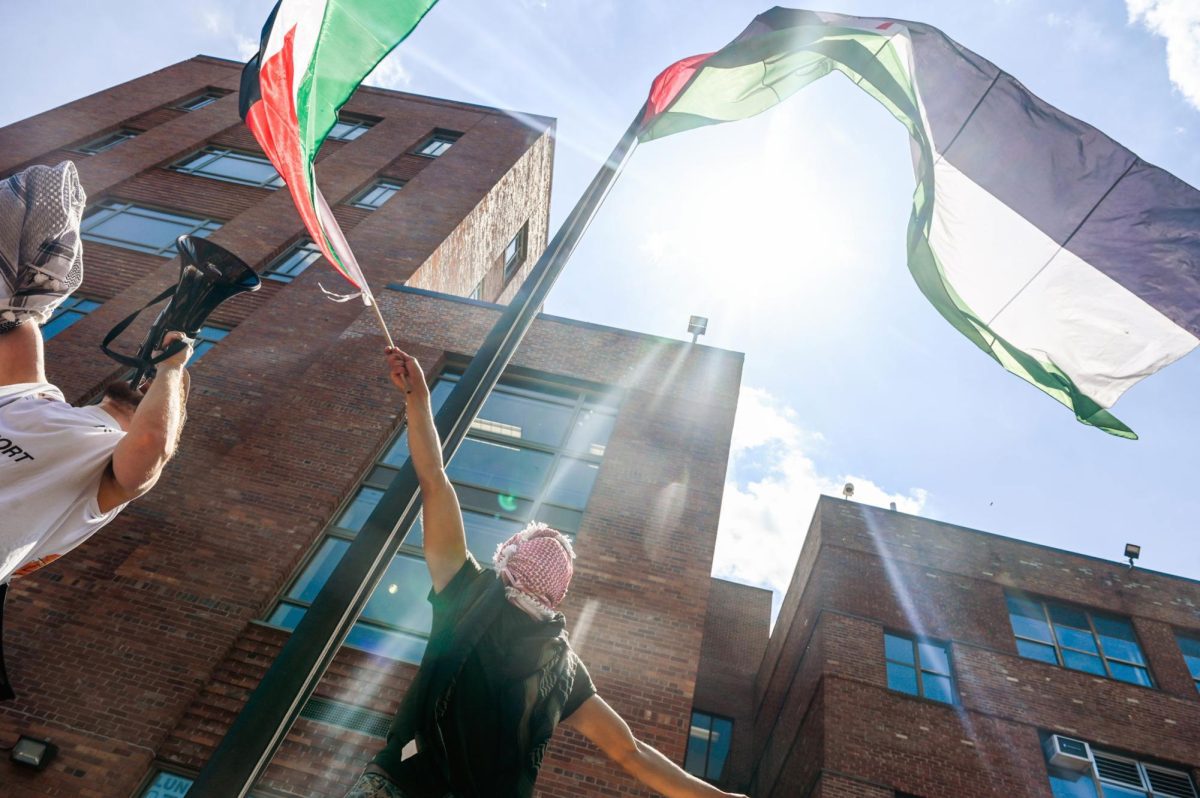
Over the course of the encampment, protesters held frequent prayer sessions, teach-ins and programming events, hoisted a Palestinian flag on the U-Yard flag pole, projected images on surrounding buildings and held frequent rallies opposing the war in Gaza.
Faculty, staff, alumni and Foggy Bottom residents expressed an array of reactions to the encampment, with some supporting students’ rights to free speech and the pro-Palestinian movement and others raising concerns about antisemitism and campus disruption.
Many community members condemned officials’ response to the demonstration, including University President Ellen Granberg’s slew of statements asking D.C. officials for their “full support” in managing the “potentially dangerous” protest and a Washington Post report that alleged the Metropolitan Police Department declined requests from GW to clear the encampment.
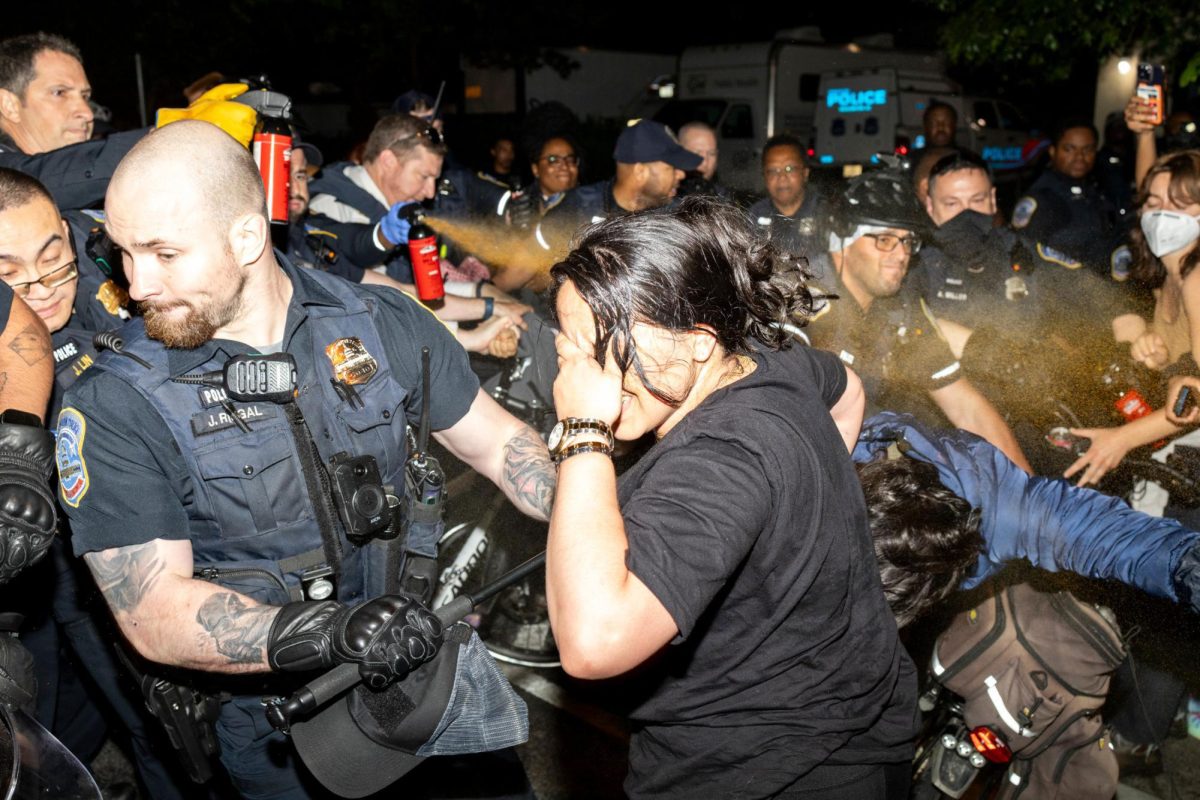
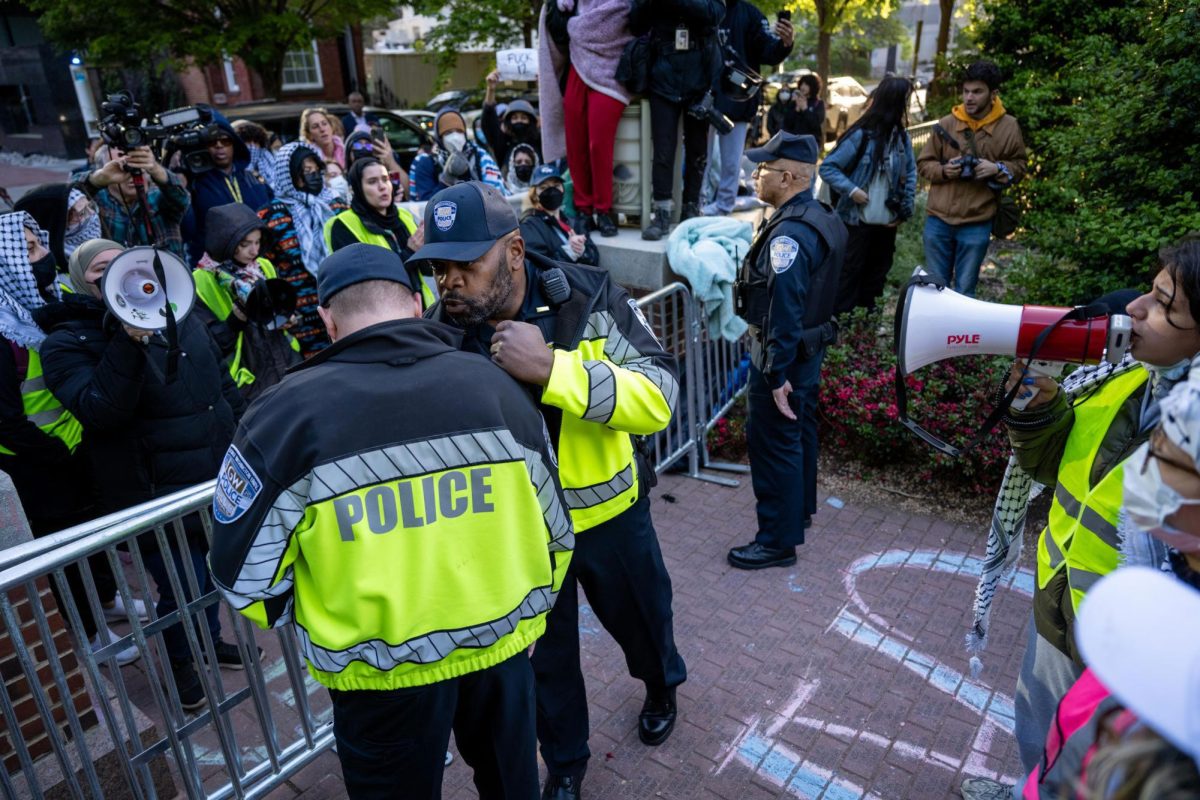
At around 4 a.m. on May 8, MPD officers descended on U-Yard and cleared the encampment, deploying pepper spray and arresting 33 protesters. Granberg and Provost Chris Bracey released a statement following the clearing thanking MPD for “regaining order and safety” and asserting that they would “continue to pursue accountability” for the protesters involved.
“These activities and their underlying causes have created deep fissures in our community that will take time to heal,” Granberg and Bracey said in the statement. “We both recognize that there is still a long road ahead.”
One year later, officials have sanctioned nine student organizations involved in the demonstration, rejected protesters’ demands to divest from companies with ties to Israel and placed permanent fencing around U-Yard. The fences remain open from 6 a.m. to 11 p.m, but officials often lock the entrances ahead of anticipated protests on and nearby campus.
In the fall, the Faculty Senate’s Educational Policy and Technology committee launched a working group to review disciplinary charges for students arrested at the encampment. The findings the committee released in December revealed inconsistencies in GW’s accounts of its role in issuing stay-away orders between GW’s council and the student’s legal counsel. The Faculty Senate then passed a resolution in February endorsing recommendations from the findings, including using suspensions in a “politically neutral way” and having the University support students in their academic endeavors.
In October, the House Committee on Education and the Workforce accused the University of failing to sufficiently discipline pro-Palestinian protesters, and an impending visit from U.S. Department of Justice antisemitism task force officials probing into whether “remedial action” from the University is warranted still looms over campus.
Last Friday, on the one-year anniversary of the start of the encampment, officials locked the gates all day. In the afternoon, a protest formed at the State Department, and demonstrators marched to U-Yard to rally outside of the gates before marching to the White House.
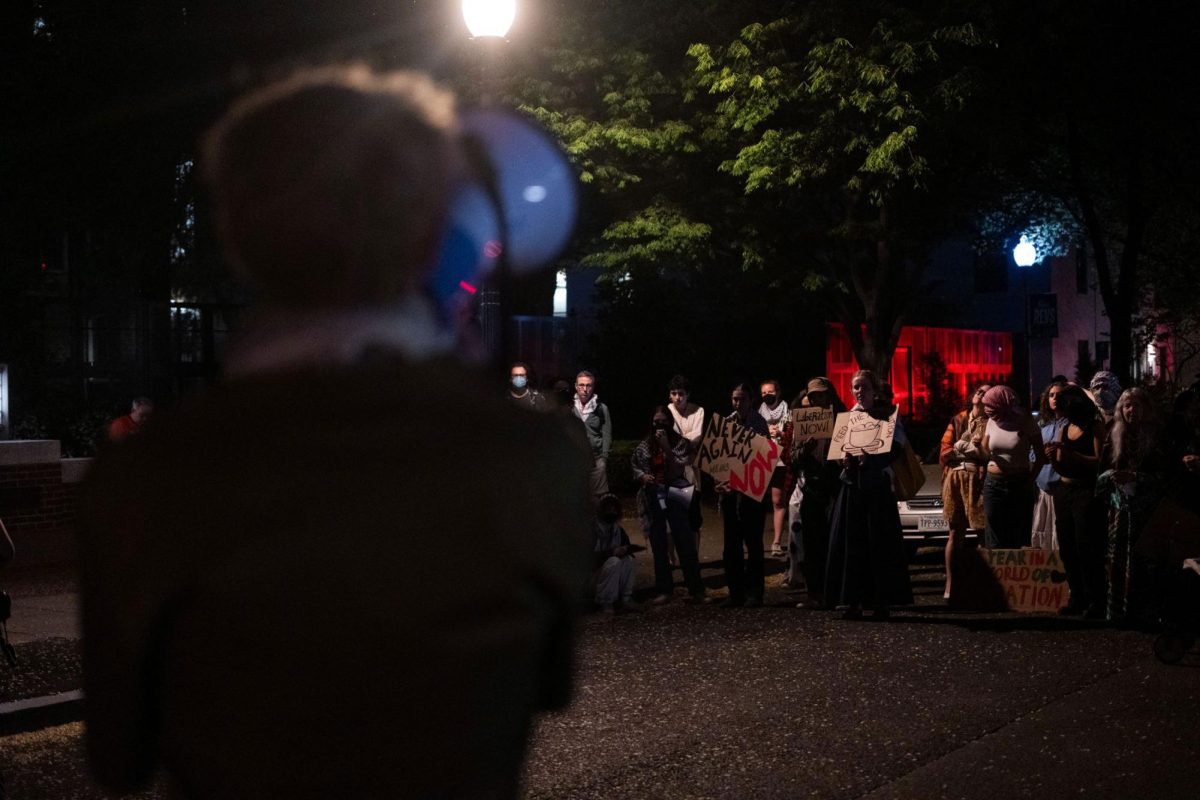
The Hatchet spoke to people who participated in the pro-Palestinian encampment, dissenters of the movement, people living by campus and other community advocates about the demonstration and its lasting impact on campus culture. Here’s what they had to say:
Ferhan Güloğlu, Doctoral student studying anthropology
Güloğlu said she learned from an undergraduate student weeks prior that organizers planned to erect a pro-Palestinian encampment, and was “very excited” to help organizers pitch tents in protest of GW’s financial ties to the war in Gaza.
Güloğlu said as a visibly Muslim woman in academic spaces, she has felt like an “obvious outsider” as people have made unnecessarily mean comments that make her feel as if there is “something wrong” with her. But she described the encampment as a peaceful and respectful space where community members, including her friends from Jewish Voice for Peace, were attuned to cultural differences and set up prayer rugs for her and other Muslim demonstrators.
“You can pray in this public space without shame or without being scared,” Güloğlu said. “It was such a good feeling that stayed with me, like it’s in my mind, it’s the image of the encampment. I’m still thinking a lot about it.”
Güloğlu said she attended the protest every day, despite living far from campus and having two small children, but never slept in the tents because she was breastfeeding, which she said she still feels “guilty” about given kids her children’s age in Gaza are dying. She said she brought her children to the demonstration a few times and was “so proud” to show them an encampment filled with Palestinian flags where she studied.
Güloğlu said she misses being surrounded by people who “would sacrifice everything” to support Palestinians because now when she’s on campus, she worries everything she says could be “weaponized,” particularly under the Trump administration. She said she doesn’t talk about Palestine in her anthropological discussions out of fear that someone will record and “demonize” her due to heightened tensions on campus after the encampment.
“I’m considering, checking, double-checking everything,” Güloğlu said. “Just keeping my silence to feel safer.”
Sean Shekhman, former Vice President of GW for Israel
Shekhman, who was vice president of GW for Israel last spring, said he received a text from a friend “about an hour” after the encampment started that read “It happened.” He said “everybody” expected pro-Palestinian protesters to start an encampment after one cropped up at Columbia University and other universities.
“The initial reaction was fear because nobody really knew what it would turn into and also confusion because no one really knew what the effects would be,” Shekhman said.
Shekhman said the encampment created a “very difficult” situation for Jewish students on campus because students in general were not taking the time to listen to Jewish students’ concerns about their safety during the encampment. He said the encampment took on slogans and chants that were “outright antisemitic,” calling for the murder of Jewish people and Israelis.
Shekhman said he did not attend any counterprotests but did go to the encampment the first night to talk with people he knew who were involved with the demonstration about what they were protesting for and their views on the war in Gaza. He said the conversations he had with students were “very interesting” because he heard different perspectives on why students were involved in the demonstration.
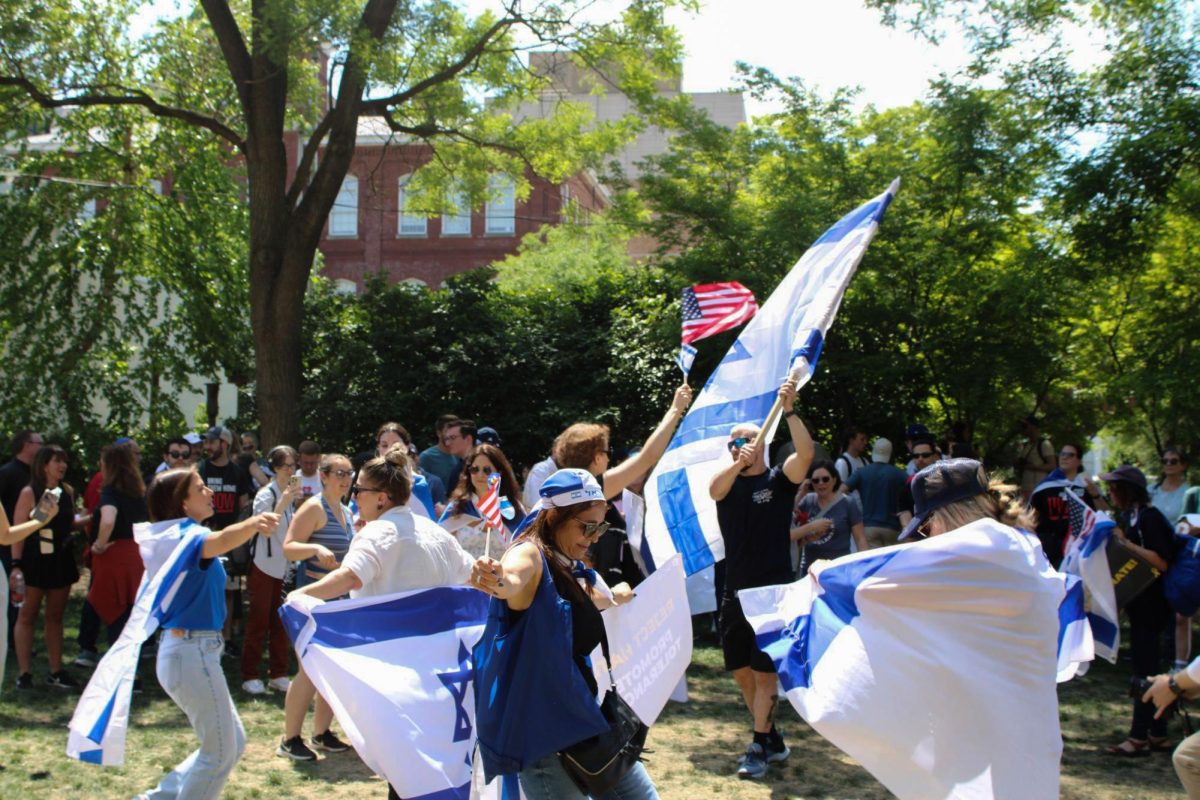
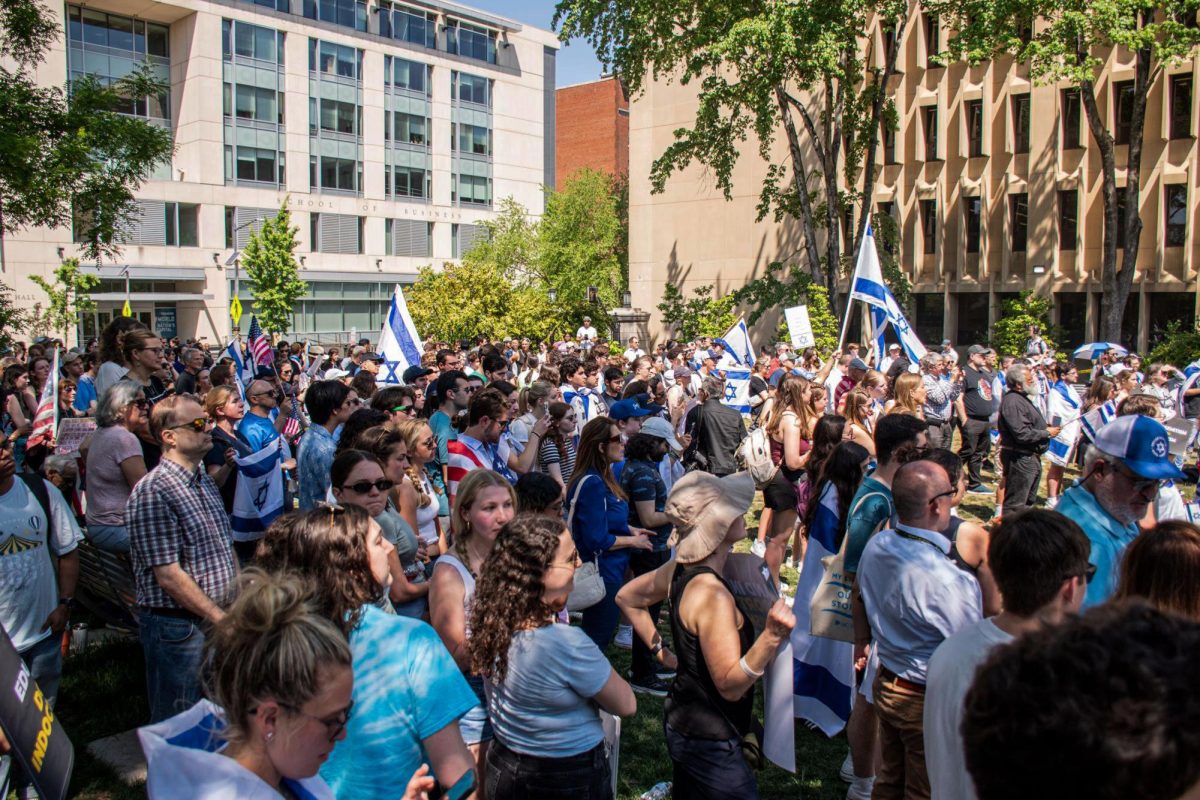
The only event Shekhman did attend was a “A Rally Against Campus Antisemitism” that was organized by GW for Israel and the GW Jewish Students Association in G Street Park a week after the encampment first started.
Shekhman said organizing certain events, like “IsraelFest” and events with outside speakers, have become “a bit more difficult” in the year since the encampment, citing security concerns that need to be addressed, like counterprotests. He also said he’s seen students on campus feel “uncomfortable” in being “openly Jewish” because Jewish students don’t know whether other students support the rhetoric that was used at the encampment.
Shekhman said the Jewish community at GW has grown stronger following the encampment and said attendance at GW for Israel events has increased. He also said first-year students, who saw the encampment after they committed to GW, came to the University in the fall wanting to advocate for the pro-Jewish and pro-Israeli community.
“It’s stronger than ever, we’re prouder than ever,” Shekhman said. “We do more stuff, more success and more passion than we ever did.”
An anonymous journalism student, Class of 2024
The student, who graduated last spring and requested anonymity due to fear of the Trump administration’s retaliations against student activists, said they decided to join the encampment on its fourth day after fellow demonstrators set up tents outside of the fenced-off U-Yard on H Street.
They said they attended the encampment’s rallies in the first few days but were “nervous” and “scared” to sleep at the encampment since they were graduating and didn’t want to face disciplinary action from GW or arrest. They said they ultimately decided to join the encampment because they were “very passionate” about the pro-Palestinian cause.
“I was feeling all these conflicted feelings of like, ‘Wow, this something I’m passionate about, now I have an opportunity to kind of put my money where my mouth is through action,’” they said.
When MPD cleared the encampment, they said they looked outside their tent to see cops “flooding” U-Yard, so they fled and put their valuables in a safe place. They said they then returned to the site to support those being arrested as a protest began to gather outside the police barricade on 20th Street, where they got pepper-sprayed by police.
“We were the group that didn’t necessarily want to get arrested and go to jail, like, we at least wanted to do what we could, to at least observe the ways that they were handling the students who were getting arrested,” they said.
They said there has not been a single week since last spring when they haven’t thought about their experiences in U-Yard during the encampment. They said the encampment provided them an opportunity to express their activism for the pro-Palestinian movement, which they have been involved in since high school.
“That was the first time in my life that I can ever remember where I was like, ‘Wow, people can band together, people can make a statement, and people can actually make these politicians scared,’ you know?” they said. “And I think for that reason, that’s what stuck with me the most.”
Lisa Schwartz, Associate Professor of Biomedical Laboratory Sciences
Schwartz, a remote professor of biomedical laboratory sciences, said she happened to be on campus for an event the day demonstrators launched the encampment in U-Yard.
She said as she exited her car and parked at Funger Hall, she heard the sound of a bullhorn. Schwartz said she walked towards the sound, where she discovered the encampment and decided to watch the protesters from afar. She said while she took in the scene, she heard a demonstrator with a bullhorn chant, “Zionists are not welcome here.”
“As someone who since October 7, 2023, had strongly reconnected to my Jewish identity and began wearing a Star of David necklace, I truthfully was afraid and quite upset,” Schwartz said in an email. “Never in my life had I heard this phrase and certainly not at GW, where I’ve been a student, alum, staff, faculty and parent.”
She said she participated in the May 2, 2024, G Street rally in support of Jewish students after learning about the counter-protest through GW Hillel. She held a sign during the demonstration reading, “Faculty against antisemitism.”
“I was concerned by how any student, particularly Jewish students, would be impacted by the hurtful language being broadcasted at the encampment and wanted to show my support to them,” Schwartz said in an email.
Schwartz, the founder of GW Faculty and Staff Against Antisemitism and Hate, a group advocating for the importance of inclusivity and dialogue on campus, said members of the GW community were living in “parallel universes” where some saw the encampment as a form of peaceful protest, while others, including herself, saw it as “disruptive” to the University’s educational mission.
She said it is a “good thing” the encampment forced University officials to reevaluate GW policies and procedures like codes of conduct and time, place and manner restrictions for free expression activities because they needed to be more explicit, clear and well-communicated to the GW community.
She said the polarization on campus and the rise of antisemitism beyond the encampment drove her to form the group after the encampment’s closure.
“I wanted all members of the GW community, particularly Jewish students, to know that there were faculty and staff who supported them,” Schwartz said. “The group has served as a support for its faculty and staff members too.”
Kai River Blevins, Doctoral student studying anthropology
Blevins said they learned of the encampment the morning students erected it and immediately got ready to arrive at U-Yard by about 8 a.m. to join fellow students and support the demonstration. They said they felt “very proud” of the undergraduate students who had organized it and were standing up to GW’s “unfair, discriminatory behavior” of restricting pro-Palestinian student groups’ programming.
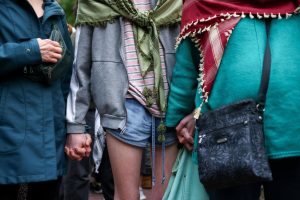
They said they and other graduate students collaborated with some faculty members to support students, including by talking to officials outside of the encampment to ask them not to infringe on students’ rights to protest and joining hands to form a human barricade around the protesters on the encampment’s first day.
“I thought that that was a really important cause to support and to allow students to be able to make that basic free speech political claim and to ask their university what they’re doing with their own tuition money,” Blevins said.
On the sixth day of the encampment, more than 100 graduate students penned a letter in support of the student encampment urging the University to support and allow free expression on campus, which Blevins co-organized. Blevins said the goal of the letter was to show officials that there was broad campus support for the encampment, hoping they would allow students to continue demonstrating, instead of threatening discipline or arrest.
“It could be another tool to help the University see that this is not just some undergraduate students that they could ignore and that it’s not just the faculty who think we should be having this conversation,” Blevins said. “But that, in fact, all the graduate students who help to teach all of these classes, with the awful pay that they give us and the terrible benefits they keep taking away, we also think that this should be a conversation, and that we are members of this community who have something to say about it.”
They said participants had conversations and “debates” about broader geopolitical issues. They said the environment was “so much more amenable” to open dialogue about an array of political issues than they’ve seen in classes they’ve served as a teaching assistant in over seven semesters at GW because it removed the pressure of speaking up to get a good grade.
“They were doing what universities say they want students to do,” Blevins said.
Blevins said a lot has stayed the same since the encampment as the “genocide is still ongoing” in Palestine, and the University is still “discriminating against” pro-Palestinian students. They added that seeing the black fences in U-Yard feels like “an open wound,” serving as a reminder that officials disallowed the protest each time they walk through the space.
“It felt empty, and I was like, ‘This is not my memory of this place,’” Blevins said of U-Yard. “My memory of this place is joyful — a lot of stress and sometimes terror at what a cop is going to do or things like that — but genuinely I felt in community in that space, and I have not felt that way since.”
Jim Malec, Foggy Bottom and West End Advisory Neighborhood Commissioner
Malec, the ANC’s 2A08 commissioner who chaired the body during the encampment, said when he learned students had erected tents, he was immediately supportive of students exercising their First Amendment rights, which he said was a “content-neutral” position.
On the encampment’s second day, Malec sent a letter to GW’s Director of Community Relations Kevin Days expressing that he was “very disappointed” with the University’s response to the demonstration. The letter asked officials to celebrate student activism as a “net positive” for society instead of threatening to discipline or arrest students. Malec said Days’ response to his letter was not what he was “hoping for” but declined to specify what Days said.
Malec said his constituents never reached out to him personally about the encampment, but in email chains and Listservs he’s part of as a neighborhood leader, Foggy Bottom and West End locals “generally” expressed opposition to the encampment because of the traffic and noise issues it created. He said some residents found the demonstration antisemitic and inappropriate, viewing it as a protest against Israel as a state.
He said he was “extremely disappointed” when he learned MPD had cleared out the demonstration last May, saying the sweep was unnecessary and had justifications that were “severely lacking.”
Since the clearing, GW has installed permanent fencing surrounding U-Yard and restricted building access to GW community members, which Malec said increases a sense among locals that GW is a “walled garden within the community.”
“We have what I would consider serious overreactions by the administration to this short-term event that happened, the short-term stimuli that’s gonna last for decades,” Malec said. “It’s gonna impact the way students interact with their university, and it’s gonna limit the community’s ability to interact with the University.”

An anonymous SJP member, international affairs student, Class of 2026
The student, who requested anonymity due to fear of retaliation from the University, said she joined the encampment to call on the University to divest from weapons manufacturers and “support human life.” She said she was at the encampment for “pretty much” its whole duration, including staying there overnight, but was not there when it was cleared.
“I joined the encampment because divesting from genocide is an integral way this University can show that it supports students and human life,” she said.
She said her time in the encampment was both “amazing and horrible” because of the community it brought together but also because of “hostility” she felt members of the encampment received from University administration, including alleged assault by Provost Chris Bracey against two students and University officials requesting MPD clear the encampment two days after it went up.
“However, the fact that we, as students, had to take drastic measures in order to publicize the lack of recognition of our calls for divestment from administration was heartbreaking,” she said.
She said seeing students, including those from other schools in the DMV, come together to express their support for the Palestinian people was an experience “unlike any other.”
She said her views on the encampment and what it was fighting for have not changed in the year since the encampment as there is “still a genocide” taking place in Gaza.
She said only one part of campus life has been impacted by the encampment, adding that the University approved GW for Israel’s “IsraelFest” event in Kogan Plaza despite “community pushback.” She also said the “ugly” fences are still in U-Yard, which were permanently added to U-Yard in December.
“I think that the repression that we have seen coming from the encampment tells all of us that GW is scared of our demands and will try its best to avoid making changes that benefit the good of the community,” she said.

An anonymous international affairs student, Class of 2025
The student, who requested anonymity out of fear of backlash from the community, said they visited the encampment “fairly regularly” because they had friends who were participating.
They said as a Jewish student who is a supporter of “peace” in the conflict, they had conversations with several protesters about the history of the Israel-Palestine conflict, which allowed them to find common interests between Jews and Palestinians, including their love for the Palestinian land and desire to see a peaceful resolution in the conflict.
“It was just a lot of really powerful conversations, especially as a Jew, it just made me feel like peace is possible,” the student said.
They said they felt “embarrassed” to be associated with GW after the MPD cleared the encampment, and the fact that the University was “sanctioning” violence on their own students, including their friends, made them feel unsafe.
They said, as a Jewish student, they never felt uncomfortable by the actions taken at the encampment or by the demonstrators but felt “unsafe” that the University used Jewish students and anti-semitism as an excuse to discipline the protesters.
They said they have felt that since the encampment, the University has “cracked down” on students being able to “freely enjoy” campus spaces through the sudden enforcement of a rule ordering the removal of hammocks on campus and erecting fences around U-Yard.
“I still don’t feel comfortable like setting up a blanket and hanging out with my friends in U-Yard, like I used to do, because it’s surrounded by gates, and it’s overall just a really unfriendly aura that the University has created,” the student said.
Molly St. Clair contributed reporting.