
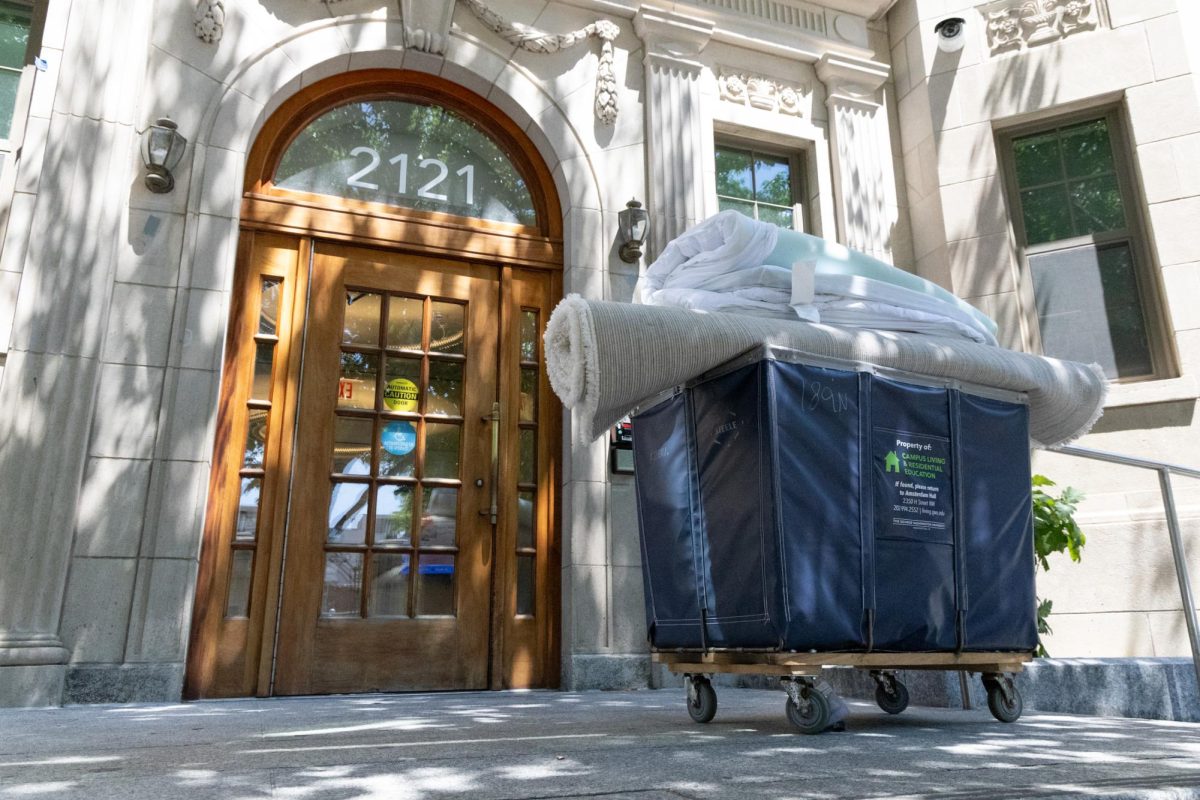
Students donated over 53,000 pounds of goods during the Office of Sustainability’s Green Move-Out, a nearly 14,300-pound drop from last year’s record high, according to the office’s annual report.
As part of the annual program — which the sustainability office launched in 2014 to advance the University’s zero-waste goals — 96 student, staff and faculty volunteers spent two weeks after the spring semester concluded collecting and sorting $85,000 worth and over 53,000 pounds of goods, according to the report. The amount is down from last year’s record of 67,440 pounds, which a University spokesperson said could be due to rising product costs and difficult-to-calculate factors like housing trends and what students choose to keep or sell themselves.
“Also to consider when reviewing this year’s numbers is that weight diverted is only one measure of success,” the spokesperson said in an email. “There are other factors that define success, such as participation, reuse, financial benefit to the community and how much material is kept in circulation rather than purchased new and/or sent to landfill.”
Last year’s move-out produced a record 67,440 pounds, including 300 pounds of electronics and 1,800 pounds of mattress toppers, up from over 41,500 pounds in 2024. In 2023, the program generated over 57,000 pounds of goods, saving 12 truckloads of waste from landfills and including 1,250 pounds of food.
The report states the donated items went to local partners, like Bread for the City, Goodwill Greater Washington, green removal and recycling service Donation Nation and GW’s student-run food pantry The Store. The spokesperson said if items aren’t suited for donation, like foam mattresses, dirty clothing and open food and hygiene products, officials made efforts to reuse or recycle them, with the landfill being a last resort.
The spokesperson said the largest category of donated goods this year was soft goods, like bedding, clothing and shoes, totaling over 27,400 pounds, which went to community partners and The Loop, GW’s free clothing exchange on the Mount Vernon Campus. Soft goods also comprised the largest portion of donations in 2024, totaling 24,000 pounds, and 2023 yielded 48,125 pounds of clothing and shoes.
The spokesperson said over 20,700 pounds of household goods collected, including electronics, went to community partners, while student living supplies, like hangers, furniture, coffee machines and extension cords, will be available at GW’s no-cost Reuse Market in August.
The goods diverted from landfills totaled 24.1 tons, avoiding 94.7 metric tons of greenhouse gas emissions, according to the report. The University spokesperson said officials determine emissions avoided through the U.S. Environmental Protection Agency’s model that estimates how much pollution is avoided when items are reused rather than replaced with a factory-made alternative.
The spokesperson said officials in future years would like to understand other metrics, including student participation rates, awareness levels and overall program satisfaction, that they have not measured in the past. They said officials conduct a review of the program every summer to identify opportunities for improvement.
“For example, in 2025, we focused on increasing communication, improving signage and labeling and starting planning efforts earlier in the academic year,” the spokesperson said. “We expect to continue refining the program each year based on feedback, operational data, and student needs.”
The inaugural University-run Green Move-Out in spring 2015 produced over 43,000 pounds of goods after students founded a smaller-scale, student-led version of the initiative in 2006. Green Move-Out has diverted an estimated one million pounds of material since its inception in 2006, according to this year’s report.