
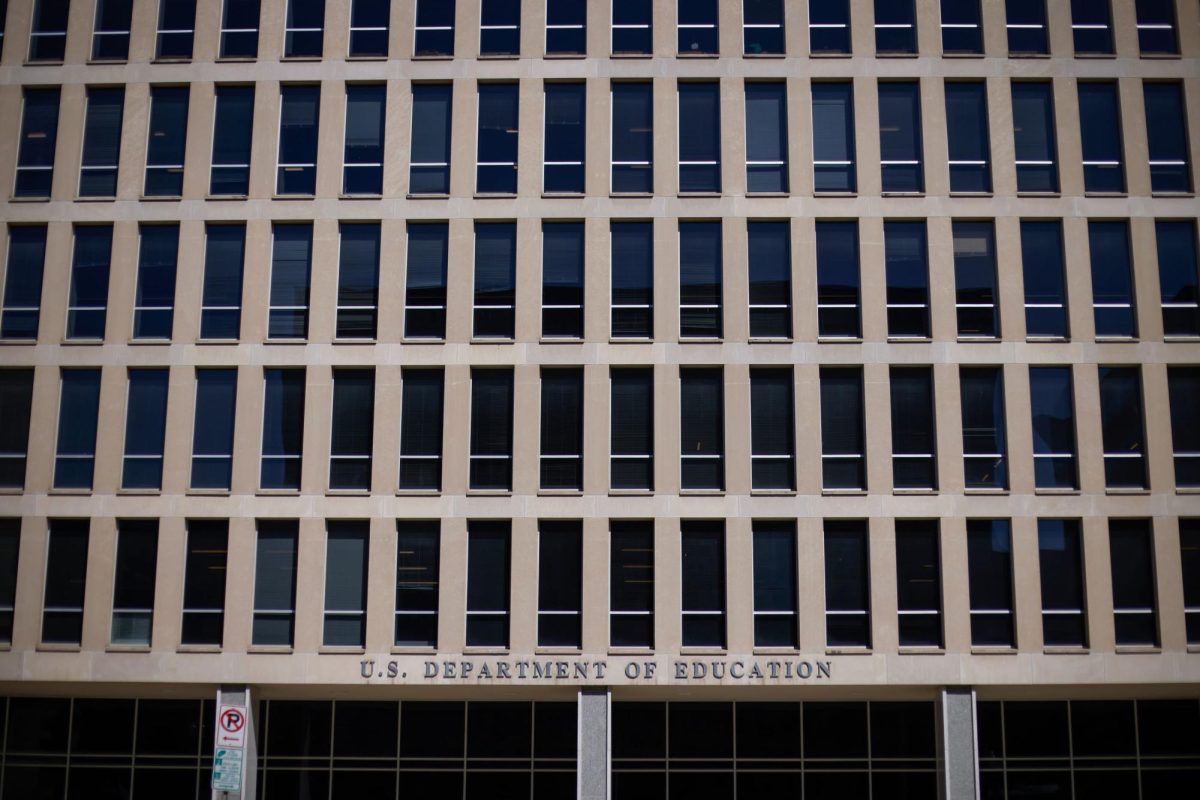
The Department of Education is planning changes to the student loan repayment plan in accordance with the “Big Beautiful Bill” President Donald Trump signed into law earlier this month, including reducing the number of repayment options from seven to two.
The department plans to reject roughly 460,000 applications from people seeking to make lower payments on their student loans and resume accruing interest for accounts on the Saving on a Valuable Education plan — a Biden-era student loan repayment plan aimed at lowering payments for many borrowers — which has faced legal scrutiny since its creation in July 2023. Since the bill’s signing, Education Department officials are also implementing an overhaul of the student loan repayment system by trimming the number of payment plans offered to borrowers from seven to two after July 1, 2026.
The rejected applicants make up around 23 percent of the nearly 2 million applicants to Income-Driven Repayment plans who have still not had their applications processed by department officials, according to a May court filing from the Education Department.
The four income-driven repayment plans available to borrowers are commonly seen as the cheapest options for them by experts, allowing borrowers to pay back their student loans with a percentage of their monthly discretionary income. Eligibility varies based on loan type and payment plan, but the Federal Student Aid website offers a full matrix of eligibility.
Just under 40 percent of the nearly 33 million borrowers enrolled in student loan repayment plans are enrolled on one of four IDR plans. Over half of those enrolled in income-driven repayment plans are enrolled in the SAVE plan.
After at least 20 years of payments, borrowers enrolled in IDR plans, like the SAVE plan, with remaining balances can have their remaining balances forgiven.
Secretary of Education Linda McMahon said in a post on X, formely known as Twitter, Wednesday that the Department of Education will resume charging interest for enrollees on the SAVE plan, adding the program itself was illegal.
“SAVE borrowers: We’re here to help you find an affordable, legal repayment plan,” McMahon said in the post.
The Department of Education did not return a request for comment.
University spokesperson Julia Garbitt said GW has no involvement in the student loan repayment process, adding that once an individual agrees to take out a federal loan, the borrower is responsible for the management and repayment of that federal loan. She said the day-to-day management of the borrower’s repayment is handled by the loan servicer.
While the remaining balance for SAVE plan enrollees will accrue interest starting next month, enrollees are not required to resume monthly payments, due to the July 2024 pause on payments for SAVE plan enrollees following court injunctions.
In July 2023, then-President Joe Biden introduced the SAVE plan as a new avenue for student loan repayment before student loan repayments were resumed after a three-year pandemic-induced pause in October 2023.
The SAVE plan has faced various litigation since July 2024, with an appellate court in February upholding and expanding the previous injunction, which prevents the plan from being further implemented or providing any more loan forgiveness. February’s expanded injunction upheld the previous pause and also said the Secretary of Education did not have the authority to forgive any remaining loans repaid under the Income-Contingent Repayment plan, one of the other four IDR plans.
As a result of the ruling, Department of Education officials suspended applications to IDR plans for a month, reopening applications in late March. When applications reopened, borrowers could not apply to the SAVE plan.
Earlier this week, the Education Department paused all forgiveness for all IDR plans, upholding previous pauses on forgiveness for three of the IDR plans and instituting a pause on the Income-Based Repayment plan to comply with “ongoing court injunctions” stemming from the July 2024 pause. Department officials did not provide a timeline for when forgiveness would be resumed but said eligible borrowers should continue making payments.
The current challenges facing student loan repayment plans comes as the Department of Education works to overhaul the entire student loan repayment process, in accordance with President Trump’s One Big Beautiful Bill Act.
On July 1, 2028, the SAVE plan will officially be phased out. Borrowers currently enrolled in the plan will be required to switch to a different repayment plan by the date the plan shuts down.
For borrowers who take out student loans starting July 1, 2026, they will only have access to two new repayment plans. The first plan is a refurbished version of the standard repayment plan, where borrowers make fixed payments over a term based on the loan amount. The other option for new borrowers is the Repayment Assistance Program, which will be similar to the current IDR plans.
RAP will have borrowers make monthly payments ranging from 1 percent to 10 percent of the borrower’s adjusted gross income over a maximum term of 30 years. If any borrowers have a remaining balance at the conclusion of the 30-year term, it will be forgiven.
For current borrowers enrolled in standard repayment plans, they will have no changes to their repayment plan, as long as they do not take out any new loans. Any borrowers with a remaining balance will be able to shift to the new RAP plan.
The fourth income-driven repayment plan, Income-Based Repayment, will still be available to borrowers who took out loans before July 1, 2026.
The IBR plan allows enrolled borrowers to make monthly payments of 10 percent of their discretionary income over a term of 20 years for those who first borrowed after July 1, 2014. For borrowers who first borrowed before July 1, 2014, those enrolled in IBR plans will make payments of 15 percent of their discretionary income over a term of 25 years.
For parents that take out Parent PLUS loans starting after July 1, 2026, they will only be able to make repayments through the new standard repayment plan.
The Department of Education’s Loan Simulator currently reflects today’s repayment options available to borrowers, but a banner on the website said the simulator will be updated to reflect “recent legislative changes.