Updated: Jan. 14, 2026, at 8:51 p.m.
Students interning and working for the federal government said the government shutdown has hurt their day-to-day finances and prevented them from having a “true” job experience in the federal government.
Since the federal government shutdown began on Oct. 1, student interns and employees working for members of Congress and at Smithsonian museums have been out of work — a disruption they say has strained their finances and cut short valuable professional experience in government and museum affairs. The shutdown, triggered by Congress’s failure to pass funding legislation through Nov. 21, has led to mass furloughs, suspended pay for federal workers and the closure of federal buildings across D.C.
Since the start of the shutdown, the Senate has attempted multiple times to pass legislation that would reopen the government this month, including most recently on Thursday — the shutdown’s 23rd day — when the spending bill passed by the House of Representatives on Sept. 19 failed to reach a 60-vote threshold in the Senate. The shutdown began after Senate Democrats throughout late September refused to advance the spending bill over a lack of an extension for health care subsidies in the bill, which were set to expire at the end of this year and help fund health care for 22 million Americans.
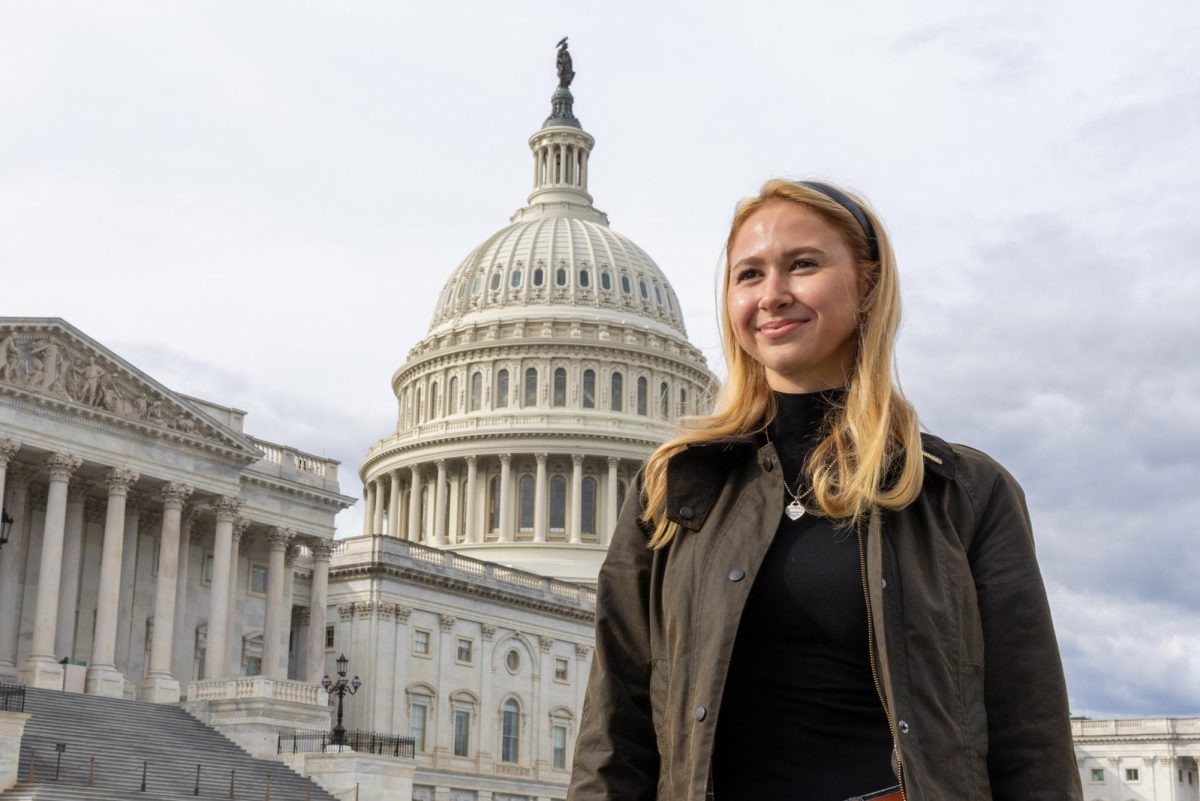
Ana Claire Hanley, a junior majoring in political science who interns for Speaker Mike Johnson (R-LA), said she has been furloughed since the government shutdown on Oct. 1, prompting her to take on a “side gig” at a consulting firm to earn extra income.
“I’ve consecutively worked on Capitol Hill since the start of summer without stop, so it was a very drastic change from commuting here three days a week minimum to just being at home and not really having much to do,” Hanley said.
Even with some income coming in, Hanley said she’s had to cut back on spending for groceries and other necessities.
“There’s definitely been some adjustments there, and having to work around that,” Hanley said. “Maybe spending less on groceries, maybe trying to go to Harris Teeter instead of stopping at the convenient Whole Foods on campus.”
Hannah Davis — a junior majoring in history and Asian studies, who works a few hours each week at the Smithsonian’s Air and Space Museum in D.C. — said the shutdown has threatened her financial stability as a college student. She said that, in lieu of her usual online trainings, she is helping with a research project as part of an arrangement with her supervisors, but she won’t receive payment for this work until the government passes a spending bill and the Smithsonian reopens.
While most government institutions shut down on Oct. 1, the Smithsonian Institution was able to use prior-year funding to keep the National Zoo and 21 other museums open until Oct. 11. Starting Oct. 12, Smithsonian museums closed their doors. She said her bosses at the Smithsonian Institution have been in constant communication with her and her co-workers about the status of the shutdown, even as they report that the outlook is bleak as the gridlock in Congress approaches its fifth week.
“We know we’re not going to come back this week,” Davis said. “So they have been very much like, ‘There’s no light at the end of the tunnel.’”
Davis said people need to remember the government shutdown isn’t just affecting civil servants but also a myriad of other workers in D.C. and the rest of the nation, like security guards at airports, National Park Service workers and interns.
“There’s a lot of people who are involved in federal work that are being affected by this,” Davis said. “So people who are volunteers at the zoos are getting affected by this. Security guards are getting affected by this. There are many.”
The government last shut down in 2019 for 35 days, the longest so far in American history, as debate over funding for President Donald Trump’s wall along the U.S.-Mexico border stalled funding bills in Congress from late December 2018 into the new year.
Students in 2019 reported that the government shutdown delayed the start of their spring semester internships with federal agencies. Similarly, during the 2013 shutdown — caused by debate over funding former President Barack Obama’s health care plan — students were furloughed from their internships, and faculty reported courses were disrupted because students couldn’t access data on federal websites.
A student, who spoke on the condition of anonymity, said they intern in the U.S. Senate and are continuing to work as usual despite not receiving a paycheck. They received one payment at the start of October but have not been paid since, though they expect to receive back pay for the hours they worked during the shutdown.
“The only thing that really has changed is I can’t give tours as much, and things are a little bit slower,” they said. “But I feel like I still got a good chunk of the experience.”
The student said when the shutdown first began, some of their fellow interns hoped they might get a few days off — something they said they would have appreciated to focus more on their academics. But now that the government has been shut down for a full month, they said they’re grateful to still be coming into work.
They added that they are fortunate not to have to worry about student loans or rent but that many of their coworkers are beginning to feel the strain.
“It doesn’t affect me too much whether or not I get paid right now, or if I get paid in three, four weeks, that’s fine but just a little annoying,” the student said.
Chloe Persaud, a sophomore majoring in finance, said she works with Davis at the Air and Space Museum on weekends and went into fall break on Oct. 9 unsure whether she would still have a job when she returned.
She said the main impact of the shutdown has been the loss of income, which she worries will become a bigger issue as the closure continues and limits her spending money. Beyond finances, Persaud said she’s been treating the shutdown as a “vacation” from her weekend shifts at the museum.
“I’ve taken the approach of, I’m on vacation, I’m not going to be working,” Persaud said.
This post was updated to correct the following:
A previous version of this post included the name of an individual who spoke on the condition of anonymity. We have now removed their name. We regret this error.