

Heartbreaking losses defined men’s basketball’s 2025-26 season.
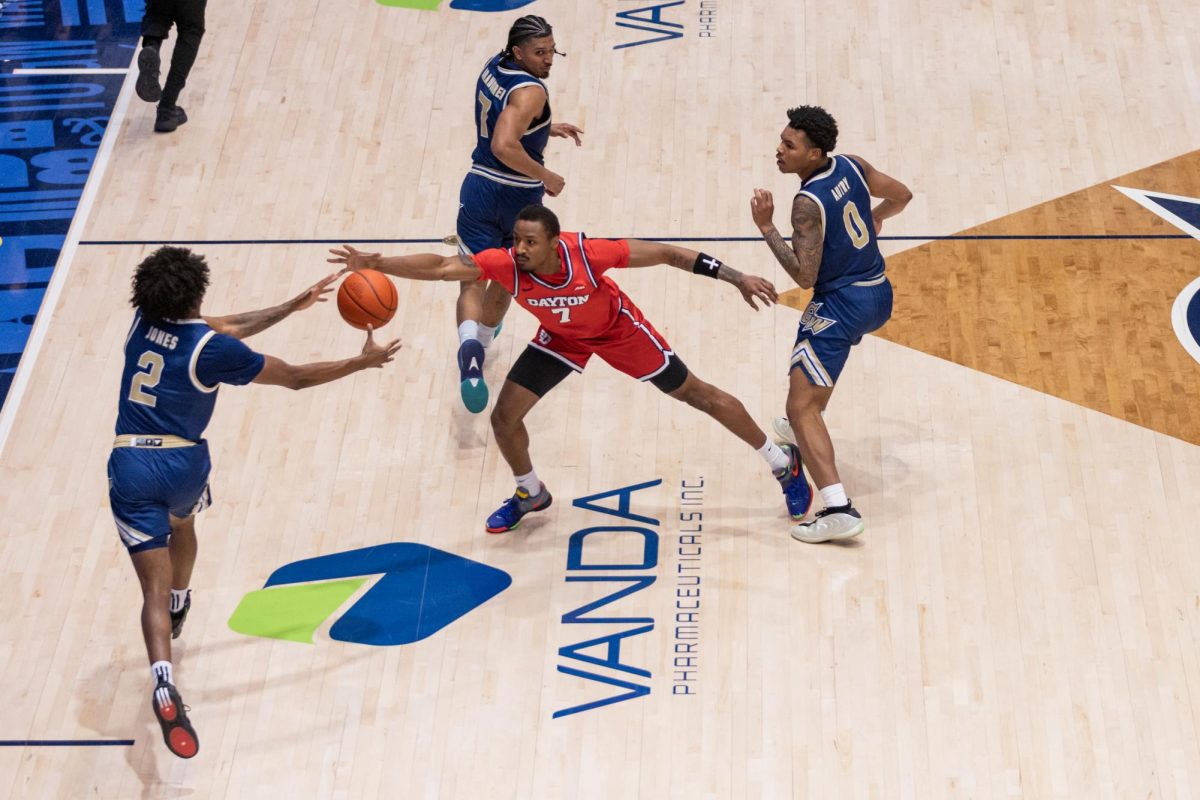
A Robbie Avlia 3-pointer sealed a GW road loss to nationally-ranked Saint Louis in January. An over-two-minute-long scoring drought allowed Duquesne to pull away late in early February. Tyrone Marshall Jr.’s game-winning layup attempt rimmed out against Dayton in the team’s penultimate home matchup.
It’s these examples, and several more, that led the team to a 17-14 regular season finish and ninth place in Atlantic 10 standings — five spots lower than their preseason slot, despite finishing top 100 nationally in KenPom and NET.
With the emotional ups and downs of the season and the team’s short trip to the National Invitational Tournament now in the rear-view mirror, Head Coach Chris Caputo said the year was “challenging” in many ways. But he still maintained the season marked significant steps up for his program as they made their second-consecutive postseason tournament and finished top 100 in several metrics.
“Overall, progress was made,” Caputo said. “It continues to be made. But I definitely think there were some challenges that we had to endure to get there this year, more than we would have anticipated.”
The challenges are still something Caputo is reckoning with. An injury to star forward Rafael Castro disrupted the team’s synergy on both ends of the court, while the team’s defensive efficiency ranked in the conference’s bottom half — though these are only two pieces to the puzzle of why the team lost so many close, winnable games.
Caputo said he doesn’t think the team’s penchant for losing close games is the symptom of one overarching problem as each tight loss was due to a different issue: inability to finish shots against Dayton, not being able to stop Murray State University’s scoring runs or letting up multiple open 3-pointers to Saint Louis’s star.
He points to the team’s NIT win against Utah Valley University as a time when the team was able to avoid another crushing defeat with smart, well-timed play close to the buzzer. Up 16 at the half, the Revs’ lead shrank to just 1 by the closing seconds, but they held on with tight defense and a clutch, game-saving block from Marshall.
“The one thing would be, and we were able to do it actually at Utah Valley, is you’re in this one-possession game and getting the stops that you needed, when you needed them,” Caputo said.
And despite a record that doesn’t reflect it, the team looked like one of the best in the conference at many points, with key wins over a juggernaut mid-major in the University of South Florida and a blowout over an A-10 contender in George Mason. Since entering the head-coach role in 2022, Caputo has attempted to reverse the program’s Murphy’s Law recent history that featured scandal, inability to hold onto top players and a revolving door at head coach that anchored them at the bottom of the conference.
Although the team is yet to finish near the top of the conference or make a serious push to the NCAA Tournament, this year’s squad finished in the top 100 in KenPom for the first time since 2016 and had their best NET finish since the metric was introduced in 2018 — marks that Caputo is proud of.
“First time we’ve been in the top 100 of the NET ever,” Caputo said. “First time we’ve been in the top 100 in KenPom in 10 years. First time we made the NIT in 10 years. First win in the NIT in 10 years. Back-to-back postseasons. All those things are, those are real compliments for our group.”
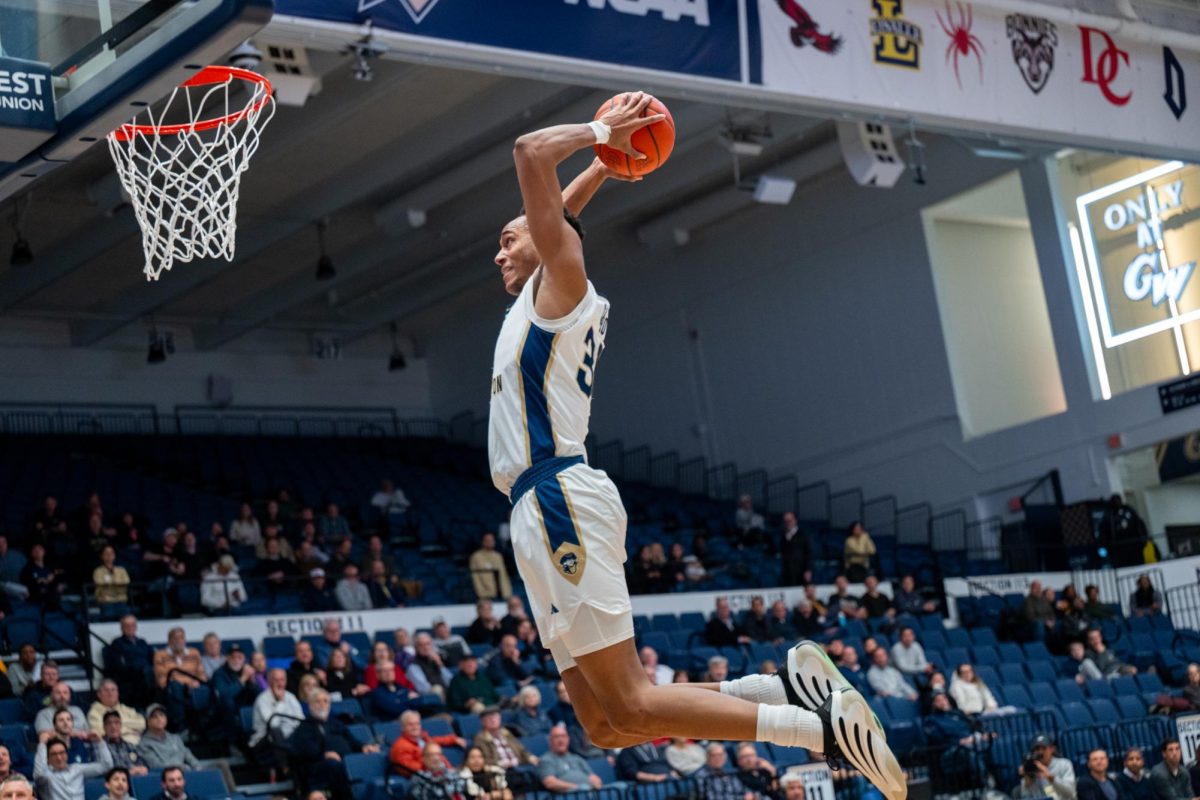
On the personnel side, Caputo has a promising story in his development of Castro, who entered the team as an underplayed prospect from the Big East’s Providence College as someone who had serious skill but had yet to translate on an NCAA court. But in his two years at GW, Castro transformed into one of the best players in the conference and one of the best big men in the mid-majors, leading the team in points, rebounds, blocks and steals per game and earning All-Conference Second Team honors — though he was likely dinged from the first team after missing six games due to injury.
Castro, who Caputo said “may very well end up in the NBA,” is a success story that demonstrates the development and growth that is a dream scenario for programs like GW. But with Castro out of eligibility this year, the team’s on-court product will have to reshuffle. Additionally, multiple key contributors announced their entrances to the transfer portal: junior guard Trey Autry, junior guard Bubu Benjamin and redshirt junior forward Garrett Johnson. While Benjamin and Johnson provided positive sparks, they struggled to maintain playing time as the season continued, and their shooting splits dipped.
Autry, however, provided dependability as he started every game for the Revs this season and was the team’s third-leading scorer with an average of 11.0 points per game. Despite inconsistencies, he had the chance to be a four-year contributor to the program — a rarity in today’s game and something a starter had yet to do under Caputo.
Caputo said he met with each player on the team after the season ended to examine different options based on how he and his staff view the player’s future compared to the player’s vision. He said that the players who’ve entered the portal have helped improve his program and make a positive impact.
“We wish those guys the best, those guys helped us win more games than we’ve won around here in quite some time,” Caputo said. “Make a step forward for the program, make the postseason twice, in Trey’s case.”
Looking to the offseason, Caputo said he anticipates being “competitive” in resources, similar to last year’s level that allowed the team to take big swings both in the portal and in retention of key players like Castro but stressed that it won’t be as much as other team’s rumored figures like that of A-10 rival Saint Louis at more than $10 million.
“You see some of the stuff that you read on the internet about, where people might be, and we’re not going to be anywhere near some of those numbers, but I do think we’ll be very competitive within the league,” Caputo said. “Which is great.”
The team will look to retain several key players from this year’s team, including junior guard Jean Aranguren, who found his footing in February after a quiet start to the year, notching the team’s second triple-double in program history. Additionally, Caputo said he anticipates graduate student forward Luke Hunger, who scored at least 20 points in four straight games during Castro’s absence, who has one year of eligibility remaining, to stay.
“We’re hoping that he will be [back],” Caputo said. “We’re working through that. Really encouraged by not just the way he played in [Castro’s] absence, but his leadership and some of the things he brought to the team, I think were super positive.”
The team will also, of course, look to the transfer portal once again. In the past, Caputo has searched a number of different wells for prospects: budding stars in lesser conferences, like Aranguren, promising players from the A-10 or similar level conferences, like guard Tre Dinkins, or role players from power conference teams who never caught on, like Castro. Caputo says he looks at data and analytics to assess players’ values and find their worth “in terms of dollars and cents” while balancing team fit. He said last year’s process resulted in a team with a top offense but defensive struggles.
“Obviously this year’s team was at one point a historically good offensive team, and that that team worked offensively together — maybe not quite as well defensively as we would have liked — but offensively together in a positive way,” Caputo said. “So trying to build a team that fits and complements each other while also having enough defensive talent to play well.”
With two A-10 teams in Saint Louis and VCU making noise in March Madness, Caputo faces the challenge of constructing a roster that doesn’t just score points but can stand toe-to-toe with some of the nation’s best. The transfer portal, analytics and an eye for under-the-radar talent will be his tools, but whether they translate into a team that can dominate both ends of the floor remains the story to watch.