
As the University’s cost of attendance for undergraduates without aid nears $100,000 next academic year, students say the GW experience and quality of education are not worth the price tag.
Officials late last month announced that tuition will rise by 3 percent for the 2026-27 academic year, bringing the total cost of attendance to $95,155 for new undergraduate students and $98,165 for returning students. More than 50 current undergraduates said the resources GW offers are not sufficient relative to the cost of their education, warning officials that their continued lack of investment will turn students away from attending the University.
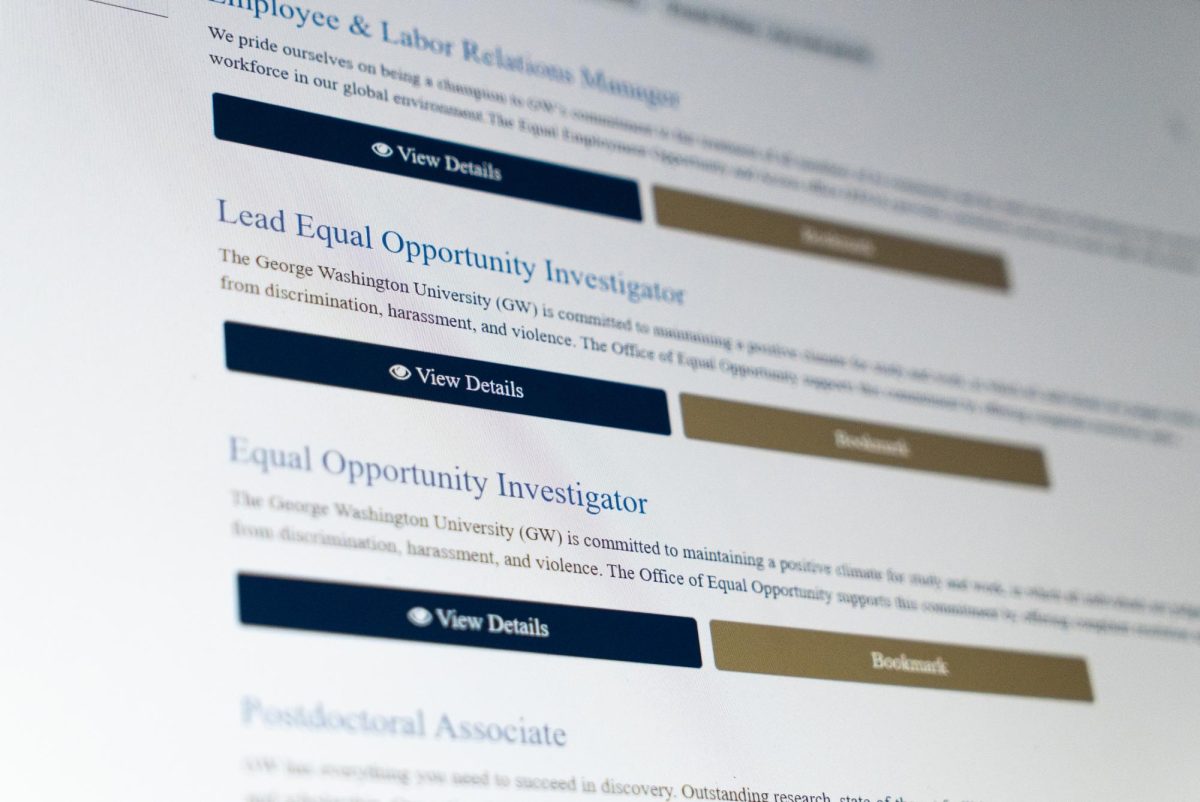
During the 2025-26 academic year, officials cut an array of student resources to combat a yearslong budget deficit, including halting a School of Business career mentorship program, canceling some “highly used” journal subscriptions and discontinuing weekend operations for District House and University Student Center dining venues.
Students urged officials to restore funding to resources they cut this academic year and increase support for underfunded services — like facilities, dining, research opportunities and academic advising — in response to the tuition hike, aiming to improve academic quality and student life.
“They’ve been cutting and cutting and cutting all year, and then they turn around and say, ‘Hey, you got to pay more now,’” sophomore Benjamin Rush said. “It’s not great. I’m gonna be completely honest, it feels pretty abusive.”
University spokesperson Julia Garbitt said officials acknowledge budget cuts have impacted some services, but the University has worked “diligently” over the past several months to strengthen its financial position and minimize direct community impacts. She said officials’ decisions to reduce services are informed by data about each services’ usage, and officials will continue to work with departments and units to minimize impacts on services.
Garbitt said GW is utilizing expanded need-based aid, multi-year scholarship guarantees and income-based tuition-support programs to provide greater predictability and financial stability for students and families. She said GW’s financial plan aims to provide affordability for students — through measures like financial aid as officials outlined in the strategic framework they launched in October — though operating the University is costly due to its more than 24,000 students, location in an expensive metropolitan area and smaller endowment compared to its peers.
Garbitt said a “significant portion” of the proceeds from GW’s $427 million sale of its Virginia campus in February will be used to create a new endowment to advance GW’s strategic framework priorities, like in research, teaching missions and financial aid. University President Ellen Granberg said at the March Faculty Senate meeting the proceeds from the sale will get officials a quarter of the way toward achieving their goal of meeting the full demonstrated financial need of residential undergraduates while also working on a fundraising campaign to help match what’s currently in that endowment.
Seventy percent of GW undergraduate students in 2023-24 academic year received financial aid, with the average grant or scholarship amounts awarded sitting at $37,813, according to the Integrated Postsecondary Education Data System.
Hannah De Lange, a junior majoring in criminal justice and English, said the tuition increase was “disheartening” because she thinks GW’s quality of education has been decreasing, pointing to how she’s seen a decline in the number of humanities classes officials offer each semester. She said GW’s cost of attendance is “really difficult” to conceptualize because the University ranked No. 59 in the 2026 U.S. News & World Report, though students are paying more than most of the Ivy League universities.
Garbitt said GW’s rankings don’t “fully capture” the advantages of studying in the District or the opportunities available to students, but they are an “important measure” in determining the value the University provides students.
“I definitely feel like for what I’m paying, I’m not getting as much out of it, like it’s such a substantial amount of money, and I don’t really see tangible effects,” De Lange said.
Ella Wentzel, a sophomore studying biology, said GW’s high price tag is “most certainly” not worth almost $100,000, noting that she believes the University lacks sufficient advising services.
Wentzel said she receives scholarship money from the University, but officials haven’t previously increased her scholarship amount when tuition rose, making it a struggle for her to keep up with GW’s high cost of attendance.
Sehrin Hossain, a senior majoring in environmental studies, said she is graduating early because as the University increased tuition each year, she found herself unwilling to pay a full four years or study abroad.
She said rising tuition should be matched by improvements in academic rigor and access to resources — areas she feels are currently lacking — like better maintained facilities, a more efficient class registration process and a greater availability of required courses, so students can fulfill their requirements on time.
“I would like for future generations of GW students to reap the benefits out of their tuition without having to literally be in debt and have so much weight on their shoulders upon graduation to pay off this debt,” Hossain said.
Aryana Morales, a sophomore majoring in Latin American studies, said officials should use a greater percentage of tuition money to increase research resources for undergraduates and opportunities for students given GW’s position as a top-tier research University. She said the University has instead cut departmental resources, like research opportunities for undergraduates studying Latin America and Hemispheric Studies in the Elliott School of International Affairs, making her feel like many students aren’t getting enough for what they pay to attend GW.
“The Latin America research department here is being actively gutted,” Morales said. “So I definitely don’t feel great knowing there are people paying more because of this tuition increase.”
GW first announced plans in late April to cut the University’s budget by 3 percent for fiscal year 2026 to combat “difficult and immediate budget challenges,” like a structural deficit and higher-education “headwinds.” In January, officials foreshadowed additional budget cuts for FY2027 when they instructed school and unit leaders to prepare budget-contingency plans as international-student applications lagged.
Morales said the University should better support students by expanding research opportunities and funding for existing student-research programs, like Elliott’s Dean’s Scholars Program. She said GW should also grow their exchange programs with other institutions to increase GW students’ abroad experiences and improving GW’s Student Health Center due to lack of available appointments.
“We have the opportunity, obviously, with this tuition cost to add more resources, build up students more in their experiences here, and we actively don’t,” Morales said. “It just kind of leaves a bad mark on us.”
Officials have raised GW’s tuition every year since 2019, when the Board of Trustees ended the University’s long-standing fixed-tuition policy, which guaranteed students an unchanged rate for up to 10 consecutive semesters. Since then, officials raised GW’s tuition by 2.1 percent in 2021, 3.9 percent in 2022, 4.2 percent in 2023, 4.2 percent in 2024 and 3.5 percent in 2025, making the 3 percent increase this year the lowest since 2021.