
Readers’ pick: Phillips Collection
It’s easy to see why tourists gravitate toward the ever-popular Smithsonian museums for a dose of history. With 17 institutions and more than 150 million objects, the Smithsonian dominates the cultural landscape. Yet a far more mysterious experience awaits at the O Museum in the Mansion, an eclectic labyrinth concealed behind 70 secret doors.
Blended into the historic row homes of Dupont Circle stands the O Museum in the Mansion, a four-story brick building spanning five houses with over 100 themed rooms and 80 hidden doors. Unlike the Smithsonian, O Street Museum invites visitors to explore freely, open drawers, finger through books and interact with the space however they please, offering a fully immersive experience.
Designed by Edward Clark, the architect for the U.S. Capitol, the mansion was originally built in 1892 to serve as a home for Clark and his brother, incorporating leftover tiles and wood from the Capitol to add a distinctive D.C. touch to the building — an identity the dwelling held until 1980 when author H.H. Leonards purchased the building and founded the museum. Over the next 40 years, the O Street Museum developed into a site for social and cultural enrichment in the District, even hosting significant figures like civil rights icon Rosa Parks, who lived in a room in the museum from 1994-2004.
On my second visit to the museum two weeks ago, I rang the doorbell and was promptly ushered inside by a staff member. Walking through the foyer in the main room, I was immediately mesmerized by the sheer number of items on display — including the framed Michael Jordan jerseys and Elvis Presley themed pinball machines. As I made my way up the massive center wood staircase, I could see that every inch of the museum is filled with artwork and bookshelves, down to the smallest nook where cast iron English guard figurines are lined up in formation.
The hidden doors are what the O Street Museum is famous for, with over 70 secret doors of all sizes — one less than a foot wide, which I had to shimmy through to reach the next themed room. Exploring the museum feels like a scavenger hunt, where every detail, from an exposed hinge to an oddly placed mirror, might be a clue to a new passage.
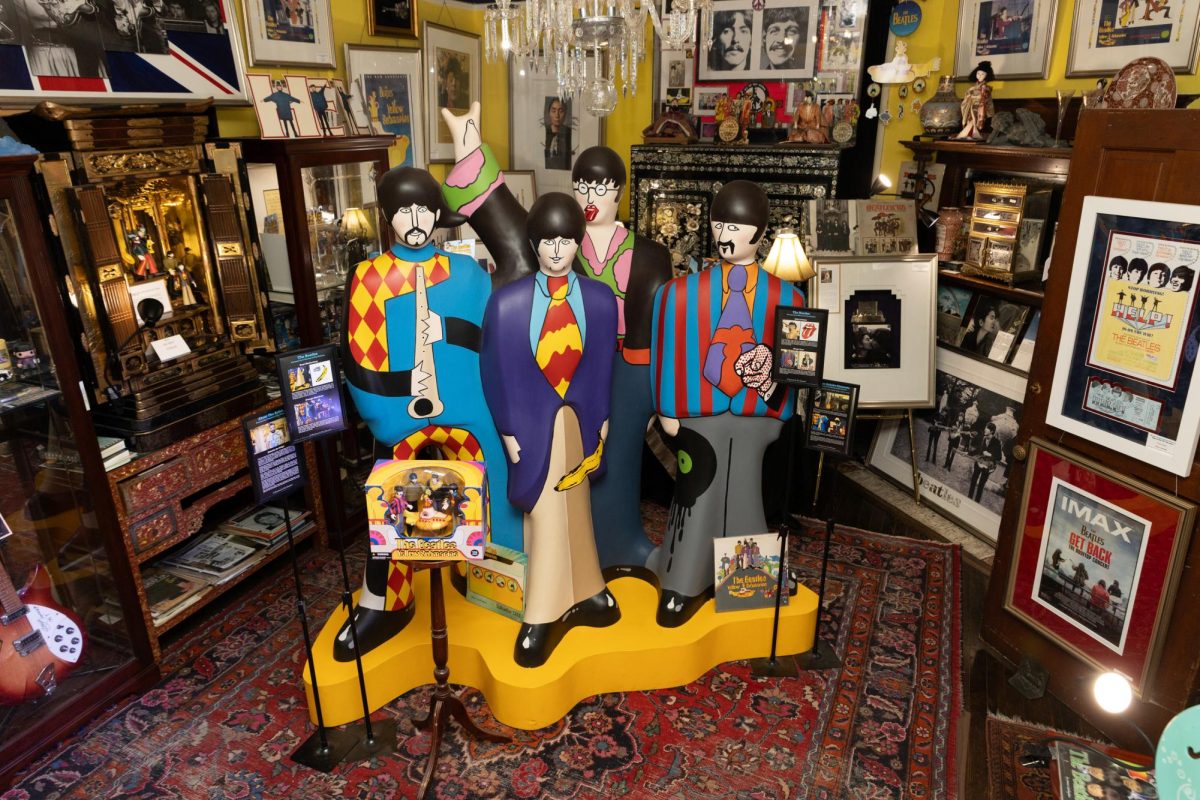
Wandering the winding hallways and stairs, each room offered a completely different experience. With themed spaces ranging from the Beatles and Marvel to NASCAR and Mickey Mouse, there’s truly something to discover for every visitor.
What makes the O Street Museum even more unconventional is that, unlike the Smithsonian museums where items are carefully guarded behind glass cases and cameras, here almost everything is for sale. From the paintings on the walls to signed guitars from some of the biggest rock stars of the 1980s, every item has a price tag and could very well be yours.
Walking through each of the rooms, the exhibits may seem eclectic to the typical D.C. tourist seeking national archives or taxidermied animals at the Natural History Museum. But the O Street Museum offers something for everyone, and a sense of discovery that lingers long after you leave.