
Readers’ pick: Adam Dean
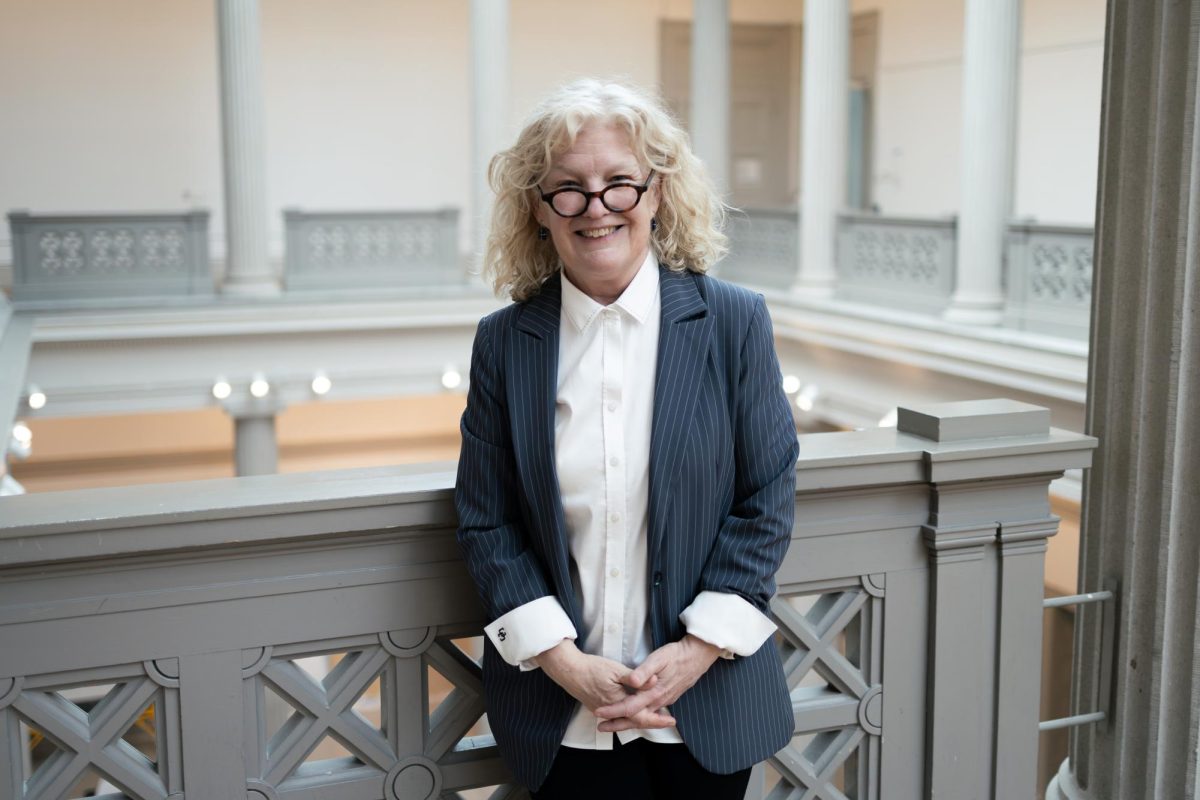
From the birth of rock ‘n’ roll to the “summer of soul,” Corcoran School of the Arts & Design Director Lauren Onkey guides her students through the rhythms of history with the precision of a conductor and the curiosity of a lifelong fan.
In Onkey‘s classroom, every chord, note and beat becomes a lens to explore the social, cultural and technological forces that shaped the music we know today. Though not a musician herself, Onkey, who is also a professor of music, became “obsessively” drawn to rock and soul as a teenager, immersing herself in the sounds of Bruce Springsteen and Stevie Wonder while scouring library shelves to understand why music matters and why it moves the world.
That passion followed her to graduate school from the University of Illinois in the late 1980s, where she added music history to her English research. Over time, she used the broader study of music culture to shape her teaching philosophy: exploring music not just as sound but as a reflection of the people, history and society that created it.
“I always think of [music] as a constellation between the art, the people who make it, the people who listen to it, larger social and cultural issues, issues about technology and business and how it’s made,” Onkey said.
Onkey began her career in academia at Ball State University, where she served as an professor of English from 1994 to 2008. She then moved to lead the Rock and Roll Hall of Fame’s education and programming division, producing Aretha Franklin’s American Music Masters tribute in 2011 in that role. After becoming the founding dean at the Jack Joseph and Morton Mandel Humanities Center at Cuyahoga Community College, Onkey said she missed working with music and moved to NPR Music, where she worked as senior director, overseeing the team responsible for programs like Tiny Desk, Jazz Night in America and All Songs Considered before taking on the Corcoran director role in July 2021.
Instead of teaching traditional music courses, like theory or composition, Onkey offers classes that explore the cultural and historical contexts of music. Courses such as The Big Bang: Race, Genre and the Birth of Rock and Roll, 1949-1963 and Music in the U.S. examine topics like the rise of modern music festivals and the cultural impact of The Beatles. Her syllabus highlights specific historical moments each week — from the Harlem Cultural Festival, known as “Black Woodstock” in 1969, to the evolution of 1950s girl groups — showing how popular songs are often rooted in societal events. By connecting music to history, Onkey sparks meaningful discussions among her students about how social, racial and cultural dynamics shape the songs we know and love.
“The through line has always been, how do you create environments and platforms for people to experience the music that they are interested in or curious about,” Onkey said about her career in music. “And how can you use those platforms for people to converse and think about what it means for them.”
Onkey said her distinctive class topics provide an unparalleled experience for students through projects like creating a Spotify playlist to tell the story of the history of rock ‘n’ roll, where she tasks them with sequencing songs that follow a theme through the music, exploring the genre’s development.
“What I was looking for there was for them to be able to exhibit that they had absorbed the historical narrative but also that to recognize there are a lot of different ways to this history,” she said.
In the classroom, Onkey said she prioritizes the use of primary sources in her classes, like music reviews in newspapers or performance videos from the time period when songs or albums were released, allowing students to directly engage with history, seeing and analyzing the materials for themselves.
“It’s so easy to turn history into a series of cliches, ‘and after this moment, everyone loved this thing,'” Onkey said. And if you can actually go back and find commercials from the day or TV excerpts, we learn so much,” Onkey said.
No matter a student’s music background, Onkey said she encourages everyone to engage with the music, dissecting each and every note and bar, understanding the story of a song.
As Onkey teaches history surrounding music and the effects it has on populations, she said she is happy that Corcoran invites these serious discussions to encourage learning. In the classroom, she said she encourages students to dig deeper into history and understand each song, dissecting each and every note and bar.
“We just have to continue to fight and be vigilant about having spaces for creative expression that might make us uncomfortable, that we might love, that we might not understand, that’s really what the Corcoran is and what will continue to be,” Onkey said.