

Interim Provost John Lach knew his time in the role would be limited, but he said he was excited at the opportunity to involve himself in initiatives that will shape the University’s direction long after his tenure, tasks he said he was prepared to start on day one.
Lach, who assumed the role of interim provost in July 2025 after former Provost Chris Bracey’s departure, said in a sit-down interview with The Hatchet that while he never had the intention of seeking the permanent position, he worked tirelessly to make progress on key University initiatives in his sole year in office, like the strategic framework’s rollout, budget model revision and transparency regarding the University’s diversity, equity and inclusion policies. As his tenure as provost ends on June 30, Lach said he recognizes community pushback claiming officials’ budget decisions have impacted GW’s academic enterprise and that officials could have been more clear in explaining the reasoning behind their decisions at times, but he always aimed to center his policies in the University’s mission and in discussions with community members.
“This is a really big year for the University, big year for higher education in general, and to have a hand and steering the University through that, through some really important things was just a great opportunity,” Lach said.
Lach said he feels officials have done “really well” in engaging community members in University-wide decisions, particularly governing bodies like the Faculty Senate, Student Government Association and Staff Council. Though, he said officials are working to broaden their communication outreach to articulate officials’ rationale behind decisions, pointing to the statement he released last month with Associate Vice Provost for Community, Culture and Inclusion Jordan Shelby West that reaffirmed GW’s commitment to DEI and announced officials’ revision of its diversity and inclusion statement.
“The goal, of course, in the end, is that I don’t expect everybody to agree with every decision I make, but I hope that they feel like they’ve been heard during the process, and that they can understand and appreciate why I made the decision that I did, even if they would have preferred a different decision or made a different decision themselves,” Lach said.
During his time as interim provost, Lach has been involved with making several changes to the University’s DEI approach, first teasing officials were considering renaming its Diversity Summit to the Staff Council in November to broaden the event’s focus. Most recently, Lach earlier this month announced the dissolution of Office of Diversity, Equity and Community Engagement, which came about a month after he and West reaffirmed GW’s commitment to DEI.
Lach said he understands potential mixed messaging with officials’ statements reaffirming their commitment to DEI, while simultaneously removing terms like “diversity” from the name of the rebranded Community Summit and the Office of Community, Culture and Inclusion, which Lach announced earlier this month would replace ODECE. But he said the descriptions of these offices and programs still include words like “diversity,” “equity” and “inclusion” though their new names are a “better representation” of officials’ desire to create community and enable people from diverse backgrounds, perspectives and experiences to come together and thrive at GW.
“You’ll look at the descriptions of both of those, and those words, diversity, equity and inclusion, are all still there, but I do think that the name of OCCI is now a better representation of, well, ‘What are we actually doing and why?'” Lach said.
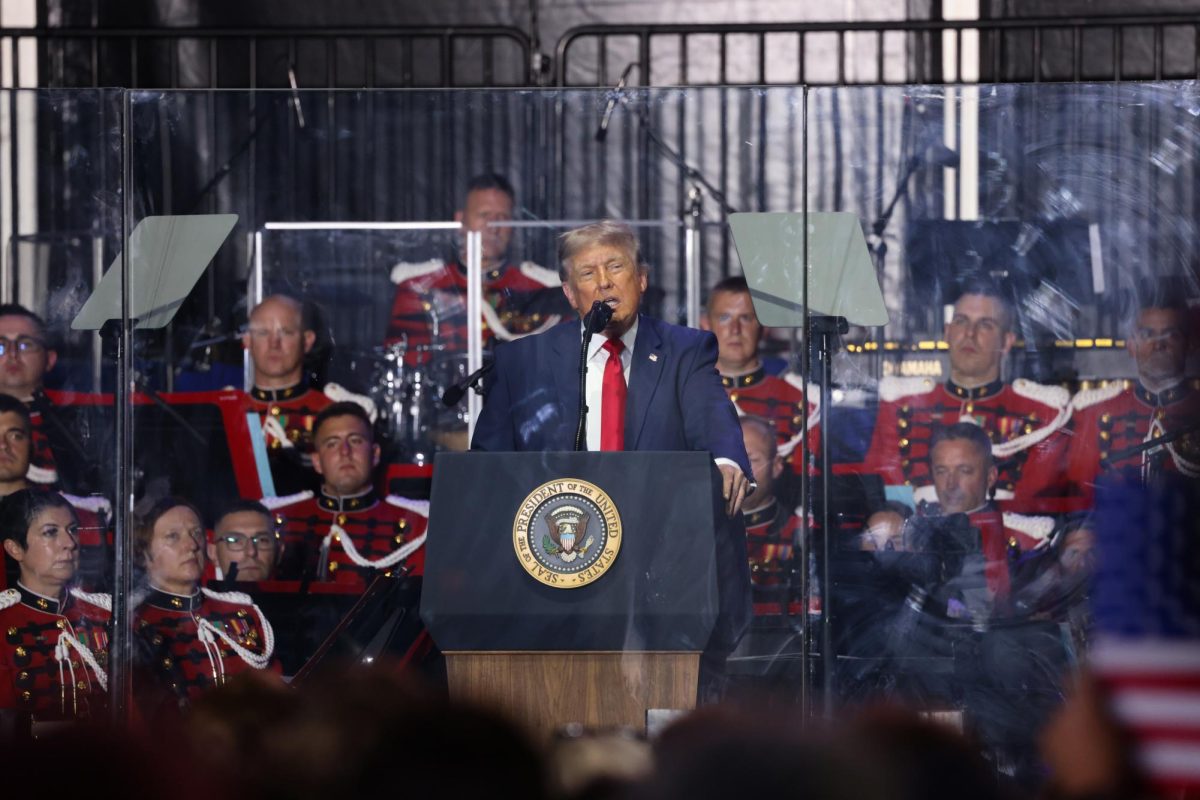
Lach said federal pressures did not factor into officials’ decision to remove the word “diversity” from specific events and offices. He said President Donald Trump’s administration is focused on “illegal DEI,” which relates to the Supreme Court’s 2023 decision to ban race as a factor in college admissions, but there is “nothing illegal” about DEI in general, which is why he felt confident putting out the statement reaffirming GW’s commitment to it.
Trump over the last year has challenged DEI policies and practices nationwide, including signing an executive order on his second day in office calling for the end of DEI practices at, among other places, universities that receive federal funding, and threatening to revoke funding from universities over their DEI practices. The Justice Department in January launched a Title VI compliance review of DEI in GW’s admissions practices and “related matters,” which officials said they will cooperate with and demonstrate that their admissions practices comply with federal civil rights law.
Lach said officials are ensuring they are following the law of not excluding people from certain opportunities, resources and experiences based on protected characteristics while also promoting DEI on campus. He said when considering the naming of offices and programs as well as the University’s messaging on DEI, he has consulted with stakeholders to help officials accurately define the work the University is doing to make GW more inclusive.
“Diversity itself is not the end goal,” Lach said. “It’s the creating that community, culture and inclusive excellence that enables people from lots of diverse backgrounds and perspectives and experiences that come together and thrive here.”
Students in November said they felt GW had subtly rolled back DEI initiatives since Trump launched a national crackdown on campus DEI, which coupled with officials omitting diversity terminology in messaging, indicated the University is yielding to federal pressure.
Lach said to combat community concerns he regularly engages with students, like through his “Pizza with the Provost” events, to hear from students directly. He said his first “Pizza with the Provost” event took place at the Multicultural Student Services Center because he wanted to hear from students there “right out of the gate” about their experiences at GW.
“Everyone can feel marginalized or excluded at different times, and what are the things that we need to do to make sure that everyone is being brought in instead of pushed out?” Lach said. “So it’s that inclusive excellence that I really do think is critical for our University community to thrive.”
Lach said his two major goals coming into his tenure were to launch the strategic framework and the University’s new budget model, and that he is “excited” with officials’ progress on both of those initiatives. He said financial pressures specific to GW, like enrollment declines among international and graduate students, have forced officials to make “some difficult choices,” though he has made decisions on what to cut from the budget while taking into consideration the University’s overall mission and their priorities outlined in the strategic framework.
Officials announced in April 2025 they would slash the University’s budget by 3 percent in FY2026, causing officials to implement a hiring freeze in July and lay off 43 staff members in September.
“It’s a really challenging process,” Lach said. “It’s the kind of thing that keeps me up at night. Those decisions are never easy, but we are making those decisions with the core mission as the priority.”
Faculty senators have called on officials to provide greater transparency around the process for budget-cut decisions and the broader impact those moves could have on GW’s academic mission as officials foreshadowed budget cuts for a second year in a row. University President Ellen Granberg said in a sit-down interview last month officials would have to conduct additional budget cuts in fiscal year 2027, which she said are necessary to achieve broader goals in the strategic framework, like improving student financial aid and strengthening career and academic advising.
Lach said it’s “not surprising” when he hears from students or faculty that their experience or service level has changed, though he takes their experiences “to heart” as feedback. He added that he has prioritized being accessible to students in order to hear about their experiences and what they want officials to focus on addressing.
In response to questions about whether he feels budget cuts have hindered GW’s academic mission, Lach said the University’s mission statement — which officials updated in April and said reflects GW’s institutional priorities and community voices — is a “touchstone” to guide officials’ “hard decisions,” reminding them of GW’s core mission to stay true to its institutional priorities.
Still, Lach said he’s better able to engage with students, faculty and staff and academic programs on a deeper level as dean of the School of Engineering & Applied Science — something he said he’s “always loved” doing — and he is eager to return to that role for next academic year.
Permanent provost or president roles aren’t out of the picture, though, Lach said. He said there may be some day he would be interested in those roles, but he said he is “not done” being a dean yet.
“Something that I was doing throughout the year is something that I have always encouraged my students to do, is to pay attention to what makes your heart sing,” Lach said. “What are the things that really make you happy, that make you feel really fulfilled.”
Six faculty senators said they’ve admired Lach’s leadership over the past year, describing him as a provost who always listened and took their feedback into consideration. They said while they will miss Lach’s leadership, they are excited to welcome Edward Balleisen as the University’s next provost, who will assume the role July 1.
Tarek El-Ghazawi, a faculty senator and chair of the electrical and computer engineering department in SEAS, said Lach is an inclusive and open-minded leader, qualities that positioned him well in the provost role. He added that Lach was the right person to lead the University during a critical period at GW because of his open and compassionate nature.
“He makes a lot of tough decisions, but he’s really always compassionate and clear, and is really willing to listen,” El-Ghazawi said. “I have seen that in the school. I’ve seen that very well in the bigger picture as well.”
Former faculty senator Scott White said Lach did an “exceptional job” serving in the interim role because of his thoughtful and effective leadership while navigating complex issues. He added that GW was fortunate he stepped into the role during the difficult time for higher education and he appreciated Lach’s professionalism, transparency and commitment to the University.
“His leadership helped provide stability and direction during a difficult time and I am sincerely grateful for his service and dedication to GW,” White said in an email.
The Faculty Senate unanimously passed a resolution at their Friday meeting in appreciation of Lach’s leadership. It said Lach over the last year displayed transparency, kindness and “good humor” while steering the University through difficult financial times, and that he earned the trust of community members because of his transparent and collaborative leadership style.
Granberg at the meeting Friday thanked Lach for taking on the role, where she said he was flexible and tirelessly advocated for and engaged community members in his decision-making. She said Lach made the “most of every second” of his time as provost and accomplished a lot of “real work,” like launching the strategic framework, developing and implementing a new mission statement and reimagining GW’s Community Summit.
“What stands out to me the most, though, is his unfailing positivity and good humor,” Granberg said. “Whatever the ask, he looked for ways to make it happen and to motivate and bring along the people around him.”
Jenna Lee contributed reporting.