
Updated: April 20, 2026, at 12:03 p.m.
GW will cut expenses for the second fiscal year in a row as the University bears the brunt of enrollment declines and a structural budget deficit, officials said at Friday’s Faculty Senate meeting.
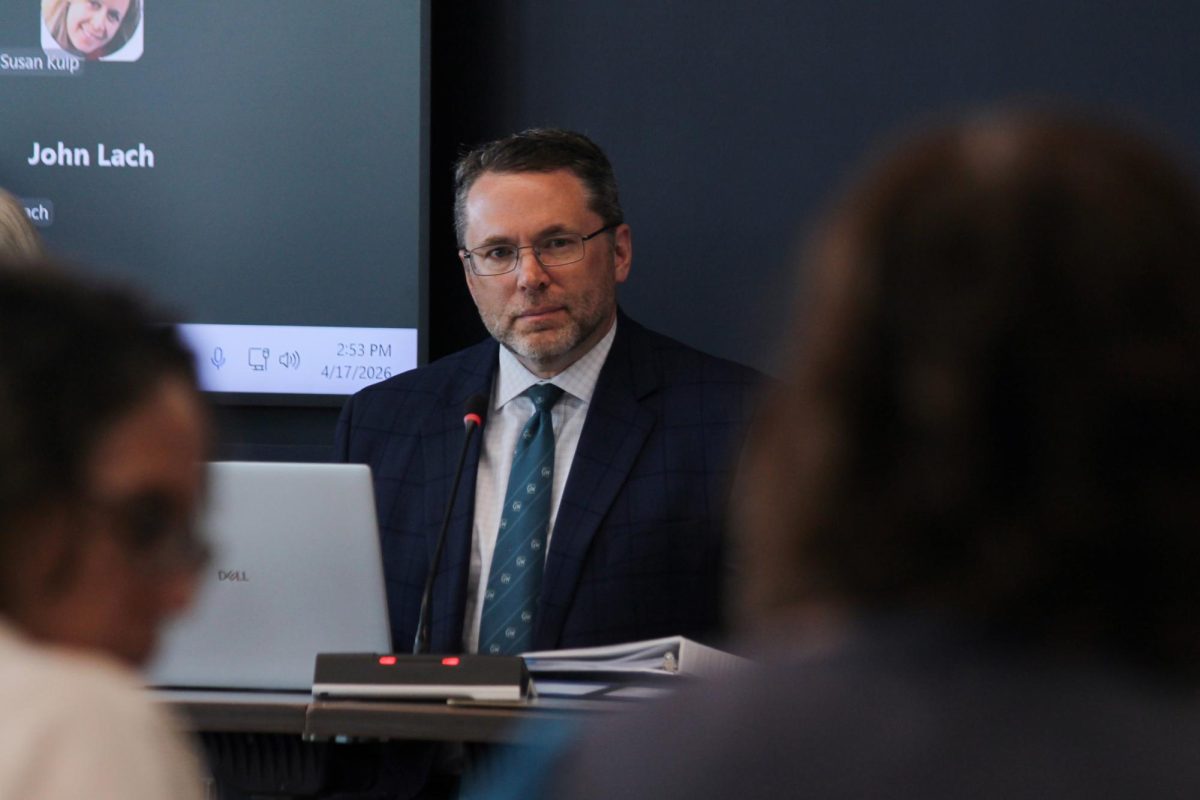
Interim Provost John Lach told senators that officials gave deans their “margin targets” for FY2027 and directed them to engage students, staff and faculty, where appropriate, about potential expense cuts ahead of the Board of Trustees’ May approval of the FY2027 budget. He said budget projections remain a “moving target” and that officials’ January directive to model 5, 10 and 15 percent cuts was only to “get ideas on the table” and did not reflect the final budgets schools would be operating under.
The looming cuts follow the 3 percent reductions officials made to the FY2026 budget — which resulted in the University laying off 43 staff members, implementing a hiring freeze and making significant cuts to student services — to address a structural deficit.
Lach’s statement marks the first time officials confirmed they would make cuts in FY2027 after officials teased reductions in January by instructing school and unit leaders to craft contingency plans. University President Ellen Granberg said in January that the directive, led jointly by Lach and Chief Financial Officer Bruno Fernandes, would help officials plan ahead if international application rates continued to lag amid President Donald Trump’s travel bans and visa policy changes as GW’s preliminary applicant data indicated.
Lach at the Friday meeting said GW is continuing to see the impacts of declining enrollment in “many programs,” and the trend of the past few years has been “turbulent” as enrollment declines have continued, which required officials to set up contingencies for the upcoming fiscal year so they could make adjustments “late in the game” if they fail to meet revenue targets.
GW’s international student population fell by more than 10 percent in 2025 due to Trump-era visa restrictions, travel bans and changes to federal funding eligibility for certain graduate programs, resulting in a decline in revenue across schools as international students typically pay the full cost of attendance.
Granberg in January said the University had received about 50 percent of the total graduate applications officials expect for fall 2026, noting that international applications are down overall for both undergraduate and graduate programs, which she said could impact net tuition revenue in FY2027.
Faculty senators in February pressed officials for greater transparency around the budget-cut decision process and the broader impacts those moves could have on GW’s academic mission, and senators in January said deans needed to consult faculty before making decisions like potentially eliminating programs.
Lach said the margins targets officials gave to deans included instructions to engage faculty, staff and students in their school when making “key decisions” about budgets. Lach also said GW is using a “balanced” approach to preserve and enhance the University’s academic mission by cutting the central administration and nonacademic unit budgets.
Faculty Senator Jamie Cohen-Cole asked whether officials will evaluate deans on the accuracy of their budget forecasting, pointing out that they might be motivated to over-project their budgets in hopes of bolstering their academic resources. Cohen-Cole also said further budget reductions would cause a “major disruption” for students, since they are already enrolled in classes for the fall.
“Any cuts that would have happened needed to happen in February, not in May or June or July, if our students are going to be able to get the educational experience they’re coming here and paying for,” Cohen-Cole said.
Lach said officials would not cancel courses with sufficient enrollment because they bring in revenue. He added that he has been working with Fernandes to increase collaboration between schools and the finance division in order to avoid unit leaders misrepresenting school revenues and expenses.
In the question portion after the Granberg’s report, senators Phil Wirtz, Angela Gore, Siobhan Rigg and Cohen-Cole rebuked officials’ final proposed Code of Student Conduct, backing students who have criticized officials’ move to remove students from conduct panels and narrow appeal pathways.
The revised code officials unveiled in November removed student-moderated conduct panels, moving to a single-adjudicator model where a student affairs administrator decides the outcome of a student’s case. Rather than appealing to a new student, faculty or staff panel as per the current code, students can only appeal their case decisions to another student affairs official in the proposed code — a move students said gives CESA staff broad control over student discipline and removes clarifying language about prohibited conduct.
Wirtz said officials should not remove students and faculty from student disciplinary hearings because limiting hearings to an “administrative” responsibility to determine outcomes makes the process unfair for students when administrators may be biased against them, like during the pro-Palestinian encampments.
Vice President for Student Affairs and Dean of Students Colette Coleman said officials created the new code of conduct based on community feedback to ensure a consistent process for anyone undergoing student conduct procedures. Coleman said officials will publish the finalized code within the next week, adding that she understands community members have advocated for officials to keep the panels, but didn’t comment further.
“We went through this process and really tried to be thoughtful about how and where we engage the voices of our students, and how do we keep a consistent process for everyone that’s going through a process with the Code of Student Conduct,” Coleman said.
In response to ongoing negotiations between University Health Services and GW over the future of the Medical Faculty Associates, former SMHS Dean and faculty senator Jeffrey Akman said “seismic” changes are coming to the School of Medicine and Health Sciences. He said former SMHS Dean Barbara Bass reduced a third of medical degree students in the school without faculty input, and the school will experience significant cuts to residency programs and faculty.
He said these changes, combined with GW’s ongoing negotiations between UHS to end GW’s financial support of the MFA, means officials will need to evaluate their vision for the school’s future.
“I’ve been here since 1977, it’ll be 50 years next year, in some capacity, and I’ve been through a lot of things here — nothing like this,” Akman said.
He encouraged Interim SMHS Dean and Vice President for Health Affairs Andrew Artenstein, who Granberg said began his role in March and will serve in the role for the next 18 to 24 months, to have discussions with faculty about their vision for the school and how SMHS fits into the University’s strategic framework.
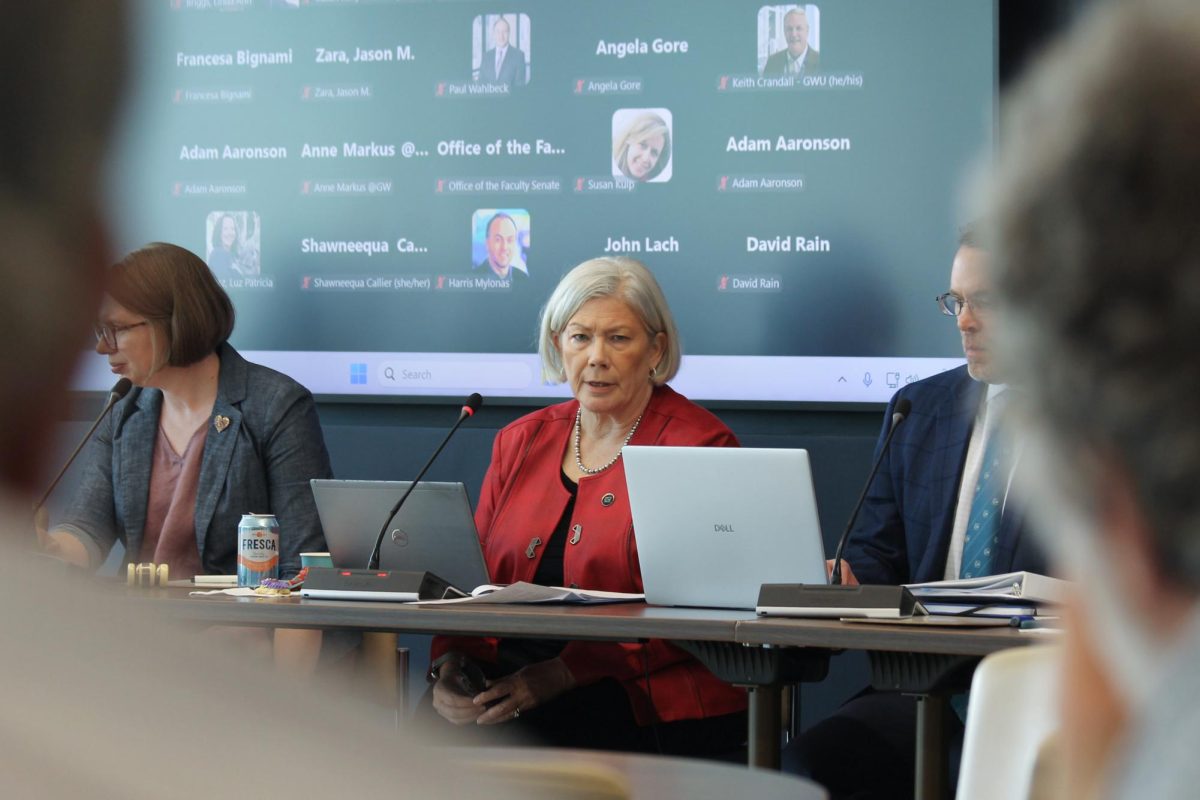
Granberg told Artenstein, who was present at the meeting, to think about Akman’s comments and talk to SMHS chairs and potentially the Faculty Senate when he thinks the “time is right” to formulate his vision for the school.
Assistant Vice President for Campus Development Adam Aaronson said officials plan to file the 2027 campus plan with D.C. by the end of 2026, and officials plan to release a campus plan proposal draft this summer, which will involve considering enrollment targets as GW weighs negotiating a higher enrollment cap.
The 2027 campus plan is GW’s long-range blueprint for how the Foggy Bottom campus can grow and change over the next 20 years.
“We’re going to be engaging both internally and externally with our neighbors to get feedback on the framework,” Aaronson said.
A 20-year agreement between the D.C. government and GW limits the University to 16,553 on-campus students, with GW filling 99.66 percent of those slots in 2016.
Faculty senator Jennifer Brinkerhoff asked how officials will consider the Virginia Science and Technology Campus in the plan following the sale of the campus to Amazon Data Services in February. Aaronson said officials are working to put together a group of community members to engage in feedback and planning.
“We are going to be kicking off a planning effort here for the Virginia campus in the coming weeks,” Aaronson said.
Granberg said there are “very few” initiatives that officials are implementing as a direct result of the VSTC sale, which she said include the “Revolutionary Promise“ and expenses associated with transitioning VSTC operations to D.C. Granberg and Fernandes did not have a financial metric for how much the University made off the sale after considering relocation expenses and the Revolutionary Promise.
The senate unanimously passed a resolution from Cohen-Cole, the co-chair of the education policy and technology committee, on artificial intelligence and educational technology. He said the resolution establishes EPT as a centralized unit for conversation surrounding institution-wide technology decisions, with standing committees handling decisions within their domain as appropriate.
“When technology shapes curricular decisions or research methods, faculty need the opportunity to provide structured input and to do so in a formal way,” Cohen-Cole said.
Arjun Srinivas, Gianna Jakubowski and Louisa Hannoucene contributed reporting.
This post has been updated to correct the following.
A previous version of this post stated Interim Provost John Lach confirmed FY2027 budget cuts at Friday’s meeting. Lach said there will be “expense reductions” across schools as well as expense cuts centrally, but did not specify whether those expense reductions were due to overall budget cuts. We regret this error.