
Updated April 6, at 6:40 p.m.
Academic integrity cases at the University have nearly doubled since spring 2023, driven in part by a rise in reports tied to artificial intelligence use, an official told the Student Government Association at a meeting Monday.
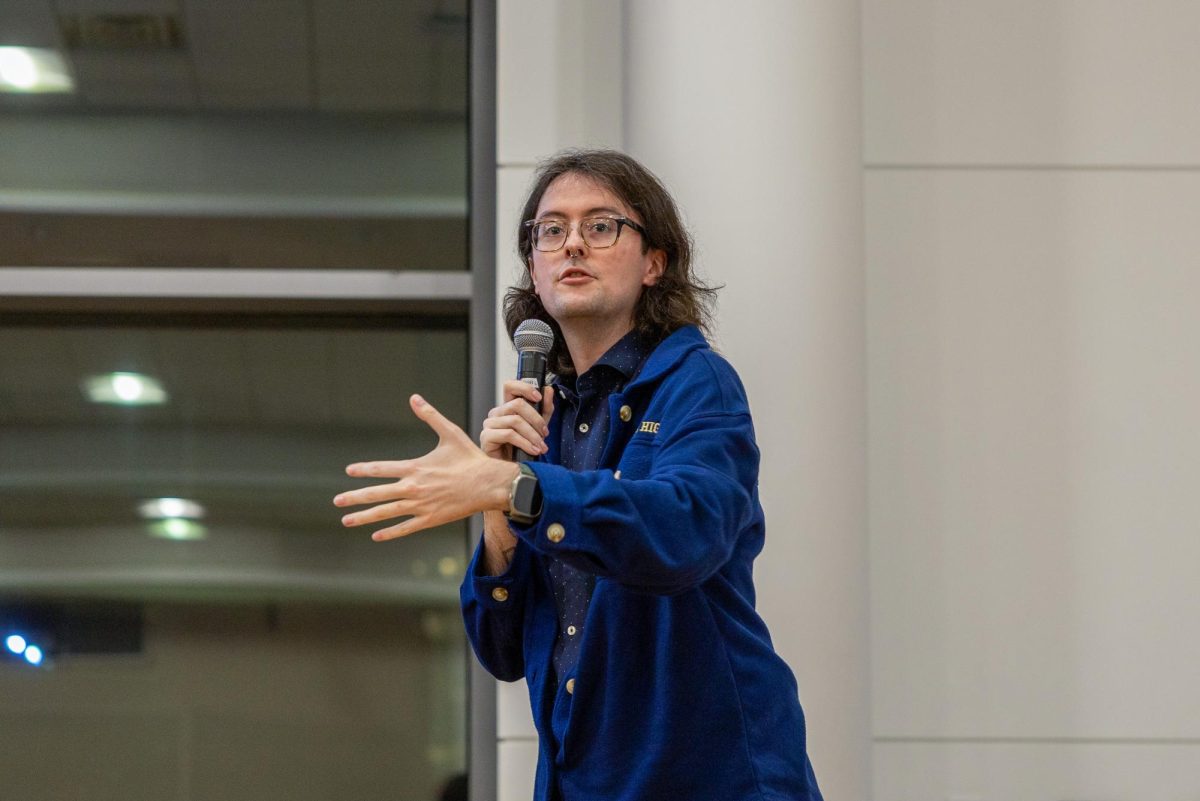
Charlie Drummond, the assistant director of Conflict Education & Student Accountability, presented data at the meeting showing academic integrity reports have jumped roughly 47 percent from spring 2023 to spring 2025 — from 70 to 103 — driven by what Drummond said was increased academic misconduct fueled by artificial intelligence usage. Drummond said the office is facing a shrinking pool of faculty panelists and a growing backlog of cases, with the number of faculty panelists dropping by about 30 percent since spring 2023 — from 33 to 23 — causing the number of cases spilling past the end of the semester to jump by about 63 percent since spring 2023.
“We want to resolve academic integrity cases within the semester that those reports are received, so that students can know kind of where they sit and how they’re moving through their academic progression,” Drummond said.
Josh Cutchens — the new CESA director after former director Christy Anthony departed last fall — joined Drummond at the meeting but did not present to senators. Cutchens started as the director of CESA last month, according to his LinkedIn profile, and previously served as the director of member experience and operations at the Association for Student Conduct Administration from May 2023 until he began his role at GW.
Cutchens previously served as assistant director of Title IX compliance and senior deputy Title IX coordinator at Appalachian State University from 2019 to 2023 and as the assistant director of the University of South Florida’s student rights and responsibilities office from 2016 to 2019, according to his profile.
The SGA and Faculty Senate, which have jurisdiction over changes to the Code of Academic Integrity, approved a temporary addendum to the code in spring 2024, lowering the number of required panelists from five to three in an effort to expedite academic integrity hearings, after a report from the University’s conduct office showed a 313 percent jump in cases from fall 2021 to fall 2023. Both bodies extended the policy again in spring 2025 due to the continually low number of faculty members interested in serving on panels and growing backlog of cases.
Drummond appeared before senators Monday to explain the data before asking them to support a resolution extending the addendum to the code for another academic year, a measure the SGA Senate plans to vote on at its April 13 meeting. Faculty senators already approved the extension for the next academic year during their February meeting.
Drummond attributed part of the backlog to more students choosing formal panel hearings over administrative resolutions — where students accept a faculty member’s proposed punishment — a pathway that allows students to contest a faculty member’s proposed sanction but takes longer to complete. They said the smaller panels have helped move cases along without compromising the integrity of the process, with the total number of cases still remaining higher than before common AI models like ChatGPT launched in 2022, but not continuing to increase.
They said in CESA’s most recent recruitment cycle, 60 faculty members indicated interest in serving on the University Integrity and Conduct Council — the pool from which panelists are drawn — but only 23 completed the required training, a drop-off rate of roughly 62 percent. Drummond said CESA is currently in its recruitment cycle for student panelists, which wraps up later this spring, but the office has recruited about 60 students so far, a number they said they aim to attract annually.
Faculty said in February officials should shorten training sessions and provide monetary incentives for serving on panels to increase participation and alleviate case backlogs. They said sitting on academic integrity panels places a large amount of work on faculty who choose to participate, with little reward in return.
If reauthorized, the addendum would require CESA to return before both the SGA Senate and the Faculty Senate before the spring 2027 semester with updated data on caseloads, resolution timelines and panelist participation, Drummond said.
SGA Vice President Liz Stoddard asked Drummond whether CESA might move to remove faculty and student panels from the academic integrity process altogether, similar to administrators’ proposal to remove student-involved conduct panels in a draft of the new Code of Student Conduct they unveiled in February. Drummond said CESA has not considered removing panels from the academic integrity process, but the code is “likely due” for a more comprehensive update.
“I don’t know what would be in that update, but that would be in consultation with SGA and Faculty Senate, who have a role in approving updates the code of academic integrity,” Drummond said.
Future changes to the code would also require approval from the Faculty Senate and SGA before taking effect.
Drummond said to reduce academic misconduct more broadly, administrators should not focus on a punitive approach and instead focus on understanding the reasons why students cheat or use AI tools to generate work, an initiative they said the office is working on. They said the office is working with faculty to identify “motivating factors” behind why students cheat and then develop support systems to discourage students from cheating in the future.
“Folks don’t wake up in the morning and say, ‘Today I’m going to cheat.’ There’s usually some kind of a motivating factor that leads to that,” Drummond said.
This post has been updated to correct the following.
A previous version of this piece quoted Assistant Director of Conflict Education & Student Accountability Charlie Drummond as saying “I don’t know what would be in that update, but that would be in consultation with SGA and Faculty Senate, who have a role in improving updates the code of academic integrity.”
The correct quote is “I don’t know what would be in that update, but that would be in consultation with SGA and Faculty Senate, who have a role in approving updates the code of academic integrity.” We regret this error.