

GW’s endowment climbed roughly $100 million to $2.8 billion in the last quarter of fiscal year 2025, trustees reported at their second public meeting since officials publicly disclosed a budget deficit that sparked cuts to staff, operations and resources over the last few months.
Chair of the Board’s Finance and Investment Committee Todd Klein said GW’s endowment rose from $2.7 to $2.8 billion between March 31 and the end of the fiscal year on June 30, despite GW incurring a $21.9 million operating deficit in the fiscal year. The trustees did not disclose the University’s current deficit, which Chief Financial Officer Bruno Fernandes said jumped another $2.1 million to $24 million between the end of FY2025 and sometime in July.
Klein attributed the deficit to revenue shortfalls, increased expenses — particularly non-cash expenses — and the Medical Faculty Associates’ related costs, which included GW loaning the medical enterprise over $98 million in FY2025.
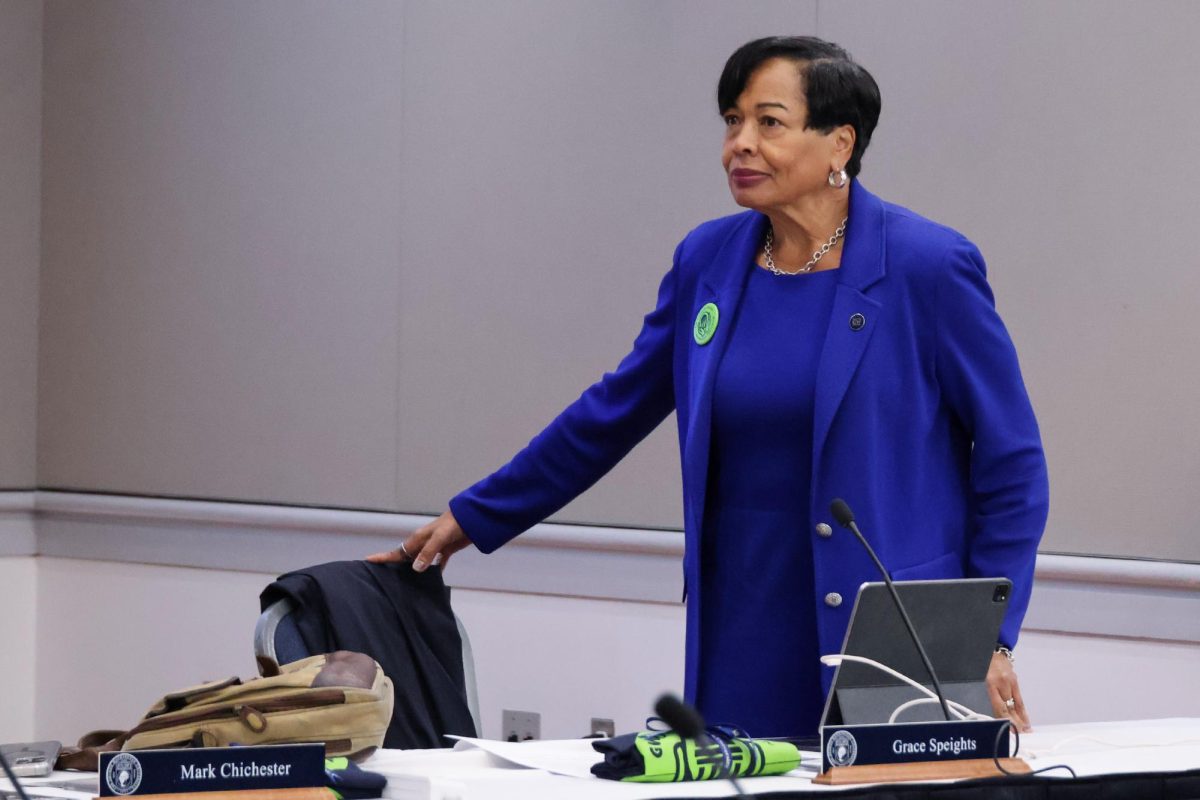
At the Board’s first meeting since GW rolled out FY2026 cuts — including the first round of mass layoffs since the COVID-19 pandemic — and indicated interest in a voluntary resolution agreement with the Department of Justice over findings that the University acted deliberately indifferent to campus antisemitism, neither Board Chair Grace Speights nor University President Ellen Granberg directly referenced the University-wide cuts or President Donald Trump’s attacks on higher education.
Speights said the University is undergoing “challenging times” but did not detail further what these are. She commended Granberg for her message to the community Wednesday, which outlined an unprecedented convergence of financial and political pressures confronting GW, along with Granberg’s commitment to putting the community first.
“These are challenging times, but your commitment to the principle of putting the GW community first is greatly appreciated by the entire Board of Trustees,” Speights said of Granberg.
Neither Speights nor Granberg mentioned the MFA’s persistent financial losses or its ongoing negotiations with University Health Services, GW Hospital’s owner and operator.
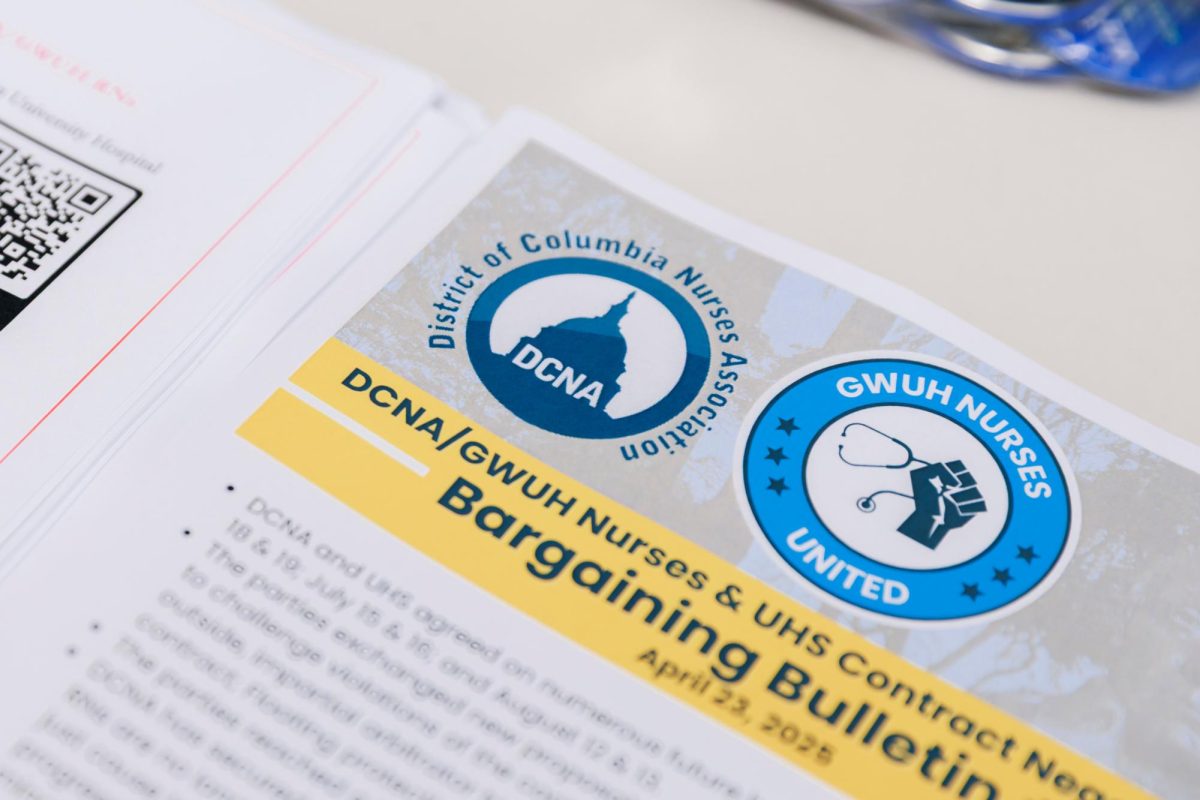
The MFA — a network of health care providers and faculty linked to GW’s medical school and hospital — lost $100 million in FY2025, pushing the medical enterprise’s debt to over $444 million owed to GW and other lenders. Officials announced earlier this month GW reached a preliminary agreement with Universal Health Services to co-fund the MFA as both parties negotiate a deal to end the University’s financial support for the medical enterprise.
Speights and Granberg also did not discuss Trump-era policies. Officials said in July that Trump’s range of federal policies — like the One Big Beautiful Bill Act, which terminated Grad Plus loans, and a travel ban in June that officials said would delay students’ return to campus — has played a role in the University’s current financial challenges.
Granberg reflected on the message she shared with the community Wednesday, which detailed GW’s current “moment of extraordinary complexity,” adding that officials must put the community first and act with transparency. She did not directly name or expand on any of the points she outlined in her email, which included cuts to FY2026’s budget that triggered layoffs, officials’ negotiations with UHS to end GW’s financial support of the MFA and the DOJ’s antisemitism investigation findings — are pushing officials to reexamine GW’s mission and the future of higher education.
Granberg said the University’s provost search advisory committee is finalizing the profile for the position and will have a final draft to her early this week after it held 11 community forums earlier in the semester.
Granberg also said GW recently earned a platinum ranking in the Sustainability Tracking, Assessment and Rating System — the top-tier ranking of the Association for the Advancement of Sustainability in Higher Education’s system that places the University among the most sustainable in higher education — and fulfilling a commitment the Board made in 2020 to achieve the rating by 2025. The Board also committed in 2020 to fully divest the University’s endowment of all fossil fuel companies by 2025, though officials did not discuss the topic at the Board’s last meeting before the end of 2025.
GW is one of 17 universities to earn the STARS’ platinum distinction out of 384 universities worldwide with a valid report, signaling GW’s long-term sustainability goals.
Student Government Association President Ethan Lynne said in his report students are anxious about their physical safety, immigration status and financial stability. He said student organizations have circulated petitions in recent weeks, calling on GW to reaffirm its commitment to students’ safety and belonging because students want to feel secure and supported.
“On a college campus, it’s supposed to feel like a sanctuary, a safe harbor in turbulent times,” Lynne said. “But lately, students have begun to tell me that it feels more like a storm — unpredictable, overwhelming and hard to find shelter from.”
Lynne said a business student on Friday asked him if they were safe on campus after seeing the National Guard inside Duquès Hall, which should only be accessible to community members with GWorld tap access, while holding up a photo of troops inside the building.
He also called on the University to reject Trump’s education compact, noting that GW’s strength comes from community members’ ability to think critically, debate openly and learn without fear of censorship or being pressured into silence.
University spokesperson Shannon McClendon said last week officials will consult the Board and other top advisers on Trump’s education compact — open to all higher education institutions — that would require GW to change several of its policies, including mandating applicants to submit standardized test scores, adopting institutional neutrality and capping the percentage of international student enrollment.
“How GW responds now will define whether we’re truly committed to supporting students through crisis,” Lynne said.
Christine Barth, the co-chair of the Board’s committee on academic affairs, said the University’s undergraduate and professional full-time student enrollment remains steady and in line compared to last fall, when GW exceeded its enrollment goal for new undergraduates this August.
In 2024, GW’s full-time undergraduate student population stood at 10,686 students, while its professional full-time student enrollment stood at 7,867. GW in 2024 enrolled 2,459 first-years and 258 transfer students.
She also said full-time domestic graduate enrollment increased this year, though there’s a decline in overall graduate student enrollment due to international visa delays and “recent workforce changes.” Vice Provost for Enrollment and Student Success Jay Goff said in August international master’s and doctoral students are the only group of graduate students whose enrollment has declined, though updated enrollment numbers aren’t available on GW’s enrollment dashboard for 2025.
Faculty Senate Executive Committee Chair Katrin Schultheiss said during her report the senate remains “deeply concerned” about the University’s financial challenges and the impact of the changing political climate, but she appreciates officials’ efforts to work with faculty through forming working groups to discuss these issues. She said she anticipates a challenging year ahead as faculty and staff are “on edge” about the University’s financial challenges and the changing political climate, making it difficult to hold the community together.
“It is my personal hope that the senate can work as collaboratively and transparently as possible with the administration as we move forward,” Schultheiss said.
Staff Council President Kim Fulmer said, in her last report to the Board before her term concludes at the end of the calendar year, the last 10 months have been the most intense of her 17-year career at the University, noting staff miss the 43 recently laid off colleagues. She added that the University’s hiring freeze — which began July 8 and ended on Oct. 13 — put increased pressure on offices that were already understaffed, though the executive committee has worked hard to connect with staff over shared concerns and solutions.
The Hatchet has confirmed 11 of the 43 staff layoffs, which span at least GW Law, the School of Business, the School of Medicine & Health Sciences, the College of Professional Studies and GW Athletics. Granberg said in her email last week officials aren’t currently planning additional University-wide staff cuts.
“We know that it is not our job to make the big decisions at GW, but there should be a seat reserved for a Staff Council member on every decision making committee,” Fulmer said.
Donna Hill Staton, chair of the Board’s Governance and Nominations Committee, said the governing body is recruiting for its next alumni trustee as current Trustee Luis Otero’s term ends at the end of the year. She said the position is currently open for applications until Nov. 7.
Kalpana Vissa, a member of the GW Alumni Council who presented on behalf of GW Alumni Chair Madeleine Jacobs, said the body over the last year engaged more than 73,000 alumni and raised more than $14 million in annual giving. She said the Council expanded its members last year from 19 to 27, advancing the University’s goals for growing the number of volunteers.
“This expansion has also created a more representative body that reflects our global alumni community and enhances the council’s ability to deepen connections across the University,” Vissa said.
Eva Fulmer, Juwon Kim and Tyler Iglesias contributed reporting.