
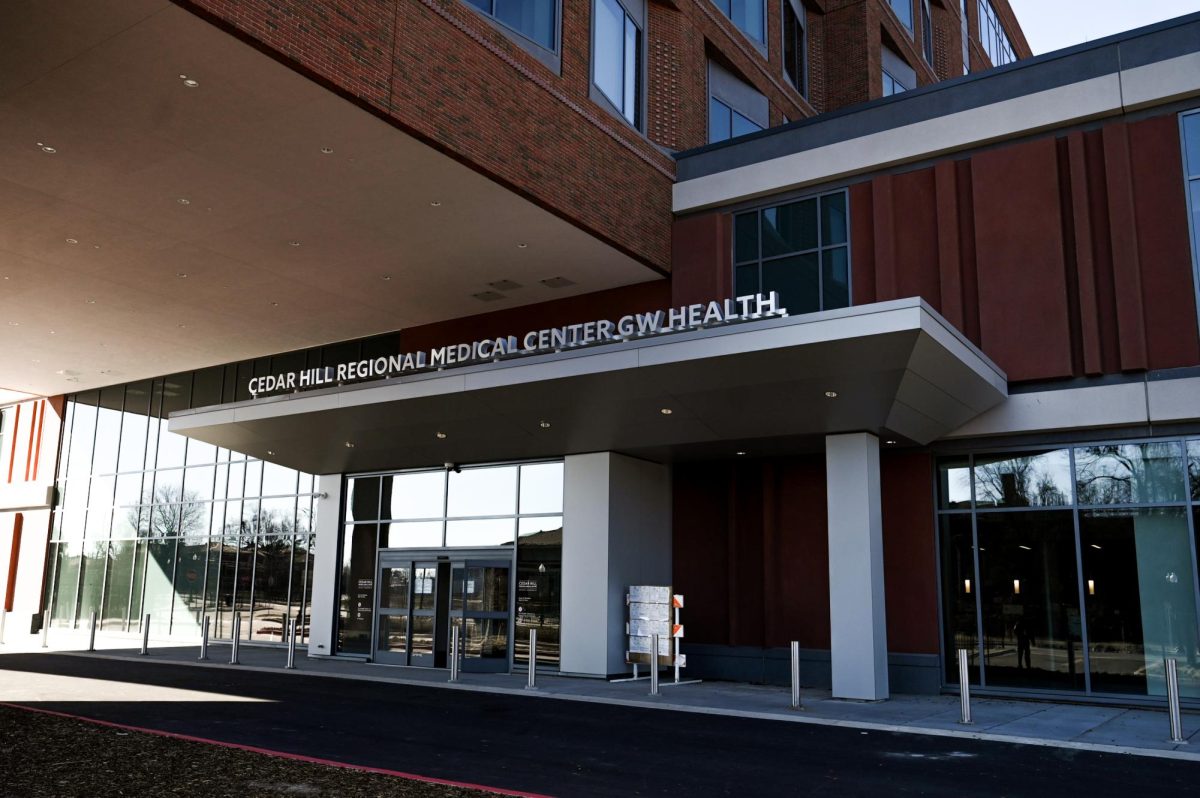
Health citations, delays in care and quality lapses at Cedar Hill Regional Medical Center GW Health have eroded community trust in the hospital in its first year of operations, local leaders said.
Cedar Hill opened in April 2025 in an agreement between the District and Universal Health Services, GW Hospital’s owner and operator, to expand access to healthcare in Southeast D.C., but staffing shortages and high turnover in the hospital’s highest leadership roles have spelled long wait times, unopened services and low quality of care for residents in Wards 7 and 8. Local leaders in Ward 8, which has a majority Black population and has long experienced health disparities due to lack of access to medical care, said surgical mistakes — including a patient death in January — and numerous health citations have fostered community mistrust toward the hospital, dashing hopes that the hospital would finally deliver the quality care long absent east of the Anacostia River.
A D.C. Council roundtable held earlier this month surveyed the repeated struggles that marred Cedar Hill’s first year of operations. In its first year, Cedar Hill’s chief operating officer, chief nursing officer and chief executive officer all resigned, leaving the hospital with an interim CEO and dozens of vacancies. The ambulatory facility was not operational when the hospital opened, and the D.C. Department of Health has conducted eight complaint-based surveys in 11 months, including one finding a preventable patient death.
8D01 Advisory Neighborhood Commissioner and Chair Dionne Brown, an independent health policy consultant, said Ward 7 and 8 residents already faced worse health outcomes than the rest of the city before Cedar Hill opened, and a hospital they cannot trust compounds those disparities by causing people to seek care somewhere farther away, with some choosing to delay or not seek care at all. She said city leaders promised residents a hospital east of the river would finally address their healthcare needs, but failed to ensure Cedar Hill could actually meet those expectations.
“I’m embarrassed to say our city did this at the risk of human lives,” Brown said.
Cedar Hill opened with the intention of providing residents east of the Anacostia River with access to specialty and trauma care, services they previously had to cross the river for. Residents of Ward 8’s life expectancy is 15 years lower than those of Ward 3, the area with the highest life expectancy at 87 years.
Residents’ skepticism about the hospital hardened into mistrust as reports of surgical mistakes and long waits mounted since the hospital’s opening, Brown said, and many residents now call friends and family in medical crises instead of 911 to avoid Cedar Hill.
“I don’t even say, ‘Why didn’t you call 911?’” Brown said. “We already have an understanding.”
D.C. Health survey records show a patient died after Cedar Hill failed to provide timely surgical services in January, leading the department to issue an immediate jeopardy citation, the most serious federal deficiency classification, which require the hospital to immediately correct the violation or risk losing its ability to bill Medicare and Medicaid for patient care. The report said the investigators found “actual harm” in that the hospital delayed care to the patient, with an employee saying the patient should have been taken to the operating room “a lot earlier.”
Associate Director for the Office of Health Facilities with D.C. Health Ranada Cooper said at an April roundtable on the hospital’s first year of operations the death was the “most significant” lapse in the February survey.
Cedar Hill Interim Chief Executive Officer Kimberlee Daniels said at the roundtable D.C. Health cited only the surgical department and that hospital leadership resolved the citation the next day, but did not address the patient death.
Daniels said hospital officials understand the history of healthcare east of the river and share the Council’s expectation that the hospital will deliver quality care to residents, but acknowledged that officials failed to engage the community to the fullest extent, leading to skepticism from residents.
“While aspects of the first year, particularly public engagement, fell short of expectations, we are making the necessary adjustments and are committed to building a strong and transparent partnership that improves health outcomes for generations to come,” Daniels said.
UHS, Cedar Hill and GW did not return requests to comment on the hospital’s safety violations, lapses in care and staffing issues.
8A01 ANC Commissioner Tom Donohue said after hearing about emergency department wait times and health citations from constituents and experiencing lengthy wait times himself, he does not think Cedar Hill is the quality healthcare officials promised residents of Wards 7 and 8.
“This state of the art resource was to come in and bring a breath of fresh air, a trusting new resource, a place where women can safely have their children,” Donohue said. “It’s become everything but that.”
Donohue said stories of health citations and mistakes that residents are hearing are driving patients to other hospitals further away from their neighborhoods. He said Cedar Hill leadership need to confront the fact that they have lost the trust of the community they are meant to serve.
“I strongly recommend that Cedar Hill immediately begin to understand how fractured the relationship Cedar Hill has with Ward 7 and 8 residents.” Donohue said.
Donohue pointed to staffing shortages, which the hospital continues to struggle with, as the first thing that Cedar Hill needs to address to begin properly serving residents.
Cedar Hill patients have consistently reported waiting hours before being seen by healthcare professionals at the hospital, which D.C. officials in February attributed to staffing issues. The hospital has also diverted patients to other hospitals in D.C. 20 times since its opening due to overcrowding and staff shortages, Deputy Mayor for Health and Human Services Wayne Turnage said at the roundtable.
Ward 5 Councilmember Zachary Parker at the roundtable also highlighted a case in which surgeons mistakenly removed the ovary of a patient who came in for an appendectomy. The patient discovered the mistake four weeks later when they sought the operation elsewhere.
“Many of my neighbors are saying, ‘I’m not going to go there if they don’t know what the difference between my ovaries and my appendix,’” Donohue said.
GW Hospital CEO Jason Barrett said at the roundtable that any new hospital will require “time for liftoff,” but acknowledged that the hospital has not met certain expectations in its first year. Barrett also added that officials are “in the process” of searching for a permanent CEO for Cedar Hill.
“This was not the launch that we wanted,” he said. “I think that we have been working more collectively now.”
In February, D.C. officials said negotiations between UHS and the Medical Faculty Associates, the physician group who staff the hospital, have hindered the hospital’s ability to deliver high-quality care. Barrett said at the roundtable negotiations have impacted care at the hospital.
UHS, GW and the MFA started negotiations to eliminate GW’s financing for the MFA in September while maintaining its clinical and academic functions. Officials said April 6 a near-final deal would place most MFA clinical providers into a new UHS-affiliated group serving both GW Hospital and Cedar Hill.
MFA CEO Bill Elliott said at the roundtable negotiations between GW and UHS officials regarding the MFA’s financial situation did not impede the group’s ability to staff Cedar Hill.
MFA spokesperson Anne Banner directed The Hatchet to Elliott’s testimony in response to questions about staffing issues at Cedar Hill.
D.C. Health Committee Chair Christina Henderson said in an interview Cedar Hill’s negative reputation will grow more difficult to address as reports of surgical complications and staffing issues drag on and “permeate” the community.
“I worry about that being a reputation that if you go to Cedar Hill, you’re not going to receive the most high quality of health care services,” Henderson said.
Henderson said the amount of complaint-based surveys, unannounced visits to investigate and interview staff and review patient records for violations of federal or local health regulations, at Cedar Hill in 11 months are unusual. She also said at the April roundtable high diversion rates and surgical issues at Cedar Hill have raised questions among D.C. and local leaders about whether the hospital was ready to open when it did.
“There have been some consistent reports and concerns that go beyond the normal growing pains of a new facility,” Henderson said at the roundtable.
Henderson said Cedar Hill’s first priority should be stabilizing the hospital’s leadership and connecting with the community it was built to serve by creating a patient and community advisory council, which the hospital’s original operating agreement calls for.
“We got to get stability in terms of the leadership to help turn around the culture, and then we need to make those true connections with community in the way that was envisioned before the hospital opened,” Henderson said.