

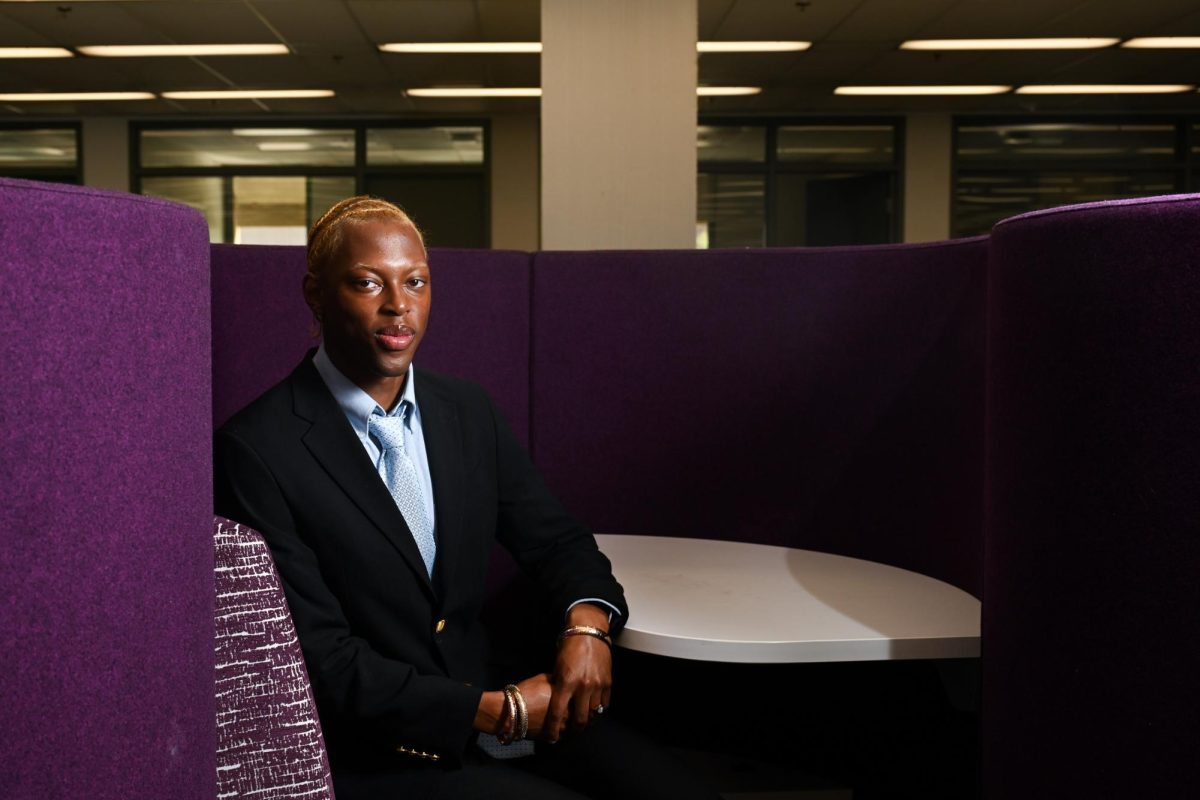
Student Government Association presidential candidate Liz Stoddard says ensuring student concerns are reflected in what University officials hear and act on starts with centering perspectives from outside the SGA bubble. We agree. That is why we are endorsing MJ Childs.
The SGA has long been shrouded in stigma, with many students viewing it as disconnected from real student concerns. Both Stoddard, a junior and the body’s current vice president, and Childs, a sophomore and SGA outsider, acknowledged this perception. They said bridging that gap requires grounding SGA priorities in the everyday student experience and ensuring their concerns are reflected in what administrators hear, a challenge when people view SGA members as disconnected from the broader student body. Our editorial board believes that addressing this stigma requires rebuilding trust in SGA as an accessible, student-facing body. We believe meaningful progress on this front comes from bringing in an outsider.
Childs said many students view the SGA as a “career politician” pipeline, where involvement requires climbing a rigid ladder of positions rather than simply representing peers. He argued that this perception creates unnecessary barriers and distracts from the SGA’s core purpose of serving students, not replicating hierarchical politics. By breaking from that model, he said, more students would feel encouraged to engage with the organization.
“I think it will definitely bring more people into the [SGA] community,” Childs said when asked whether his lack of prior experience on the body — and the stigma surrounding SGA insiders — would encourage greater student engagement with the body. “I’ve already heard that said to me.”
A candidate who is not part of the SGA and is actively engaging with other student groups may help bridge that divide, an effort Childs told our editorial board is central to his campaign. But this does not mean Childs is solely relying on his outsider status to achieve this goal. He has begun this work by reaching out to student organizations across campus to better understand their experiences. Since launching his campaign, he said he has spoken with groups, like GW Democrats, GW Hillel, College Republicans and the Left Coalition, and plans to continue those conversations with more communities, including multicultural organizations. He emphasized that he is intentionally engaging groups that have historically felt the SGA has not been responsive to their needs.
“The SGA is a very convoluted organization, and I think the biggest thing that we can do is both simplify that process and bring in outsiders,” Stoddard told us when we asked how she would work to ensure student perspectives are represented when officials make decisions. She said making the SGA more accessible and inclusive is key to ensuring a broader range of student perspectives are reflected in University decision-making. We believe that, given her role as the body’s vice president and the stigma many students attach to its top posts, the most effective way to drive broader engagement right now is to have the SGA led by an outsider.
Alfred Lewis Jr. is also an outsider candidate, but he did not attend his scheduled interview with our editorial board or provide a platform for review. As a result, we did not consider endorsing him.
What stood out in Childs’ reasoning for running was how rooted it was in everyday student experiences rather than campus politics or internal SGA dynamics. His motivation reinforced the sense that he is connected to the concerns students actually face in their day-to-day lives.
Childs said his time working at the fitness center on the Mount Vernon Campus helped shape his decision to run, after the University abruptly closed the facility with little notice to employees and offered staff the choice of leaving their positions or transitioning to reduced hours at the Lerner Health and Wellness Center, where his hours were ultimately cut in half. When asked what single moment most pushed him to run for president, he partly pointed to this experience and how he felt it was handled by the administration. He also said his decision is driven by a desire to give back to the GW community and a longstanding interest in advocating for students — the core function of the SGA.
Part of his platform includes a provost onboarding student committee that would help the incoming provost become better acquainted with the University, particularly student life. This reflects his broader goal of ensuring students and GW’s governing bodies, including the administration, are more connected to the student experience to support more informed decision-making.
Childs also acknowledged that empathy and understanding go both ways, noting that students are sometimes uninformed about institutional matters. He said he is willing to act as a “translator” between University administration and the student body by communicating through videos rather than relying solely on infographics. Childs has the right idea of what effective governing is: mutual understanding and communication.
Childs demonstrated through his interview and platform that he understands the SGA’s role is to maintain a strong connection to student needs. His approach is not solely focused on passing legislation, but also on improving accessibility so students and the SGA can work more closely together. The SGA serves as the primary advocacy resource for students at the University, but that advocacy is diminished if it remains disconnected from the student body or if students do not feel comfortable engaging with it. Childs emphasized his commitment to speaking directly with students and understanding their experiences, which he said is essential to building a productive, symbiotic relationship between the SGA and students.
We’re not arguing that Childs’ platform is perfect. It lacks substantial detail on how he would implement many of his proposed changes. But it reflects a thoughtful, student-centered approach to campus issues. We also appreciated its range, addressing concerns from dining operations, including cross-contamination and accessibility during religious holidays, like Ramadan and Lent, to broader communication breakdowns across the University. Childs has proposed working with GW Dining not only to improve menus and hours but also to better support dining staff by understanding what they need to produce higher-quality food. Notably, his platform emphasizes engagement with staff themselves, including conversations with them, rather than simply coordinating with administrators — a distinction that underscores his effort to understand multiple stakeholders on campus.
We are not convinced that Childs currently has a clear roadmap for how he would execute some aspects of his platform. But the editorial board feels this is not the central issue at hand. What matters is that the SGA must meet students where they are right now — and students need to feel that they can bring their concerns forward and be heard. Childs, in our view, is well positioned to do that.
The editorial board consists of Hatchet staff members and operates separately from the newsroom. This week’s staff editorial was written by Opinions Editor Andrea Mendoza-Melchor, based on discussions with Contributing Opinions Editor Ava Hurwitz, Research Assistant Ethan Tsai, Sports Editor Grant Pacernick and Social Media Director Max Gaffin.