

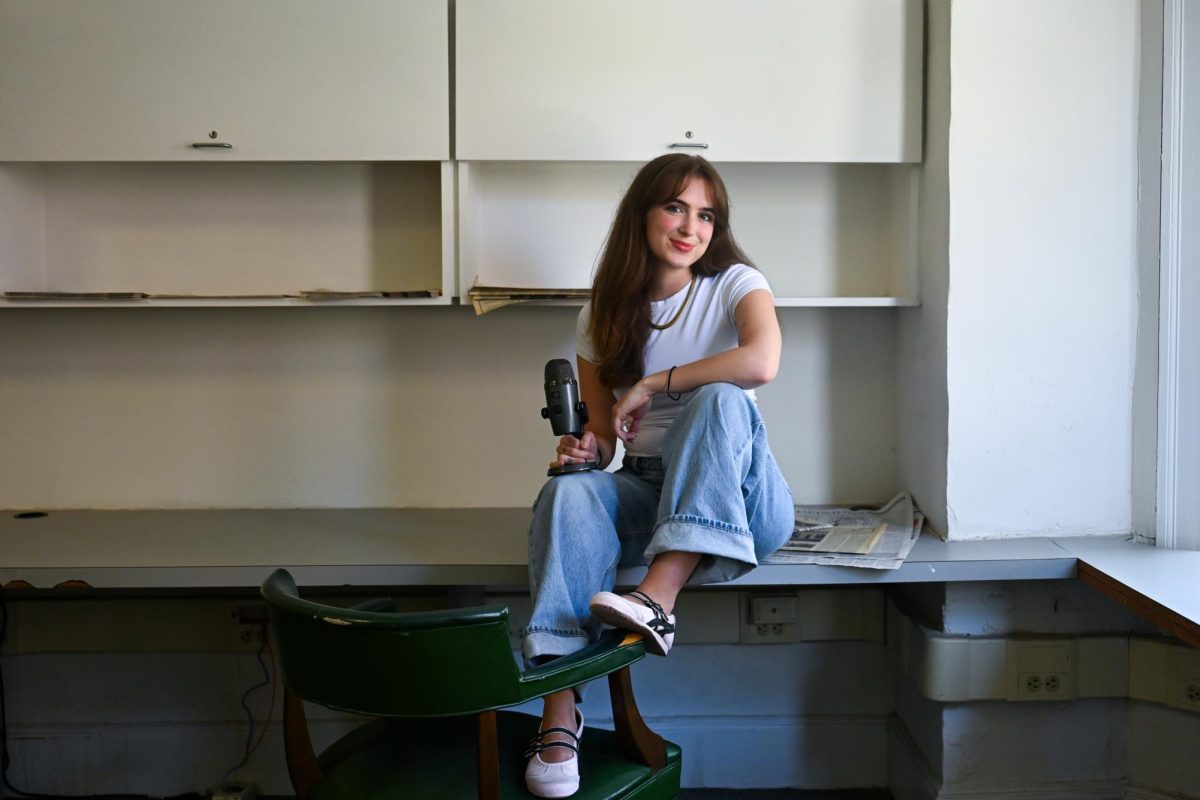
Each year, graduating editors are given 30 final column inches — “30” was historically used to signify the end of a story — to reflect on their time at The Hatchet, published in the final issues of the year.
I’ve always been described as “a talker.” Across my experiences — from my childhood as a theater kid to my tenure in high school yearbook and now my college career in podcasting — my driving force has always been my love of talking to people.
My natural disposition to seeking connection is what ultimately led me to journalism. As a journalist, I get to speak with people that I likely would have never crossed paths with otherwise, learn something new and then bring that story to a wider audience.
I discovered Getting to the Bottom of It at the Hatchet’s annual open house, where I met Sejal, the podcast host at the time. She taught me everything and introduced me to my now co-host, Max. I then took over as host my sophomore year and they haven’t been able to get rid of me since (ignoring my brief study abroad hiatus).
Though I tried my hand in several other sections of the Hatchet, the podcast was the only thing that stuck. This medium of news introduced me to an entirely new form of storytelling that rested on my greatest strength: talking.
The thing about producing a podcast, though, is that you don’t only need to know how to speak — you need to be an expert listener, not just to your sources but to your surroundings. I now find myself constantly listening for sounds I can record and weave between words in an episode. Approaching each weekly episode holistically and thinking about every element I could use to immerse the listener in the story taught me to be more present in my storytelling.
More importantly, the Hatchet helped me find my journalistic voice. I knew I could talk, but I didn’t yet know what I wanted to talk about. The Hatchet taught me how to find the news. College newsrooms are a crash course in enterprising stories as sources can be harder to come by and news doesn’t announce itself everyday. Instead, you have to dig.
Adapting to that search for news taught me to get creative when it came to pitching weekly stories that could span a roughly 10-15 minute episode. Over time, in working with other journalists on the Hatchet and in my internships, I learned that the best way to create a story worth telling is to find the humanity and emotion behind it.
Impact-driven journalism is now the mission of my storytelling. The best journalism is accessible, not laden with jargon or confined to the kind of policy debates most readers couldn’t define, let alone care about. I’ve spent plenty of time around people in suits talking policy and occasionally that makes a great story. But the most impactful journalism invites the reader in, rather than asking them to keep up.
The Hatchet also gave me community and opportunity. Without the people and the work I did here, I never would have landed that summer internship in local news, and I certainly never would have spent a year on Capitol Hill with NBC News covering Congress.
It’s the culmination of all of these experiences that has instilled in me the momentum, energy and confidence to continue my journey in news after graduation. Now, I’m taking that momentum into broadcast journalism, spending my next chapter in Vermont as an on-air reporter.
I came to GW as an eager student who just liked to talk, but I’m leaving as a journalist with a voice and a mission, and so much more to learn.
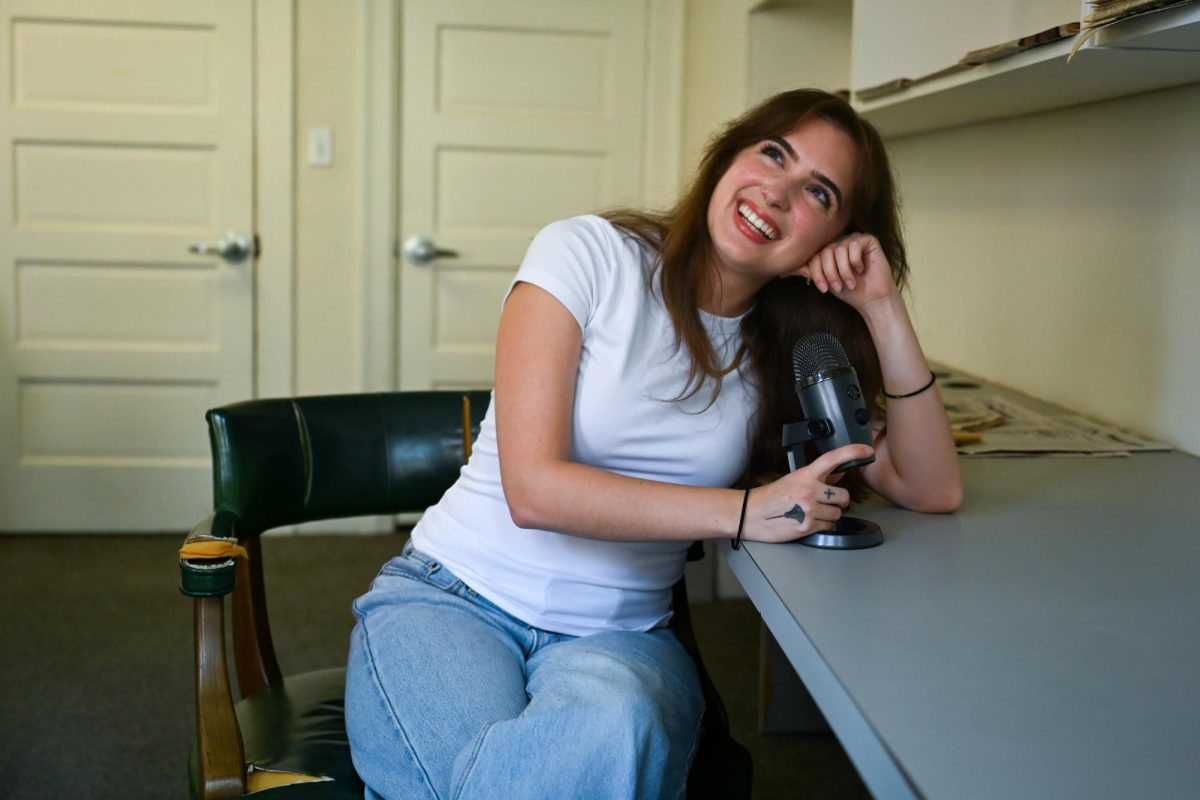
Shoutouts—
Past, current and future Hatchet staff
Sejal Govindarao: I used to joke that I want to be you when I grow up, and, not gonna lie, that definitely still stands. Thank you for seeing something in me and trusting me with the pod. Your continued support has meant so much to me and I’ve always seen you as both a mentor and a friend. I feel so lucky to have such a legend on my team and I cannot wait to keep reading your reporting as you continue to kill it in the real world.
Max Porter: Who would have thought we’d still be on the podcast together four years later! You have always been a sharp and reliable co-host. I remember sourcing for the encampment pod with you and having to navigate such a sensitive topic. In the end we produced a great product that accurately and fairly depicted the closure of the Triangle Park homeless encampment. I’m really proud of the work we’ve done, and I can’t imagine talking about everything from cat cafes to government shutdowns with anyone else. Thank you for caring about the podcast as much as I do and good luck on your next chapter.
Fiona Riley: Where do I even begin? I remember when we first met freshman year and I found out you were also a reporter for the Hatchet. You became my person in this newsroom, every time I walk in the townhouse, I look for you first. I have never met anyone who pours themselves into their work the way you do, and watching you do it has pushed me to be better. Your work and editorial eye inspires me and I feel so lucky to get to work with you and call you a close friend. I will always be your number one fan and, moreso, I will always be here for you — especially as we navigate this crazy industry we chose to subject ourselves to. I love you so much and I am so proud of you.
Hannah Marr: Working closely with you over the last year has been such a gift. I really appreciate all of the hard work and care you have put into the podcast and ensuring that we put out the best possible product. I can’t thank you enough for all of the behind-the-scenes work you and Fiona do for the Hatchet.
Rory Quealy: Thank you for always being a supporter and a friend at the Hatchet. We don’t see each other nearly enough, but it’s always a joy when we do.
Fiona Bork: I’m so glad to have had you as a constant throughout the last four years. From our co-bylines sophomore year to being among the few remaining seniors, it means a lot to know you’re always there.
Sandra Koretz: You are such a magnetic person with such a kind heart. Every time I run into you on the street, I walk away with a smile on my face. I’ll miss running into you!
Ben Spitalny: You have always been down for a guest appearance on the pod, which really means a lot (mainly because I know nothing about sports). Thanks for always being a reliable, friendly face.
Jenna Lee & Tyler Iglesias: Thank you for embracing the podcast and always working to help us bring our stories to life. I have no doubt y’all will continue to do great things next year and I can’t wait to read all about it.
Ida Liben: From day one, your confidence and diligence stood out. You are flexible, always ready for anything, and a joy to work with. I cannot wait to see where you go.
Maddie Flesch: You are endlessly reliable and always ready to step up. I love talking through ideas with you and I know your creativity will bring something fresh to the pod.
Aadarshini Vijesh: The energy and curiosity you bring into every room will take you far. I can’t wait to watch you grow and breathe new life into the culture pod.
My friends and family
Mom: Thanks for pushing me to pursue the dreams that feel like fantasies. We both know that I have always been my own toughest critic, but it’s your voice that cuts through the really loud one in my head. I love you, and it’s all because of you that I’m now following the path I didn’t always think was an option.
Grayson, Grace and Jenna: My literal day ones. Once we moved in together sophomore year, I had to start kicking everyone out or making everyone be quiet while I recorded the podcast. Thanks for listening to me — whether it’s from the other room or on Spotify — and not making fun of my podcast voice too much. Thanks for being my greatest support system.
Anyone who has actually listened to a podcast episode: Thank you. Seriously.
– 30 –


