
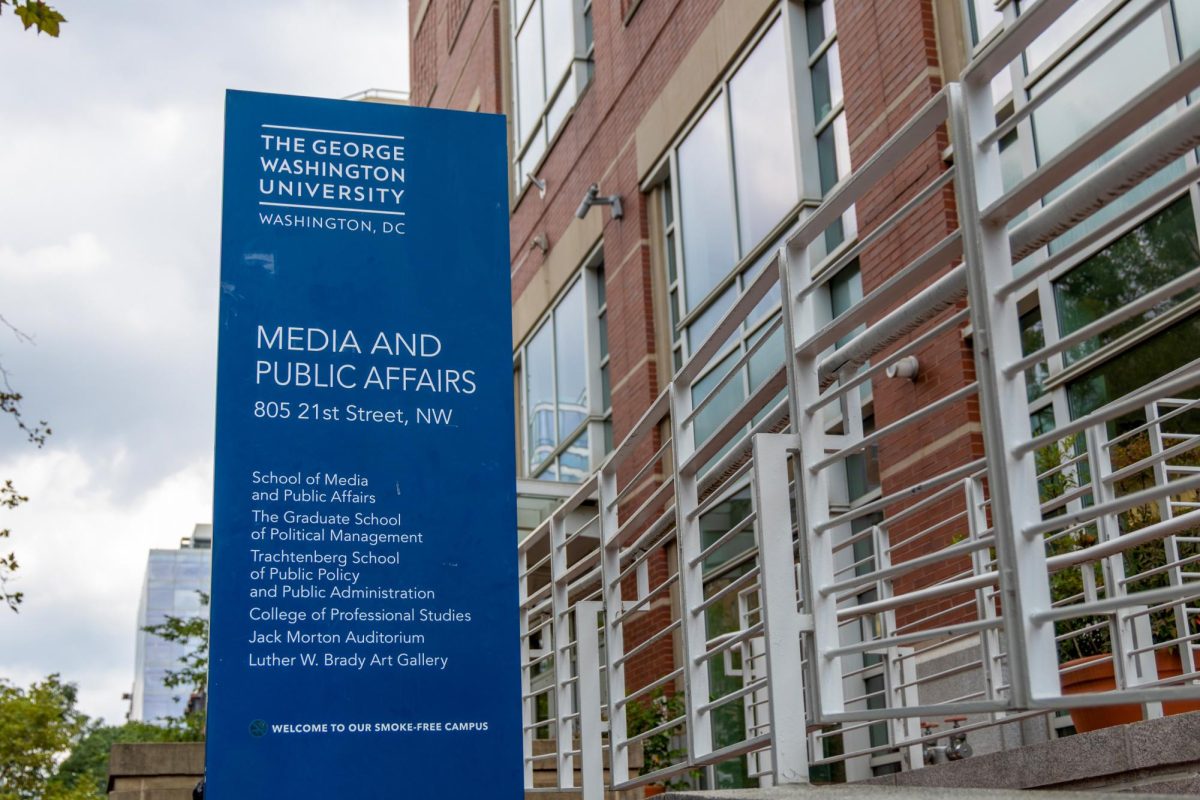
Political strategists and a student campaigner said winning modern political campaigns requires an authentic, coordinated and adaptable digital media strategy during a panel at the School of Media & Public Affairs Tuesday.
Connell Zelazny, the managing director of Republican campaign communications firm Targeted Victory, Marina Orcutt, a co-founder of Democratic digital strategy company Watershed Strategy and SMPA political communications student Ben Solasky stressed the importance of personalized content in digital media campaigns, while cautioning for the responsible use of artificial intelligence in politics. SMPA Adjunct Professor and former Wall Street Journal Deputy Bureau Chief Jeanne Cummings moderated the event, which was part of SMPA’s Campaigns & Elections series.
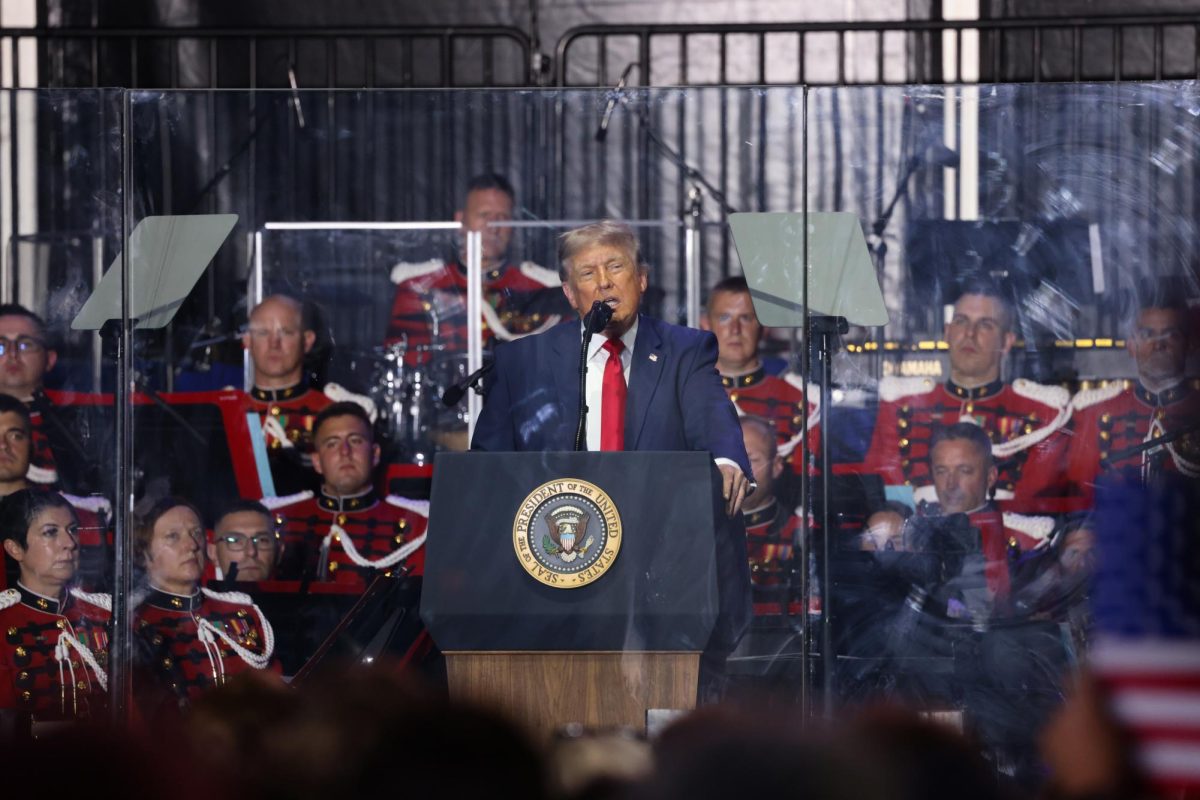
Zelazny said modern digital campaign strategy began to take shape during former President Barack Obama’s campaigns when Democrats raised unprecedented amounts of money online, catching Republicans off guard. He said the following years were defined by Republicans trying to “catch up” in the digital space before President Donald Trump reshaped the landscape in the 2016 election.
“He is able to use platforms like X, and he’s able to go out there, and he’s able to spread the message himself,” Zelazny said.
Zelazny said Trump’s ability to communicate directly with voters and donors could make him one of the best digital fundraisers of all time because he could cut through barriers on social media that other organizations and candidates failed to get through in their campaigns. He said strategists have to understand the candidate before they step onto digital platforms in order to produce authentic and successful content.
“Whatever you think might have been that million-dollar idea, if it’s not properly thought out or if it doesn’t match your candidate, you can end up in a death spiral because everyone will then just use that to demonstrate that you are, in fact, inauthentic or any number of other issues,” Zelazny said.
He said campaigns have to define the role digital media will play early on in the contest and that it is not a one-size-fits-all model, and strategies that succeed in one race may fail in another.
“It won’t necessarily work for the person you’re working for at that moment,” Zelazny said.
Zelazny said campaigns are using artificial intelligence more to increase content production on social media and decrease turnaround time to make it. He added campaigns that fail to adopt AI risk falling behind because they won’t be able to consistently produce content without it, but stressed campaigns must review AI-generated content for inaccuracies to ensure it produces the content they need.
“If you’re simply taking content that is coming out of an AI program and then just posting it online, that’s a larger problem in the command and control aspects of your campaign,” he said.
Orcutt said campaigns that work with influencers are most effective when relationships are built organically, pointing to New York City Mayor Zohran Mamdani’s 2025 campaign. She said his campaign worked with influencers that had a genuine interest in his platform, connecting with them through “organic relationships” rather than paying influencers.
She said voters can quickly identify inauthentic messaging, elaborating that consistency in the candidate’s messaging on campaign issues can be a key factor in successful digital media campaigns.
“Voters, constituents and donors can root out our inauthentic campaign behavior pretty quickly,” Orcutt said.
Orcutt said digital strategy will continue to evolve, but its success depends on how well campaign leadership understands it and how much trust decision makers put in their digital teams.
“My best bosses have been the ones who’ve been like, ‘I will let you do what you need to do. I know what I don’t know,” Orcutt said.
Solasky, who is currently working on a congressional campaign in New Jersey, said trust between the candidate, campaign manager and digital team is essential to executing an effective strategy. He said that trust enables constant communication across the campaign, allowing them to quickly produce and refine content.
“That flow of communication has been really beneficial in allowing us to create all the content that we’ve been able to do,” Solasky said.
Solasky said that coordination has led to measurable results for the campaign, including a video addressing the Trump administration’s Department of Veterans Affairs policies that reached more than 3 million views.
He said in-person interactions with voters also shape digital content, citing a social media video the campaign produced in response to a constituent’s question about whether officials were tracking Secretary of Defense Pete Hegseth’s actions at the Department of Defense.
“Those pieces of human connection, those actual things that people care about, do translate into actual social content,” he added.
Solasky said he is cautious about using AI in creative work, citing it as another way digital media can become “impersonal” and fails to connect with constituents.
“I think we need to be making real content with real people and real things,” he said.