
Updated March 3, 7:47 p.m.
The University-Wide Programs Fund is nearly empty with 10 weeks left in the spring semester, which student organization leaders say is forcing them to scale back or cut large cultural events.
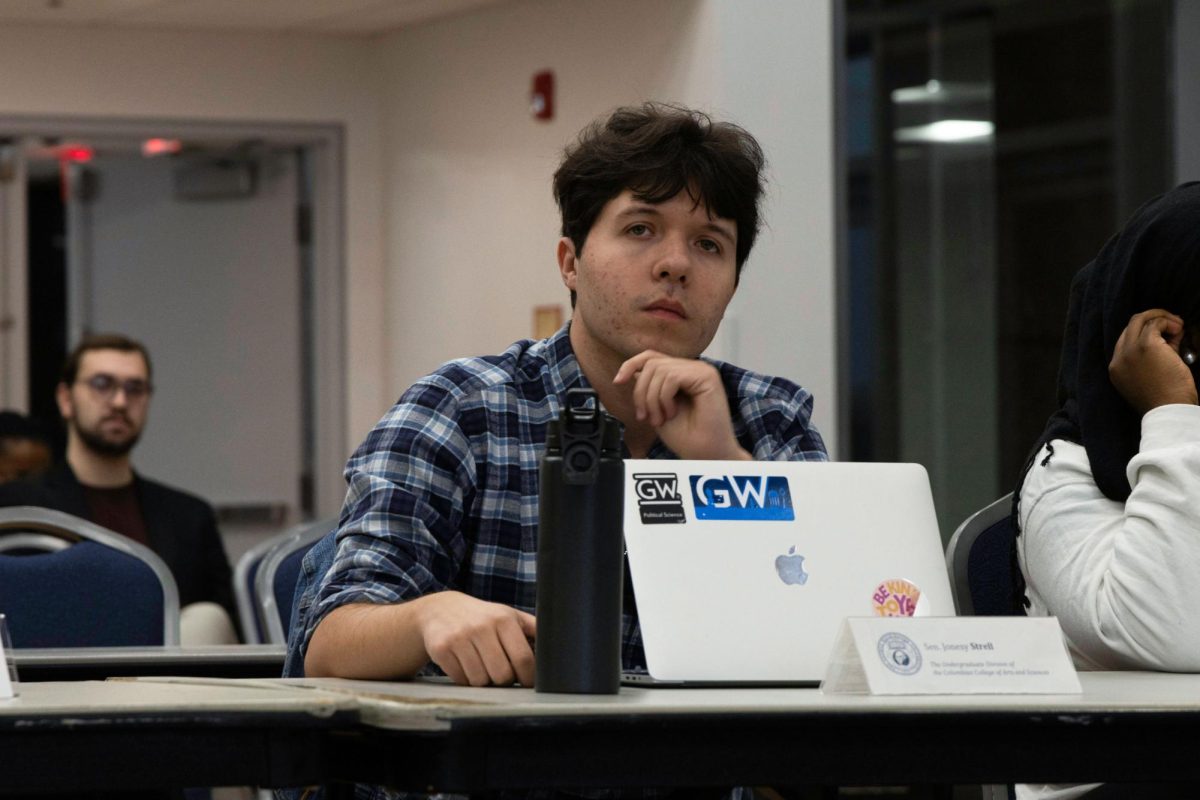
The UWPF — a joint fund between the University and the Student Government Association to provide support to student organizations for campus-wide and heritage celebration events — has disbursed $188,929.56 to 52 events since the start of the academic year, leading officials to impose a Feb. 15 deadline for student organizations to submit funding applications for the remainder of the semester because the fund was running low, SGA Sen. Jonesy Strell (CCAS-U), who serves as one of two SGA representatives on the UWPF Joint Committee, said. UWPF committee members said the fund is depleted with months to go in the spring semester because the committee appropriated too much money to only a few events this fall at the suggestion of GW administrators, leaving student organization leaders hoping to host large events this spring with narrow funding pathways.
The UWPF stood at $203,299 for the 2025-26 academic year and is now at $4,797, SGA Sen. Cheydon Naleimaile-Evangelista (CCAS-U), the SGA’s other UWPF representative said. Student organizations requested roughly $518,523 this year as of March 3, according to a publicly available tracker, compared to $365,707 last year when the SGA distributed $248,138.
This isn’t the first year the UWPF Joint Committee — which votes to disburse money from the fund and consists of four administrators, two SGA senators and one non-SGA student representative — has depleted the fund mid-year, with the fund also drying up in February 2023, which student organization leaders said prevented them from holding planned large events in the spring.
A University spokesperson said Tuesday the UWPF is funded based on enrollment and received a 42 percent increase in funding requests compared to last year, which they attributed to higher food, vendor and supply costs.
The spokesperson said the UWPF committee chose to maintain allocations consistent with previous years to support university-wide programs and help mitigate “instability” caused by fall changes in the SGA funding structure.
The SGA transitioned to and then scrapped an events-based funding model originally passed by senators in spring 2024, prior to the start of the fall semester. Senators passed student organization funding for the spring in December, cementing the transition back to the old budget model.
Official implemented the Feb. 15 cutoff for funding applications to promote “advanced planning” for student organizations and allow the committee to conduct a comprehensive review for remaining spring events, according to the University spokesperson.
Strell said UWPF administrator representatives pushed to fund events in full because they assumed the committee would get the bulk of its requests in the fall, a logic he said demonstrated “recklessness” as the committee still received an influx of requests this semester. UWPF has historically funded about an equal number of events in the fall and spring semesters, according to the tracker, with roughly half of last year’s 57 UWPF-funded events taking place in the spring compared to only about a dozen of this year’s 52 events.
“You always got to expect that you’re going to get a large number of requests,” he said. “One week, you may have 10 requests. Next week, you may have 30.”
The UWPF committee in the fall allocated the South Asian Society $22,000 and Black Student Union $20,000 for speaker fees — a combined 20 percent of the entire fund, according to the tracker. Strell said he disagreed with those decisions because UWPF should have saved more money for other campus events and asked the organizations to make up the difference through ticket sales or outside funding.
Strell said UWPF administrators likely imposed the Feb. 15 application deadline because they were “running low” on funds, a move the program has not previously had to take. Strell said the committee tends to be more generous with funding at the beginning of the school year when the budget is at its fullest.
“Because those organizations chose to submit those decisions in the fall and as soon as possible, they got the money,” Strell said. “They got at least a portion of what they wanted or what they wanted.”
Naleimaile-Evangelista said while in previous years organizations requesting funds presented to the UWPF Joint Committee about their events’ history, costs and funding and venue options, the administrator committee members disallowed presentations for the 2025-26 academic year and did not provide him a reason. Naleimaile-Evangelista, who is also the SGA Finance Committee’s chair, said he has seen organizations submit funding requests to the SGA this semester that UWPF would typically fund because of the fund’s depletion.
“The UWPF committee just needs to take accountability for how they mismanaged their money,” Naleimaile-Evangelista said.
Naleimaile-Evangelista said the administrators on the UWPF committee were generous with their allocations in the fall because the SGA was waiting on a planned funding increase this year and they anticipated the SGA to be able to cover more costs in the spring semester after receiving the increase. Naleimaile-Evangelista said even with the funding increase the SGA’s finance committee has had to make cuts due to an influx of requests and having to balance the additional requests that would have typically been filled by UWPF.
“This is causing them to be understandably frustrated, but it is a tough situation for the SGA finance committee, as we are stretching all our available resources to accommodate these new requests,” he said. “Even with the historic funding increase, it feels as if the finance committee is back to square one because we do not feel the impact of the increased funds.”
Eunice Vunobolki, a junior and the president of the African Students Association, said getting funding for events has always been an issue, but it has “never been this bad,” and it is difficult to understand changes from past years, like receiving less funding and not being allowed to present to the UWPF.
ASA requested about $43,640 and received $5,100 for two events, one that took place in mid-November and another set for this spring, this year, both of which met the 350-person expected attendance threshold, according to the tracker. Last academic year, ASA received $13,800 for its “Taste of Africa” event highlighting African food and cultures, which Vunobolki said the organization has hosted for 18 years and expects to draw 400 students this year.
Vunobolki said the organization likely will not have enough money to host Taste of Africa in its full capacity. She said they have had to look for cheaper options for vendors and will probably only be able to afford one performer instead of two, fewer decorations and less food.
“The process has been 10 times harder,” she said. “If anything, we just hit a rock, and we’re still trying to understand how to navigate that. It’s been extremely hard.”
Somtochi Igbudu, the president of Hairapeutic Beauty, said the Feb. 15 deadline was an issue because she had planned to request more funding from the UWPF after the deadline had already passed.
The SGA granted Hairapeutic Beauty $3,500 for the Hairitage Showcase, an event that took place on Sunday celebrating Black hairstyles. The UWPF provided $1,500 of the requested $18,351 for the event, according to the tracker.
“They gave us another option to reach out to SGA for sponsorship,” Igbudu said. “On their part, it was pretty good, I guess, but it was kind of stressful, in a way, to have to depend on the SGA.”
This post was updated to include comment from a University spokesperson and to reflect updated figures on the UWPF’s funding tracker.