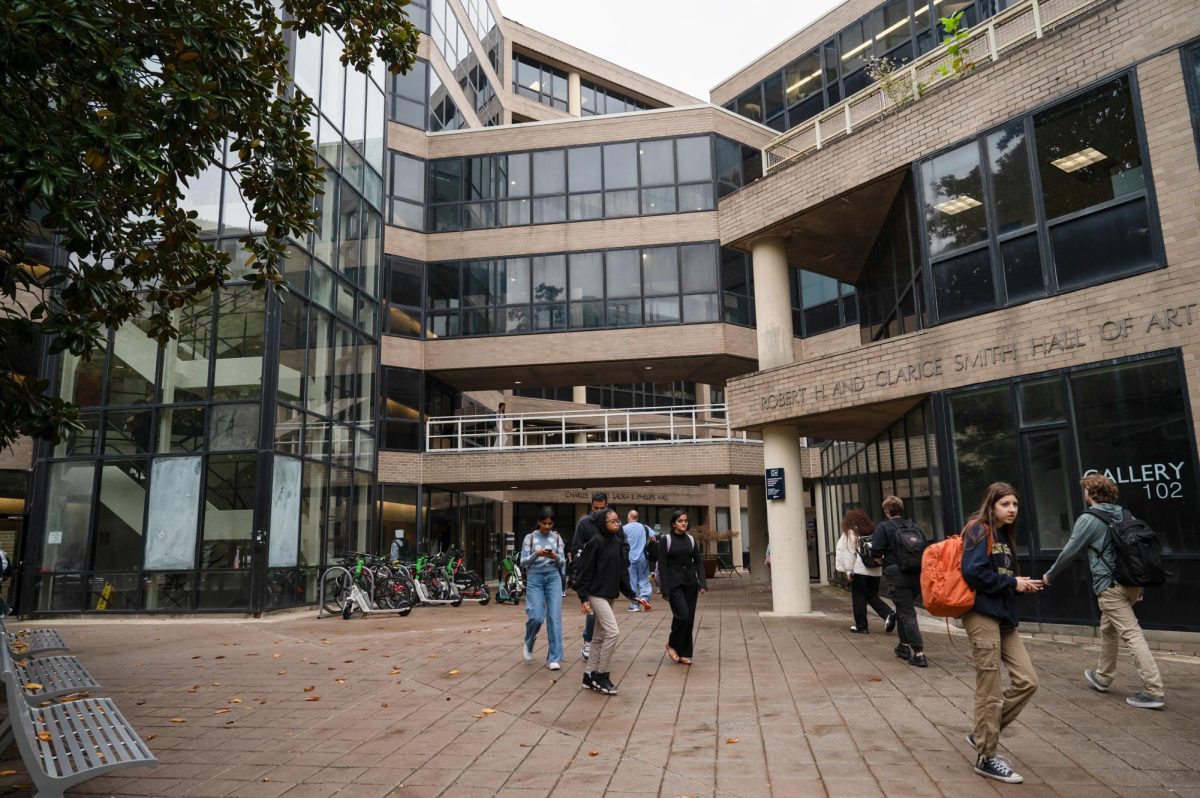

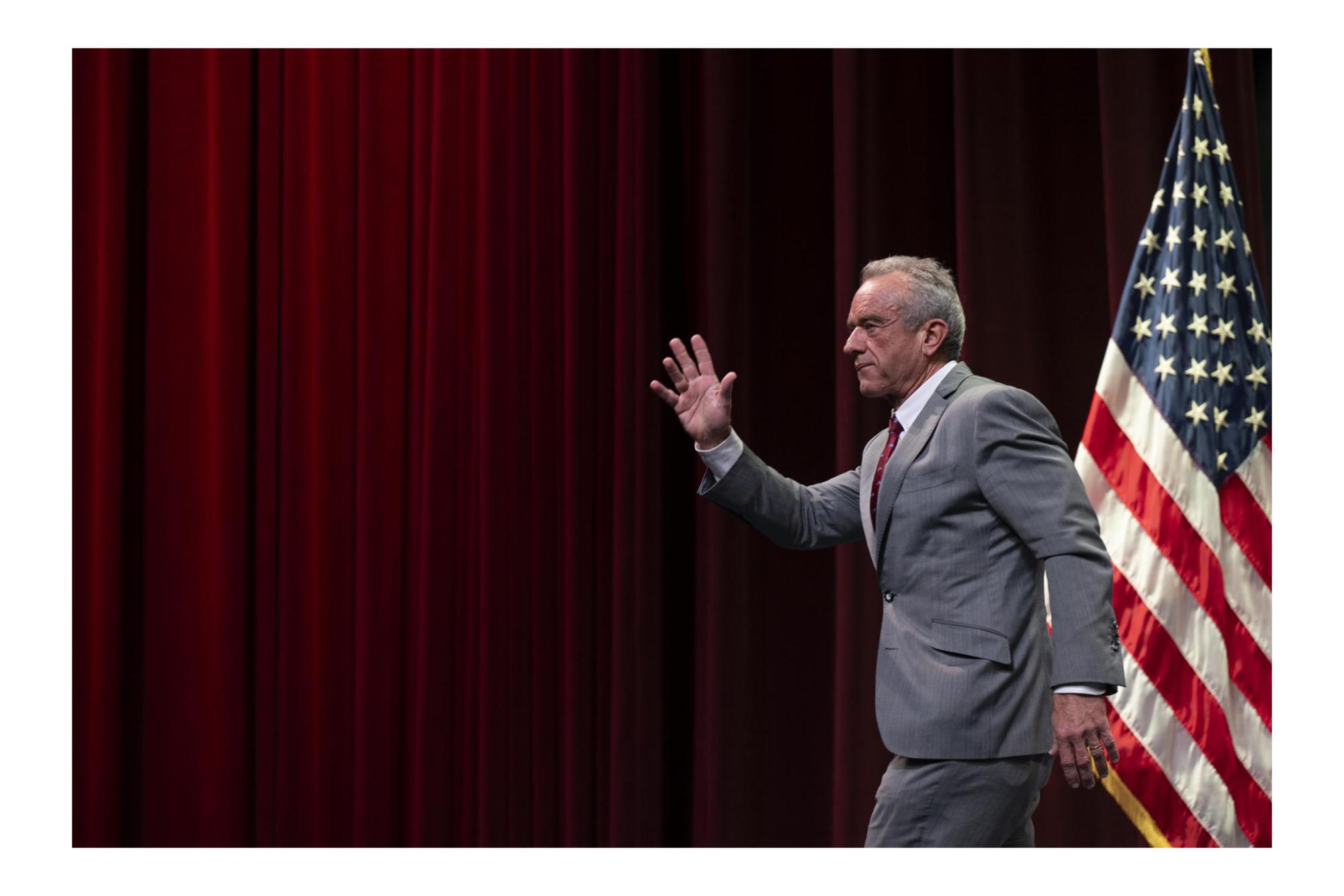
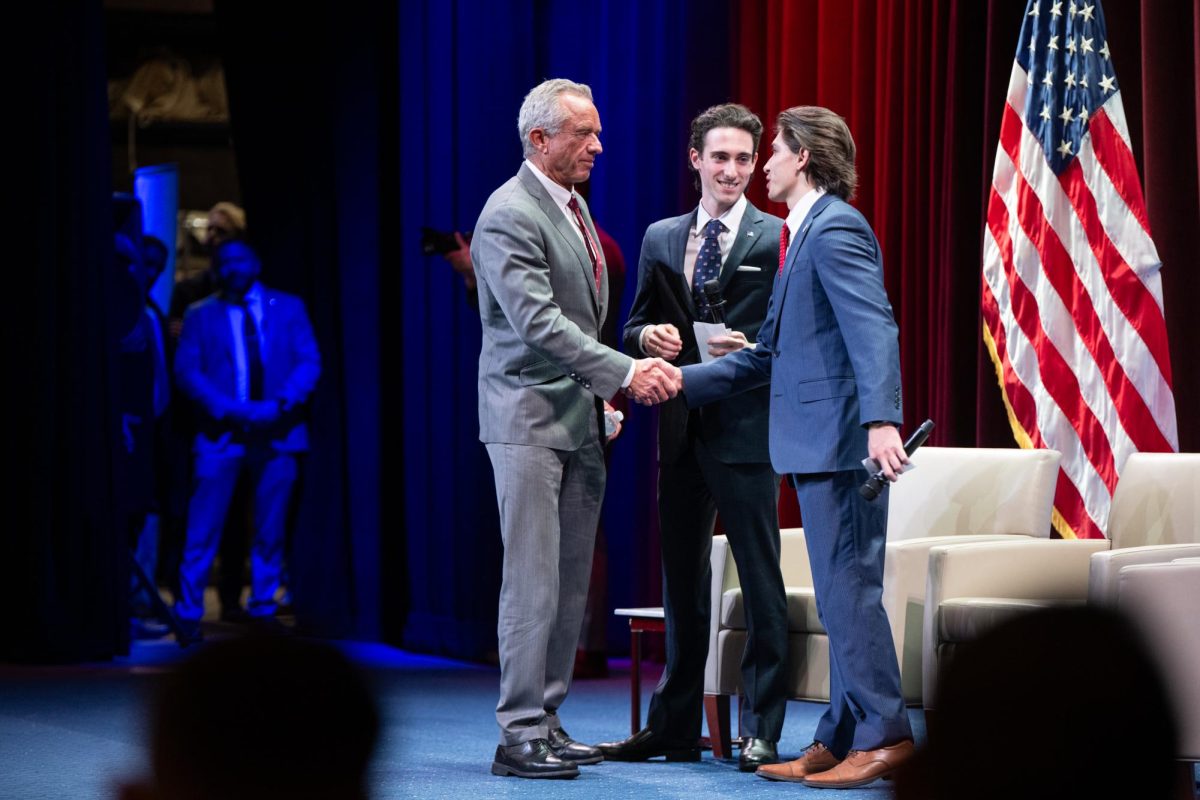
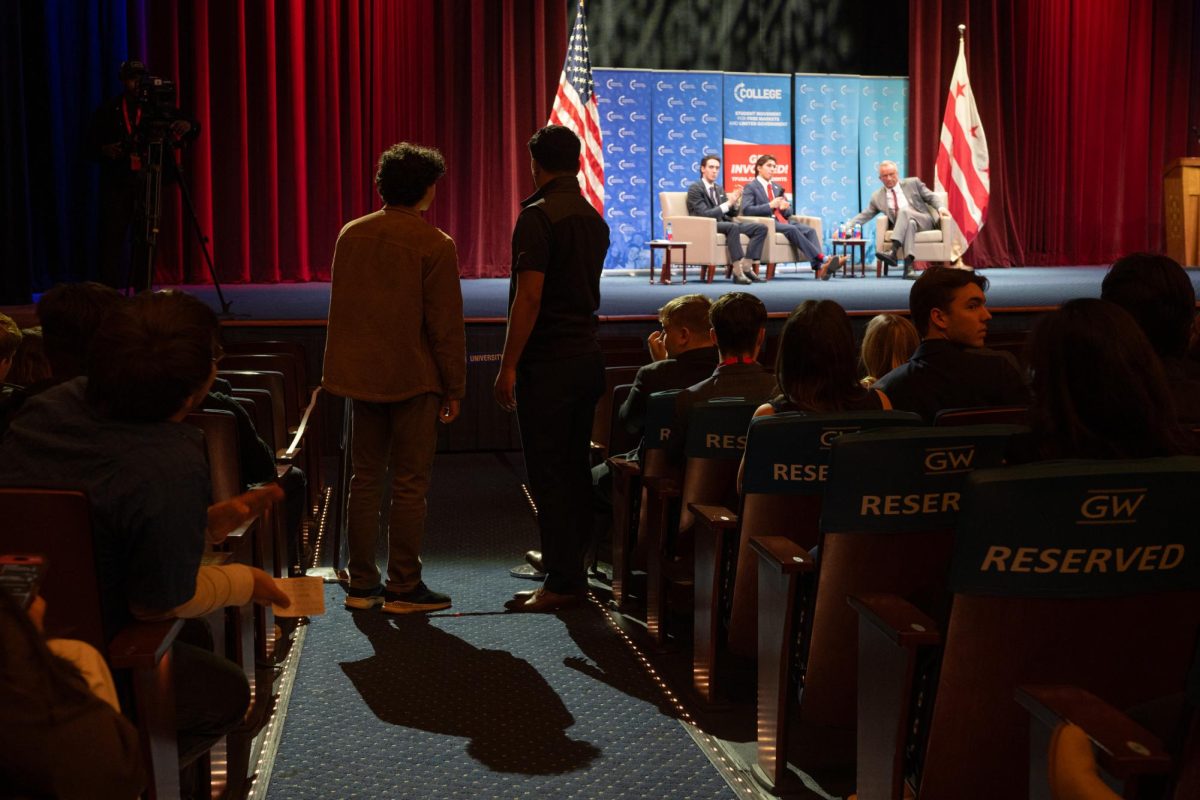
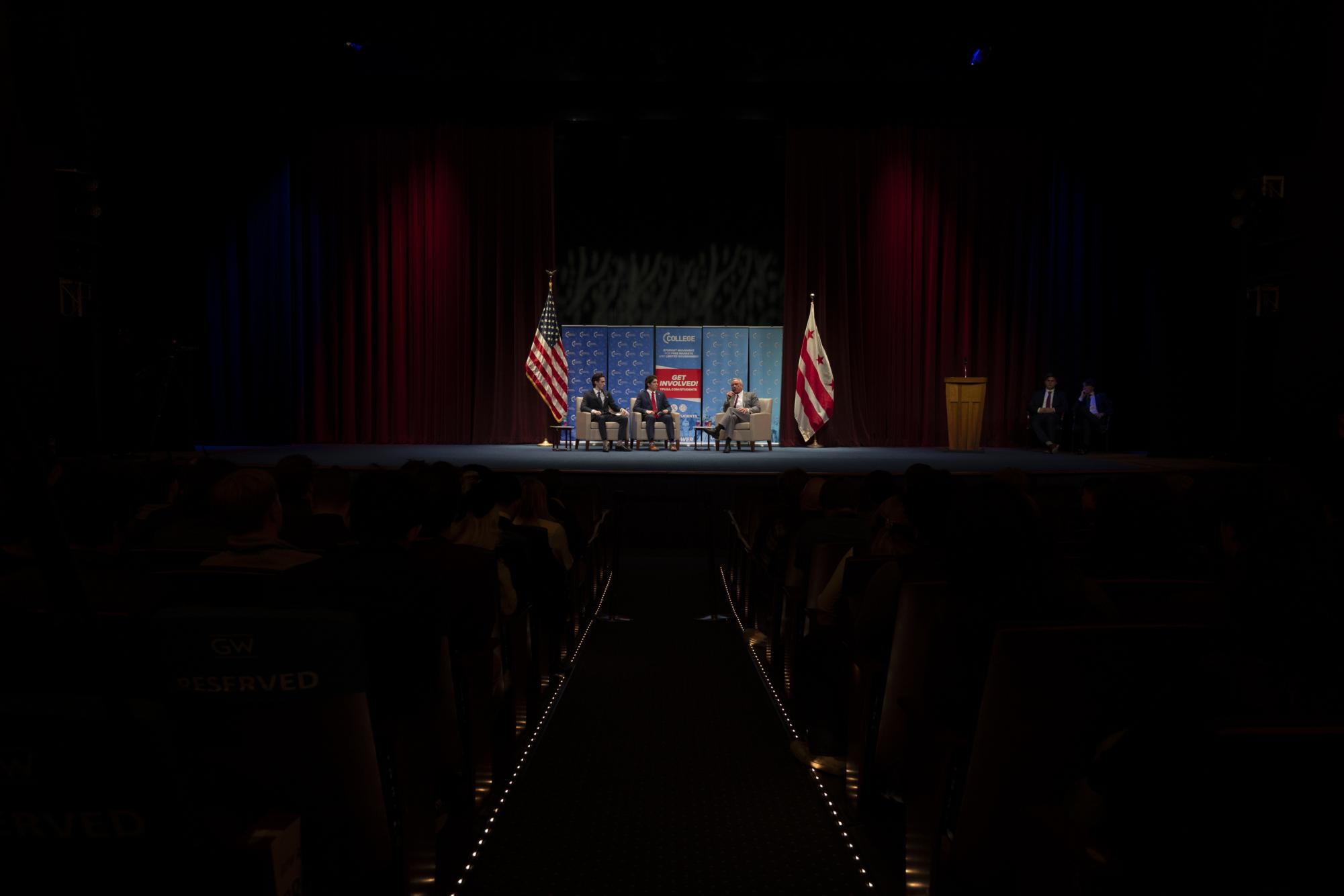
Secretary of Health and Human Services Robert F. Kennedy Jr. outlined his vision for reshaping Americans’ health during a talk at Lisner Auditorium on Monday, as dozens of students gathered outside to protest his appearance.
Kennedy defended his record as HHS secretary, which has included rolling out his “Make America Health Again” plan to curb ultraprocessed foods in Americans’ diets and cutting hundreds of millions of dollars in federal research funding, moves he said make the department more efficient and focused on “real science” at a fireside chat event hosted by Turning Point USA at Foggy Bottom and GW College Republicans. Outside Lisner, a crowd of about 60 students and community members — led by GW Democracy Matters, the Disabled Students Collective and Swing Left GWU — protested the event, rallying before it began and hearing remarks from nine speakers, including students and medical officials, as the HHS secretary began speaking inside the auditorium a little past 7 p.m.
The event, which drew a crowd of about 1,200 attendees — a mix of Kennedy’s supporters, who cheered him on with boisterous applause, and critics, who responded to Kennedy’s comments with audible boos and laughter at times — also brought out some of GW’s top officials, including Milken Institute School of Public Health Dean Kelly Gebo, School of Medicine & Health Sciences Dean Barbara Bass, Dean of Students Colette Coleman, Vice President of Enrollment Management and Student Success Jay Goff and Associate Vice President for Business Services Seth Weinshel. GW Police Department Chief Victor Brito, GWPD officers, Securitas security guards and Metropolitan Police Department officers were also present inside and outside the event, coordinating security.
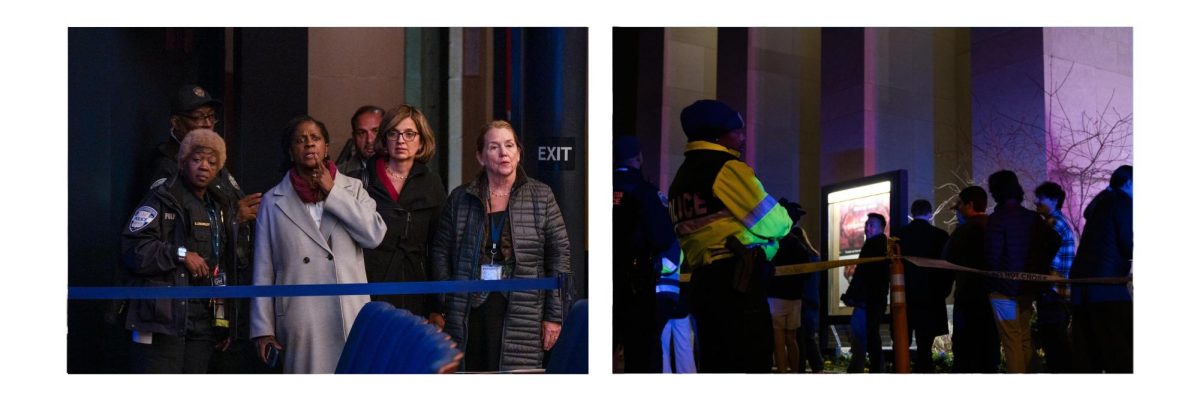
Democracy Matters, the DSC and Swing Left organized the protest a few hours after Turning Point and College Republicans announced the event last Thursday evening. A few minutes before Kennedy was scheduled to begin speaking, the crowd swelled from just over a dozen students to nearly 60, with protesters playing music like the national anthem and “Born in the U.S.A.” and interspersing chants of “shame” and “Hey hey, ho ho, you and the worm have got to go.”
The event kicked off with Ben Graham, the Department of Interior’s faith director from the newly created White House Office of Faith, and Jordan Vimont, a pastor at Christ D.C. Church, leading the crowd in a prayer.
Kennedy, who spoke in conversation with Turning Point Foggy Bottom President Ryan Van Slingerland and College Republicans Vice Chairman Paul Lieb, said HHS has not made any cuts to science or research and has not terminated any clinical trials during his time as secretary. He later clarified he meant HHS has only terminated funding for “hoax studies” that had links to diversity, equity and inclusion initiatives or those he said erroneously studied the possible genetic roots of autism.
Under Kennedy’s leadership, the National Institutes of Health has terminated or frozen at least 5,464 grants — almost 2,900 of which have since been reinstated — with most cancelations applying to studies that focus on gender, diversity and mRNA vaccines, according to Grant Witness, a website run by public health professors that tracks federal cuts to science.
Autism has no single known cause, but researchers largely agree its cause is a combination of environmental and genetic factors, according to the Mayo Clinic.
“It was all a big scam,” Kennedy said. “Now we’re taking the money away from those hoax studies, and we’re putting it in real science.”
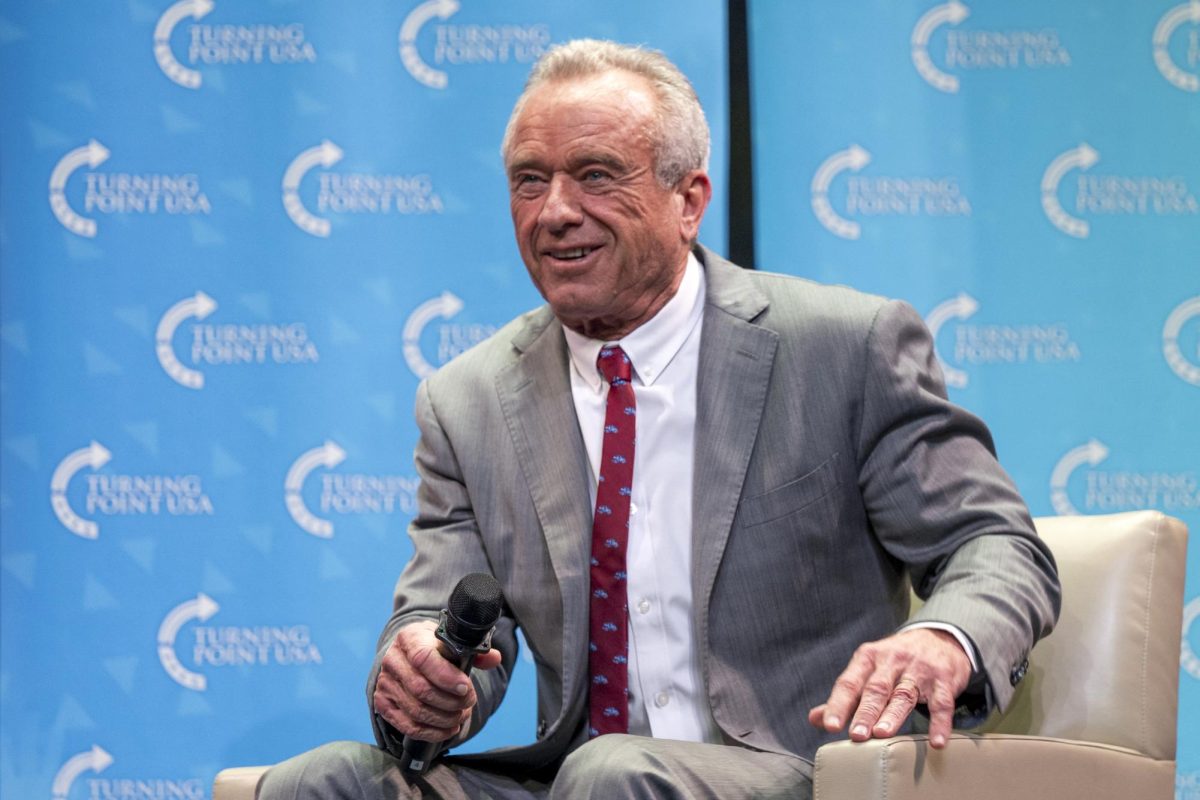
Kennedy said HHS will not emphasize social determinants of health — non-medical factors that impact a person’s health, like their economic stability, access to education or race — in its research and instead focus on publishing “objective science” that does not take individuals’ characteristics into account. He defended his department’s decision to flag words like “diverse” and “gender” when approving grants because he said science should broadly serve all Americans and not specific groups.
“We’re trying to give people the right information, and it’s for all Americans,” Kennedy said. “It’s not for Americans of one color, another color, another religion or one religion.”
He said medical schools, journals and organizations like the American Medical Association and American Academy of Pediatrics have all been “compromised” by taking funding for research from the private pharmaceutical industry, which he said promote their own “mercantile interests” over public health. He said, as a result, the United States has a “sick care” system rather than a health care system, where companies reap profits by keeping patients on treatments rather than curing their ailments.
“We need to realign these perverse incentives so that people can make money by keeping you healthy,” Kennedy said.
Kennedy said the government should not be a “nanny state” by regulating industries that sell products like vapes or e-cigarettes and instead present the public with “gold standard” research that allows them to make their own decisions. He said the health care system should reward those who make good decisions and punish those who make bad ones, like those who actively smoke facing increased insurance costs.
“We need to tell you what the risks are, what the benefits are, and then let Americans make their own choices,” Kennedy said. “If you make bad choices, you may have to pay a little bit more of your share of the healthcare costs of our country.”
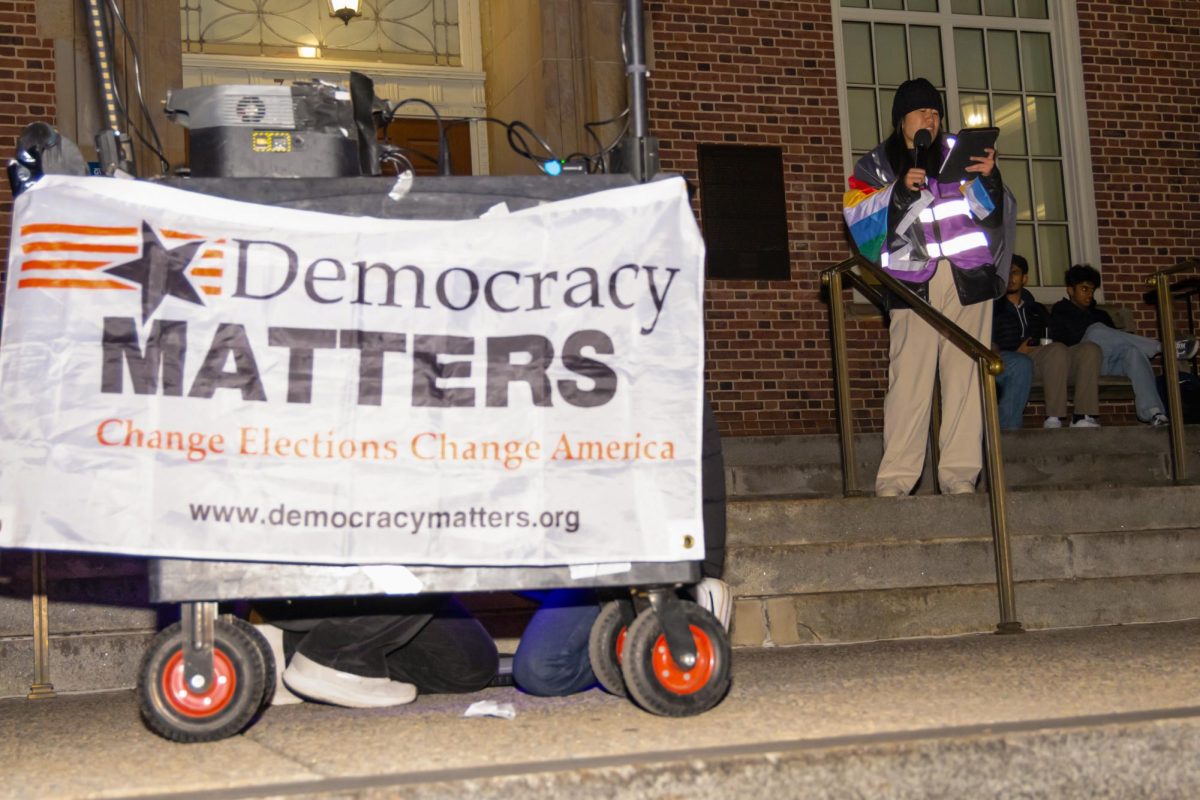
Fong said GW allowing Kennedy to speak on campus goes against GW’s mission as a university, echoing grievances other DSC members had with the event since it was announced Thursday evening. She said officials promoted the ideas of scholarship, diversity and community at GW when she was deciding whether or not to commit to GW, but they have “thrown away” those ideas by hosting Kennedy on campus.
“The disabled community is tired of having a fight every day, fighting the law, with the institution, with prejudice, now with plainly outrageous rhetoric that insults my community and insults your intelligence,” Fong said.
Fitzgerald, last year’s SGA president, said Kennedy and other lawmakers need to address a mental health crisis that is one of the “defining challenges” of Generation Z. He called on protesters to join in on a “bipartisan push” to make Congress pass mental health legislation that will expand access to resources so students can get the care they need.
“We’re working across organizations, across political lines, the Student Government Association, the Mental Health Assembly, College Democrats and Republicans, AFSP, Partners in Health, Democracy Matters, Swing Left and groups on campus and nationally because mental health isn’t a partisan issue, it’s a human one,” Fitzgerald said.
Donnelly, a pediatrician at National Children’s, located in D.C., said she wants Kennedy to feel the “worry and suffering” he’s inflicted on families with young children because of his vaccine and autism policies and statements. She said she was one of the protesters who interrupted Kennedy’s confirmation hearing in January, shouting “you lie” when he said he was not anti-vaccine.
“I worry about the future for my patients and my family,” Donnelly said.
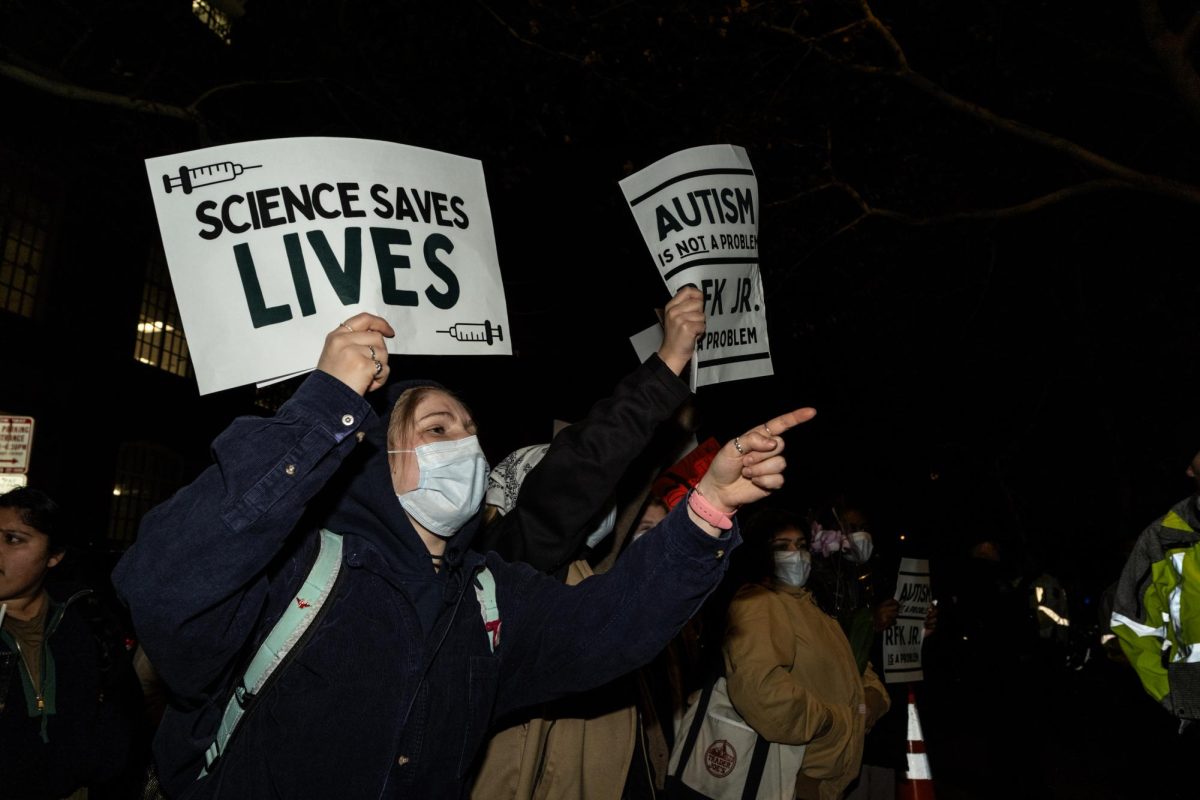
The protest concluded with one final round of chanting “dictators have got to go” towards Lisner and organizers playing the song “F*ck Donald Trump” as the crowd slowly dispersed. The event continued on for another 30 minutes after the protest cleared.
Your donation directly empowers the student journalists of The GW Hatchet, giving them the tools to investigate, report and publish stories that matter. Every contribution helps us continue our decades long tradition of independent journalism at GW.