
The Student Bar Association Senate voted to allocate $151,000 to the executive budget and 44 law school student organizations at a meeting Tuesday, marking the lowest SBA budget in at least five years.
SBA Senators unanimously approved the Student Bar Association Budget Allocation Act marking a significant reduction to the SBA’s budget, dropping to $151,000 from over $200,000 in 2024, which senators attributed to broader University budget cuts. SBA President Amanda Hichez said the executive cabinet took nearly $35,000 less than last year’s $110,328 executive budget to create a more equitable balance between the executive and student organization budgets, a decision aimed at addressing student and SBA Senator complaints of an imbalance between the executive and organization budgets from last year.
SBA senators voted to allocate $63,372.20 to student organizations and $75,000 to the SBA executive budget, saving $12,627.80 for the ad hoc fund — which the senate can distribute to student groups that request extra money throughout the year.
“The alternative is giving more to student orgs and leaving the exec with less, and obviously that’s not a good idea because we’re putting on weekly events, all the major events at the law school, and we’re already working with less money,” Hichez said.
Hichez said she predicts that this year’s University budget cuts, including implementing a hiring freeze to reduce expenses by 3 percent, will limit any potential supplements to their budget this year from the law school or financial assistance from the University for groups like GW Law Revue — an annual law student musical and sketch performance in Lisner Auditorium — for discounted rates on event spaces.
Following an initial budget recommendation for each organization presented by SBA Sen. Yasameen Ganji, the chair of the SBA’s Finance Committee, senators scraped over $12,000 from student organizations that received an increase in funding this year into a pool to be redistributed to identity-based student organizations throughout the night.
During the meeting, SBA senators debated funding priorities between organizations with a professional or identity focus and those created for recreation and heard appeals from student organizations dissatisfied with their suggested allocation.
SBA Sen. Alexandra Ethridge said the senate should prioritize funding for organizations that serve a broader community, like a cultural or religious group, rather than specific interests, like real estate law, tech law or the Revue.
“We’re talking about taking money from them for a play to give to groups that have not yet gotten to establish themselves but can really help foster community on this campus,” Ethridge said.
SBA Interim Sen. Luke Bella said the senate should prioritize affinity — those serving an identity — groups and professional organizations over organizations created for “fun,” like the GW Law Running Club, which initially received their full request of $380 before senators cut the allocation to $50 during the debate.
“I mean, it’s the law school, I feel like those should be the priorities over fun things,” Bella said.
After multiple recess sessions where senators discussed where to allocate the pool of money, SBA senators decided on 15 identity based organizations — groups like the GW Law Association for Women, GW Latin American Law Student Association and Black Law Student Association — and allocated an additional $500 to each group.
SBA senators allocated an additional $215 to the National Security Law Association, Military Law Society and Plaintiff’s Law Association after representatives from each gave speeches on their organization’s behalf during the community comment period. Senators also upped the Evening Law Students Association budget to $4,800, after representatives from the organization noted its recommended allocation of $1,800 marked a nearly 65 percent decrease from its budget the year prior.
Throughout the night, SBA senators reduced $4,000 from Law Revue because it initially had the largest allocation of any other student organization at $14,000. The group requested $25,797.97 to put on its annual production this year and received $13,500 in allocations last year.
SBA Senators said the production usually costs over $30,000 due to having to rent out Lisner Auditorium, the total cost of which is usually not covered by the SBA allocated funds or revenue from ticket sales.
Senators also passed an amendment, proposed by SBA Sen. Nicole Emanuel, which reduced the funding allocation of any organization that received 100 percent of its requested funding to 90 percent of its request, pooling the saved money into the pot to be redistributed to affinity organizations.
Last year SBA Senators participated in a similar debate over the annual Budget Allocation Act, instead voting to take money from the executive budget to redistribute to student organizations after student leaders expressed concerns about reduced budgets from the previous year and an increase in the executive budget. This year marks the second year of significantly reduced funds for student organizations allocated by the SBA, with the body allocating $65,000 in the 2024-25 school year, down from $100,000 in the 2023-24 school year.
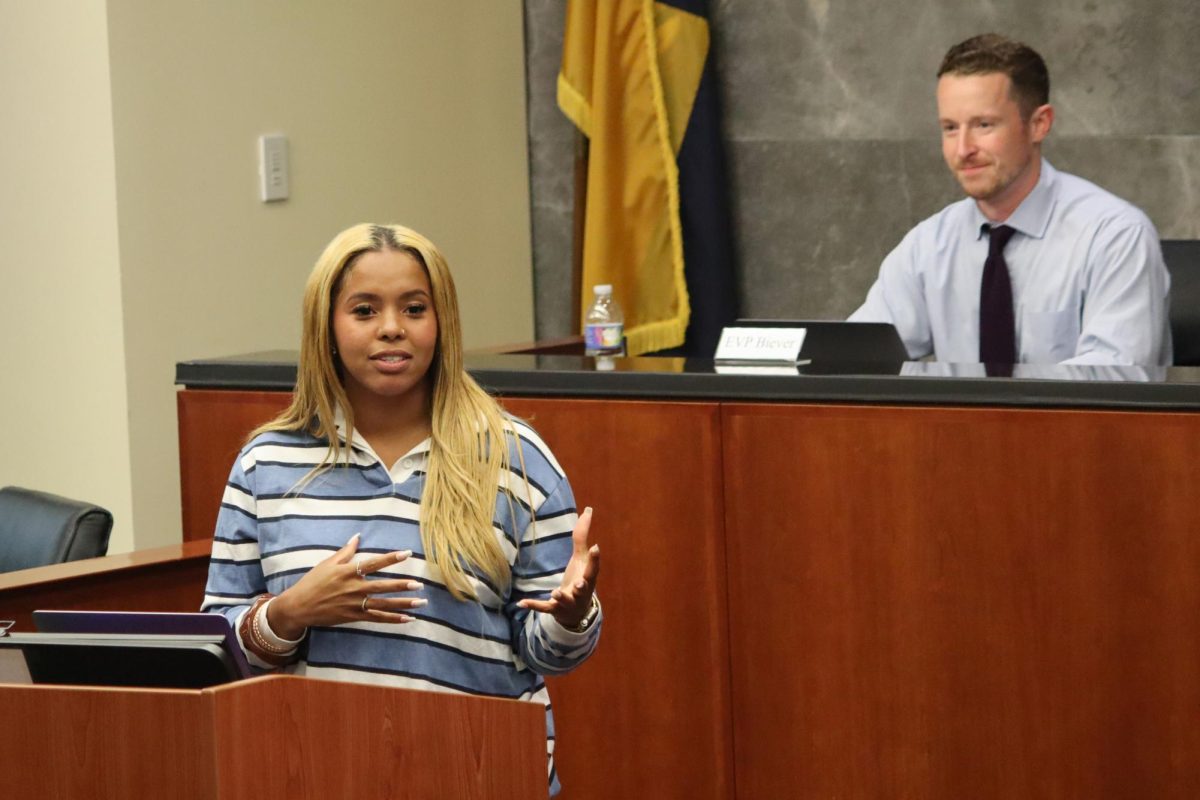
SBA Executive Vice President Quinn Biever swore in six interim senators, appointed by Hichez, to fill vacancies ahead of the Sept. 24 special election which will fill first year law senator seats and any remaining vacancies. The newly sworn-in SBA senators Ava Mayo, Ibrahim Nazir, Luke Bella, Eric Frank, Kian Zabihi and Leslie Rangel will serve in their capacity as temporary senators until the election where they will have the opportunity to run for a full-time position.
The SBA Senate also voted to appoint Callie Stevens, a third year law student, to serve for a second consecutive term as SBA senate parliamentarian, a position the body created last year to help conduct senate meetings. SBA Sen. Thaddaeus Canuel said Stevens did an “amazing job” in the role last year, and he could not think of anyone more qualified for the position.
“Callie has been an absolute wonder to have on the committee,” Canuel said. “She’s been so helpful, and has really helped me and the rules and tons of constitution committee overall to just do some really excellent work, really getting a handle on the constitution and the bylaws.”
In her presidential address, Hichez said Assistant Dean of Students Anthony D. Tiberio reached out to her to create an SBA Executive Committee, which will meet bimonthly with SBA members and law school deans to discuss law student concerns. The formation of the committee comes after a year marked by SBA leaders’ recounting issues in communication with law school deans, which they said led to a lack of financial transparency from law school officials and heightened oversight from the Dean of Students’ Office.
“That’s going to be a great opportunity to be a liaison between the senate, the SBA and the administration,” Hichez said.
The next SBA meeting will be held Sept. 23 at 9 p.m. in the Burns Moot Court Room in Lerner Hall.