
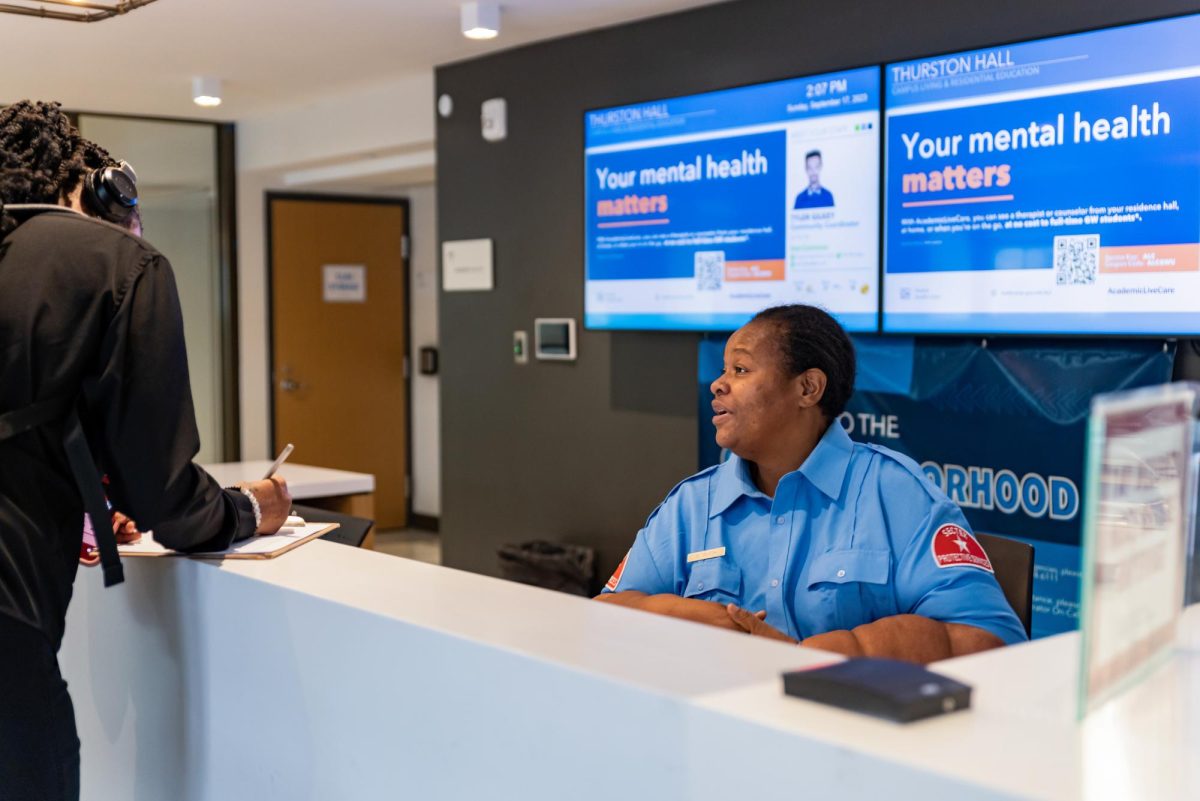
Officials terminated around-the-clock security guard hours in upperclassmen residence halls this academic year, reducing coverage to the overnight period from 10 p.m. to 6 a.m.
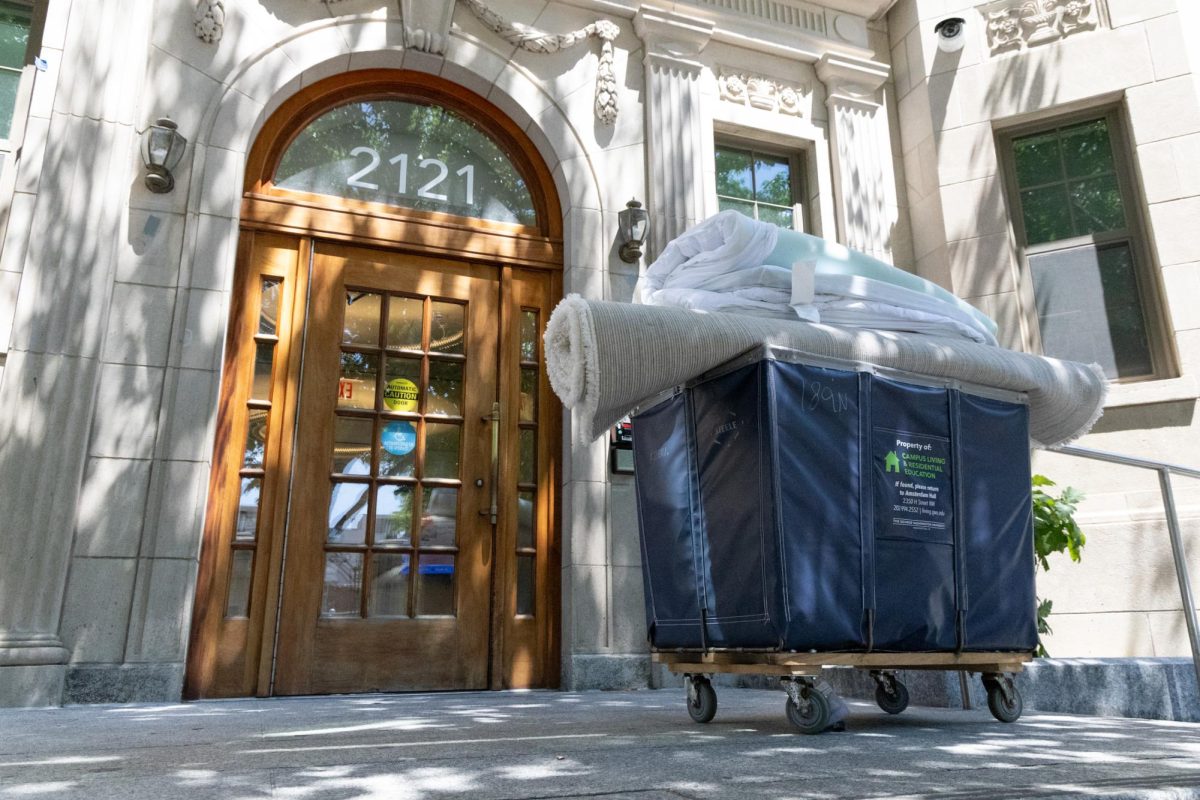
First-year resident halls, Francis Scott Key Hall, District House, Jacqueline Bouvier Kennedy Onassis Hall, Munson Hall and International House will retain 24-hour security coverage, but upperclassmen residence halls like Shenkman and Dakota will shift to overnight security only, according to a University release. The Division of Safety Operations and the Division of Student Affairs activated the security plan based on the “geographic location” of each building and the crime reporting data from the Campus Safety office, according to the release.
The University categorizes The Dakota, South and Shenkman halls, District House and 1959 E Street as upperclassmen housing. All residence halls on the Mount Vernon campus, Potomac House and Thurston, FSK, Guthridge and Madison halls are first-year housing. Officials categorize International House, JBKO and Munson, Philip Amsterdam, Fulbright, 2109 F Street and Strong halls as second-year housing.
“For this academic year, updates to residence hall safety protocols were made following data analysis and a risk-based assessment to maintain safety in all residence halls,” University spokesperson Julia Garbitt said in an email. “Security coverage from location to location is determined by geographical factors including foot and metro traffic and whether the space is on the outskirts of campus.”
The University will monitor the new security posture closely and make changes as needed, per the release.
In line with last year’s policy, students can tap into the residence halls using their GWorld cards, while visitors, including any non-residential GW students, are required to sign in with a security guard to enter.
The University will also continue security efforts from past academic years, including mandated GWorld tap access needed to enter academic and University buildings and the use of closed-circuit television in public spaces, according to the University release. GW owns the CCTV cameras on campus, using the system to monitor public spaces and identify any potential unusual or suspicious activity, according to Garbitt.
Security guards will continue to foot patrol around campus and have presence at the entrances of “some of the buildings,” including residence halls, the release states.
The University is monitoring the Trump Administration’s decision to deploy the National Guard and federalize the Metropolitan Police Department, according to the release. Officials in an email last week said they did not believe federal law enforcement presence would have a “direct impact” on University operations, but recommended students carry their student and government identifications at all times and report suspicious or threatening behavior to the GW Police Department or MPD.
Officials said they will share updates through the D.C. Federalization page on Campus Advisories.
“While direct impacts to GW’s operations are not expected at this time, community members may notice increased law enforcement presence in the Foggy Bottom neighborhood, as well as across the District,” the release said.
“I strongly encourage you to stay alert and aware of your surroundings at all times,” GW Chief of Police Victor Brito said in the release. “It’s great to embrace our urban environment, but it’s just as important to stay mindful of your location and situation.
For live safety updates, alerts are pushed through email, text messages and social media through GW Alert, Campus Advisories and GW Guardian App.