
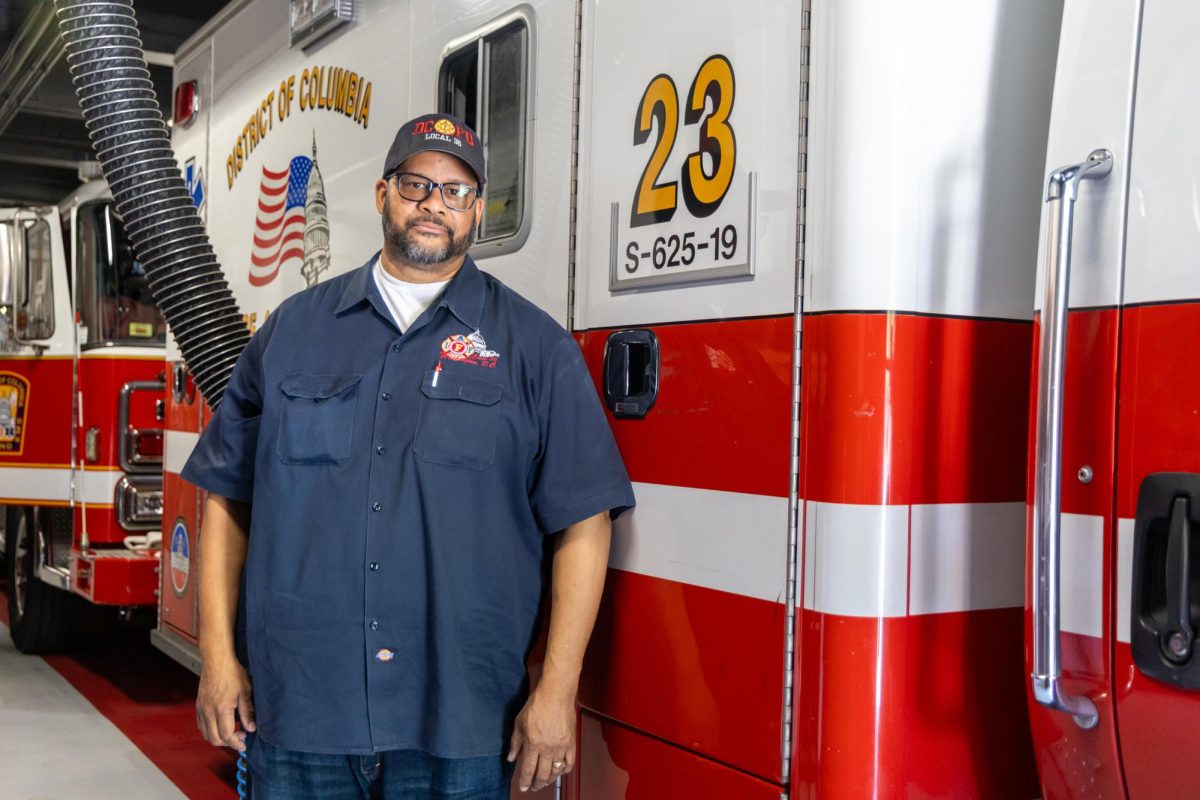
Firefighters at the Foggy Bottom Engine Company 23 firehouse and other DC Fire and Emergency Medical Services personnel are unlikely to see a pay increase until at least sometime next year under Mayor Muriel Bowser’s budget proposal for fiscal year 2027.
The proposal, which Bowser presented to members of the D.C. Council earlier this month, includes $469 million in cuts and will save the city $127 million by forgoing funding for future raises in a new collective bargaining agreement for FEMS personnel, which has been under negotiation since 2024. Current and former firefighters said they want the city to revisit the budget, which is set to be passed in June, because a lack of a wage increase would further contribute to cost of living issues for D.C. FEMS personnel and could cause some to leave their companies for other fire departments in the greater DMV area that offer higher pay.
In their unveiling of the budget before the Council earlier this month, officials with Bowser’s office said the cuts were necessary because of a $1.1 billion dollar budget gap they said stems from factors like federal workforce reductions — which are leading to reduced tax revenues for the District — rising Medicaid costs and increased overtime expenses.
Joe Chisholm, vice president of the International Association of Fire Fighters Local 36 and a firefighter for nearly 29 years at Foggy Bottom’s Engine Company 23 before he retired in 2019, said union leadership was surprised when Bowser did not include money for future collective bargaining agreements in the budget because she had supported them in disputes with the city in the past.
D.C. Firefighters have not seen a raise in over two years as they are currently operating under a collective bargaining agreement that expired in 2024. IAFF Local 36 filed an unfair labor practices complaint with the District of Columbia Public Employee Relations Board in June, alleging FEMS had failed to negotiate with the union in good faith.
Union officials said the city either didn’t respond to their proposals or made offers too low for the union to negotiate with, according to a June IAFF 36 press release. A spokesperson for the Office of the City Administrator said in July the District did not have “sufficient funding” to reach a deal with the union at the time.
In 2015, Bowser settled a long-running lawsuit with IAFF Local 36, which began before she was first elected, agreeing to pay $45 million to 3,000 firefighters in a dispute over overtime pay. At the time, Bowser expressed support for back pay and for paying time-and-a-half to firefighters who work more than 42 hours in a week going forward.
Chisholm said the union has maintained a “great relationship” with Bowser and endorsed her each of the three times she ran for mayor largely because she was “receptive” to their concerns about pay, like with the $45 million settlement.
“We’re not asking for the moon, but we are asking for a piece of the pie,” Chisholm said. “And she’s been, in the past, real receptive, making sure everything that we ask for we get at least all or some of it.”
The proposed budget does not provide funding for future collective bargaining agreements or raises for non-unionized city employees, but many employees who belong to unionized agencies, like the Metropolitan Police Department or DC Public Schools, will still see raises because the District already settled on collective bargaining agreements with their respective unions.
Chisholm said Bowser had allowed the contract negotiations to “drag on,” and they don’t know why money for future collective bargaining agreements was left out of the budget. He said firefighters’ wages haven’t kept pace with the rising cost of living and living within the District has become “unaffordable” for most firefighters.
“Everything is going up,” Chisholm said. “You can see it around the country, gas, groceries, everything is going up, except for our salaries.”
Chisholm said Ward 2 Councilmember Brooke Pinto has been helpful in advocating for issues related to firefighters, like when she voted against a $25 million deal to buy 18 new fire engines after the union raised concerns about their quality.
Pinto, in a statement, said she wanted to see money for firefighter raises included in the budget and said she would work with other members of the council to prioritize collective bargaining increases in the budget.
“Our firefighters put their lives on the line to protect our communities every day and it is imperative that we stand with them and our public workforce to ensure they are properly paid and have fair benefits,” Pinto said in a post on X. “It is unacceptable that the budget removes funding set-asides for future collective bargaining agreements, including for our firefighters.”
David Hoagland, the president of the IAFF Local 36, called Bowser’s budget proposal “deeply concerning,” and said it could directly impact D.C. residents as a lack of raises could put the quality and stability of FEMS services at risk.
“Fire and EMS are among the most relied upon and essential services in this city,” Hoagland said in a statement. “Residents depend on fast, professional, and reliable emergency response every single day. Maintaining that standard requires retaining experienced, highly trained personnel — and that only happens when compensation keeps pace with the cost of living.”
A firefighter currently assigned to the firehouse in Foggy Bottom, who spoke to The Hatchet while off-duty and requested anonymity over fears of retaliation from FEMS leadership and the mayor’s office, said firefighters are asking for a higher wage because they want to be paid an amount that is “fair” and would allow them to provide for their families.
“We know we’re not going to be millionaires, but we’re just asking for something that can provide for our families, put food on the table,” they said. “We’re not asking for the whole ball of wax.”
The firefighter, who said they met Bowser at a union event when she was first running for office, said the mayor is less worried about providing firefighter pay since she is not running for reelection and won’t need the union’s endorsement.
“If she was running for reelection, she would be running to our union office and trying to talk to them,” they said.