
Over a year after President Donald Trump’s return to power, GW’s conservative student leaders say the campus has become more welcoming to right-leaning students, pointing to packed events, a surge in membership and support from University officials.
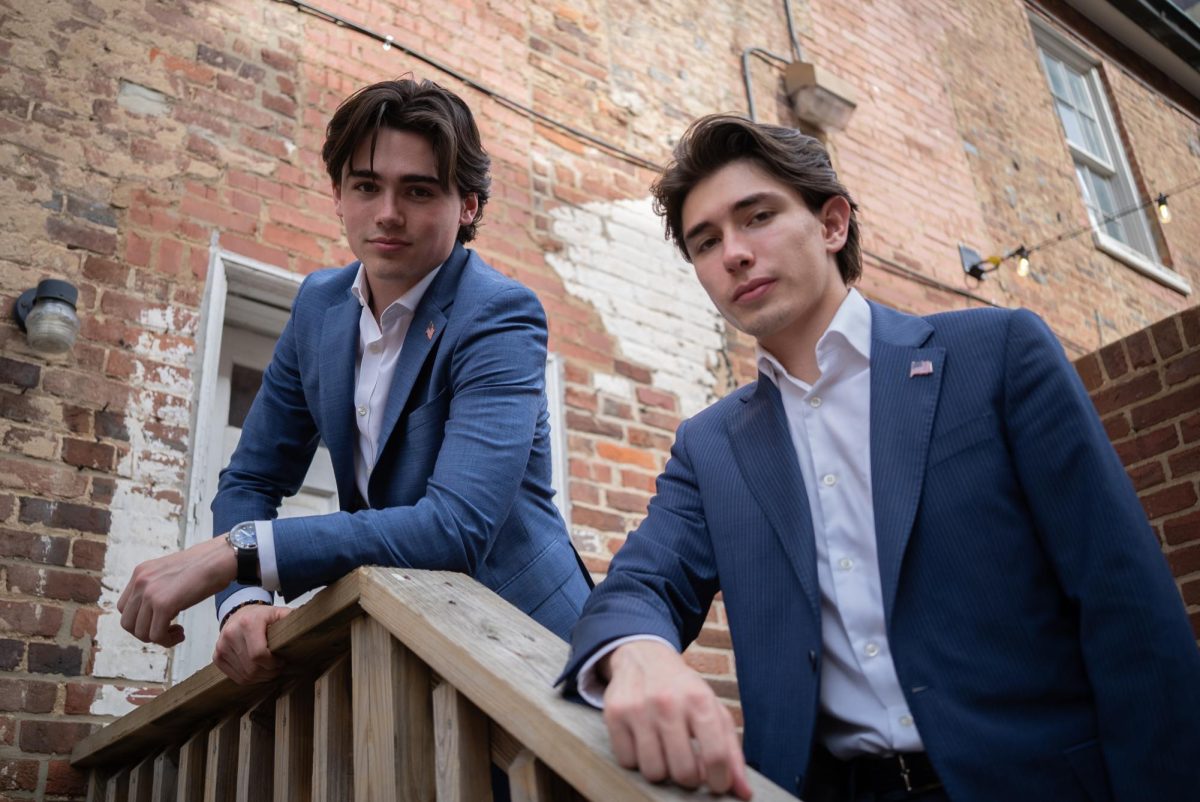
Three student leaders from GW College Republicans and Turning Point Foggy Bottom say membership and interest in their organizations and events have surged this year as Trump and Republicans returned to federal power, and students across the political spectrum show renewed interest in civil discourse. They said the surge in interest has coincided with increased support from University officials, including in response to online threats following Charlie Kirk’s assassination and view their recent successes as a starting point as they work on hosting more events with high-profile Republican leaders.
“It’s great to be a Republican,” Kieran Laffey, the chairman of GW College Republicans, said. “We got a lot more work to do, and we want more dialogue and conversation, and we invite everyone, no matter what you believe, to come to our stuff.”
Laffey said College Republicans has capitalized on growing interest from GW’s conservative students by revamping its social media and website, doubling the number of events it offers and expanding social opportunities, from trips to the National Symphony Orchestra to parties at Hotel Hive. He added that the group has seen a 21 percent increase in membership this year, with 39 percent of members being first-year students — the highest proportion of first-years since before the pandemic.
“Our membership has skyrocketed,” Laffey said. “The freshman class this year is our largest faction in the club, so we’re all thrilled, but we got to keep pushing.”
The College Republicans, in tandem with other groups like Turning Point Foggy Bottom, hosted events in recent months that drew attendance from students on both sides of the aisle, like their fireside chat with Health and Human Services Secretary Robert F. Kennedy Jr. along with a vigil to honor Turning Point’s founder and conservative activist Charlie Kirk after his assassination in September.
Laffey said the revival of other conservative organizations on campus, like Turning Point and Young Americans for Freedom, over the past year, signals a shift in the student body toward the right as there is greater demand for a wide range of right-leaning groups.
“A lot more young people are conservative,” Laffey said. “That’s a big reason why Trump won last November, so definitely seeing all the chapters revived and really doing great things.”
Laffey said when he first arrived on campus in 2024, he immediately felt that GW was predominantly liberal, but he believes conservative students, though still in the minority, now experience a more tolerant environment where students of all political affiliations are eager to engage in civil discourse and debate Trump’s policies with Trump in office, giving them more ground to stand on.
He said he hopes to foster greater civil discourse across the student body by hosting debates and other events with left-leaning groups. The College Republicans and College Democrats also came together to host a unified vigil following Kirk’s assassination.
“There are, of course, hurdles we still have to get over, but we need more conversation,” Laffey said. “That’s why GW is here to have important discussions about politics. So we got to keep pushing for that.”
Laffey said he finds conservative students still feel they have to preemptively “hide” their political identity on campus in classes, but the sense has become less of an issue since Trump came into office but still exists, especially in academic settings.
Laffey said University President Ellen Granberg and other administrators have been “very supportive” of the College Republicans in the last year, pointing to having brunch with Granberg and the College Democrats and having officials ramp up security after fielding their concerns about safety on campus after Kirk’s assassination.
In the immediate aftermath of Kirk’s assassination, the College Republicans postponed a scheduled event with Congressman Brendan Gill (R-TX) over safety concerns. A week later, at the College Republicans vigil for Kirk, officials like Granberg, along with Vice President for Student Affairs and Dean of Students Colette Coleman and Interim Provost John Lach, attended along with a handful of members of Congress.
Laffey said Coleman invited him to serve on her cabinet in a new spot reserved for a conservative voice. He said he joined the cabinet in August, adding that it includes about 10 leaders of “larger” student organizations at GW, including leaders from Program Board and GW College Democrats
“I have all good things to say, and I really do believe people like Dean Coleman and President Granberg want more civil discourse, and they want to see thriving political parties on campus,” Laffey said.
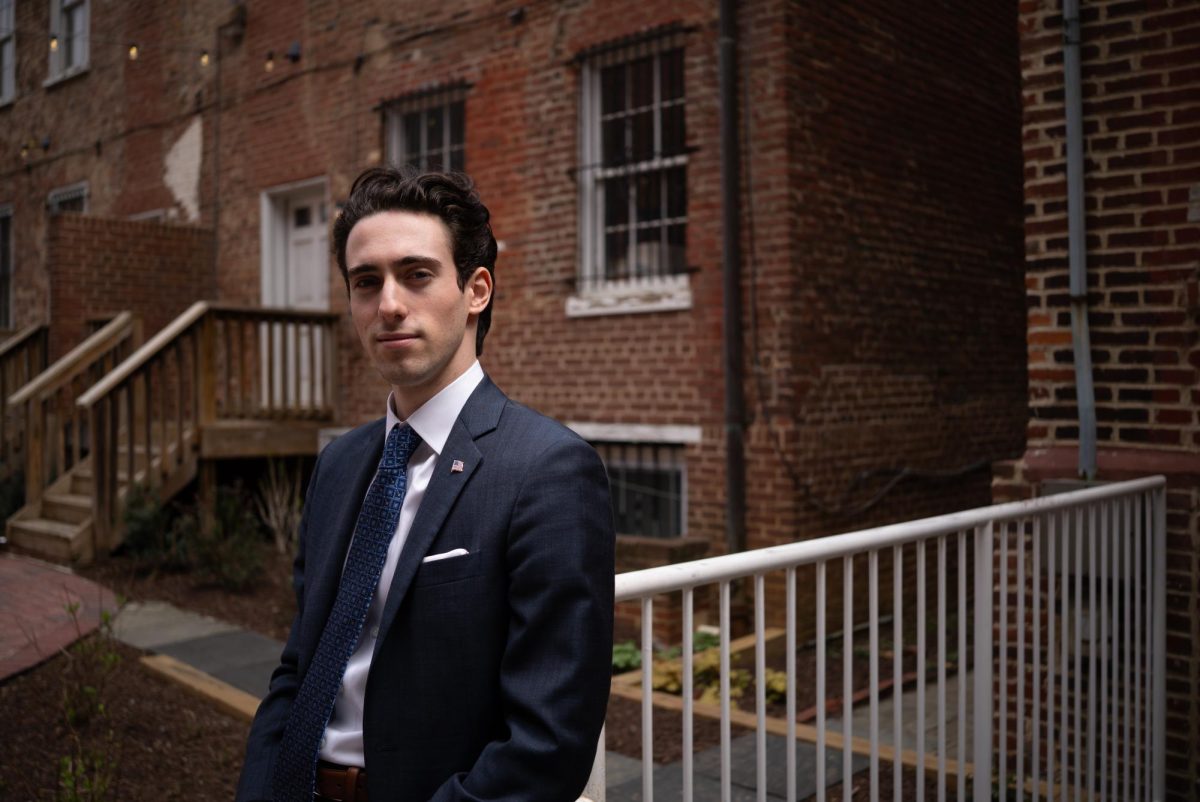
Ryan Van Slingerland, a junior majoring in international affairs and the president of Turning Point Foggy Bottom, said there’s been an “ebb and flow” of the GW community’s reception to conservative student groups within the past year, emphasizing uneasiness over the war in Iran and Trump’s unpopularity, fueling some animosity toward conservatives.
Despite this, he said overall, students are more interactive with the group’s events, like Thursday’s discussion with Erika Kirk and Karoline Leavitt, which had attendees from across the aisle as students look to engage in greater civil discourse.
When students revived GW’s Turning Point chapter in October, in the wake of Kirk’s assassination in Utah, the group’s leaders said their goal was to encourage civil discourse, champion debate across political beliefs and seek both Democrats and Republicans to attend the group’s events.
“In months past, and even now, after our event [on Thursday], we’ve made considerable strides at bridging that divide,” Slingerland said. “A lot more students are receptive to our message.”
Slingerland said the University administration has been supportive of conservative groups, especially this year and in the wake of Kirk’s assassination, like the GW Police Department, which investigated threats made to members of the College Republicans.
“The admin wants to take those strides and make sure that everyone is welcome at GW because unfortunately, there are a lot of other colleges around the country that don’t treat conservatives that way and who are somewhat hypocritical in their approach to political ideology and certain viewpoints,” Slingerland said.
Paul Lieb, the vice chairman of College Republicans, said collaborations with other right-leaning organizations on campus, including Turning Point and YAF, are necessary to ensure people with the same political beliefs are unified on campus. College Republicans hosted multiple events this year in conjunction with Turning Point and YAF, including with prominent party figures, like Sen. Rand Paul (R-KY) and RFK Jr.
“On a college level, it’s so important to stay close with the people that are so like minded because if you’re divisive, nothing is actually going to get done,” Lieb said.
Lieb said students can still feel “degraded” by professors when they write papers with right-leaning beliefs because left-leaning professors won’t grade their writing but rather the beliefs expressed in the paper because their bias seeps into the grading process. He said people come to college to have a dialogue and hear a diverse range of opinions.
Lieb said the support from GW’s administrators has been great, including helping address “student pushback” on Fizz — an anonymous campus social media app — by cutting it off from GW’s WiFi. He said College Republicans has also been able to expand their event offerings this year, including hosting a gala with multiple members of Congress at the Kennedy Center in late March, which they plan to turn into an annual event.
“You see the growth of other chapters as well,” Lieb said. “Turning Point, they’re all big chapters now. Any big conservative movement we can really bring and help lift up is always good.”
Natalie Note contributed reporting.