
Officials’ payment to federal lobbyists in the third quarter of the 2025 calendar year marked GW’s second-largest payment to the firm since they retained them in spring 2024, with total payments this year surpassing last year’s, lobbying disclosure forms show.
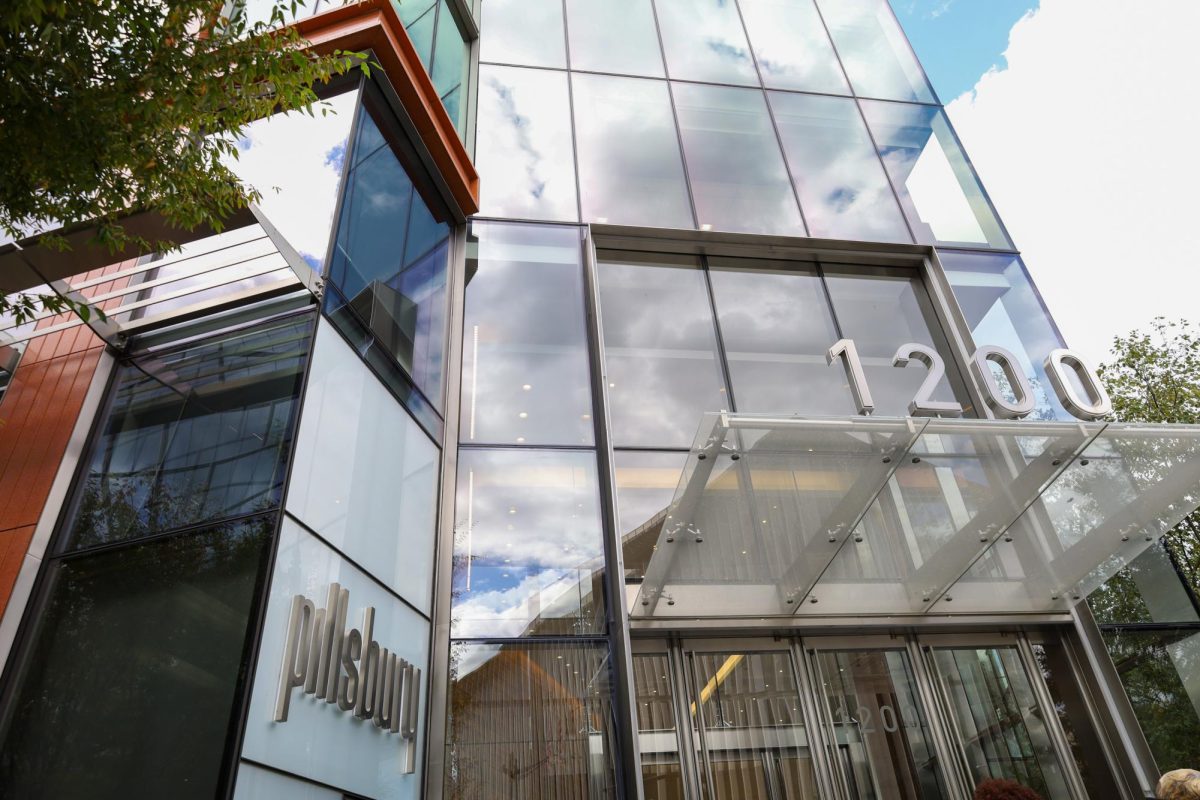
The University paid the law firm Pillsbury Winthrop Shaw Pittman $80,000 between July 1 and Sept. 30 to assist with “higher education issues,” bringing total payments to the firm to over $390,000 since officials retained them last year. Officials’ continued payments to the firm come amid President Donald Trump’s ongoing attacks on higher education, including travel bans, visa policies affecting international student enrollment and the termination and overhaul of graduate student loan programs.
University spokesperson Kathleen Fackelmann said Pillsbury provides officials with “valuable guidance” on a variety of ongoing “government and regulatory matters.”
“GW’s continued engagement of the firm and our payment to them reflects our level of activity as we navigate the current environment,” Fackelmann said in an email.
Fackelmann declined to comment on the specific government and regulatory matters for which the firm advises GW. She also declined to comment on whether the type of services Pillsbury provides has changed since GW first retained the firm in 2024 and why the University paid the firm $10,000 more this quarter than it did in each of the last two quarters.
Fackelmann also declined to comment on whether Pillsbury is advising GW or lobbying on behalf of GW on issues related to the Trump administration’s actions, including the Department of Justice’s campus antisemitism investigation into the University or various higher education policies implemented by Trump.
The University registered as a client of Pillsbury and hired five lobbyists to petition Congress on its behalf in spring 2024, marking the first time GW had retained federal lobbyists since 2009. Officials hired the firm in May 2024 on the 12th day of the pro-Palestinian encampment in University Yard and two days before the Metropolitan Police Department cleared the demonstration.
Officials’ payment to the firm represents a $10,000 increase from the $70,000 paid in each of the first two quarters of 2025. In 2024, GW paid Pillsbury $90,000 in the second quarter when they hired the firm, followed by $30,000 in the third quarter and $50,000 in the fourth quarter, totaling $170,000 for the year.
The third quarter’s payment brings the total payment to the firm to $220,000 so far this year, exceeding the $170,000 officials paid them for their three quarters of service last year by $50,000.
University President Ellen Granberg said in an interview with The Hatchet last September that GW hired the firm after the House Oversight Committee called on D.C. officials to testify on why they denied requests to clear GW’s pro-Palestinian encampment. She said GW hired the firm to ensure officials didn’t create a “bigger issue,” because the University did not have connections to manage a “situation” between lawmakers and GW officials.
She said at the time that the University is still in touch with Pillsbury because they allow GW to have a voice on Capitol Hill that they hadn’t had before, but also added that the communication is selective because of the price associated with their work.
Other universities, including Northeastern University and the University of Pennsylvania, also retained federal lobbyists in early 2024 and have continued paying firms through 2025, though the universities hired the firms prior to pro-Palestinian encampments on their campuses. The University of Pennsylvania, like GW, paid its lobbying firm $80,000 in the third quarter of 2025 to engage with Congress on higher education-related issues, though it paid its lobbying firm the same amount each quarter in 2025.
GW’s spending on lobbying increased this quarter compared to its peer schools’ payments to lobbyists, which either remained stagnant or decreased. New York and Northeastern universities spent $50,000 on their lobbying firms’ services per quarter in 2025, while Syracuse University’s spending declined in the third quarter from $50,000 in the first two quarters to $40,000 in the third quarter.
Some of GW’s peer schools have also recently retained lobbying firms this year, including Georgetown University, which hired a lobbying firm in May for higher education policy issues and paid them $30,000 in each of the second and third quarters.
Tulane University retained a lobbying firm in early April for issues relating to funding and regulations impacting higher education institutions, along with Medicaid policies and facilities and administrative reimbursement issues. Tulane paid the lobbying firm $60,000 for each of the second and third quarters.
Wake Forest University hired a lobbying firm in February, initially paying them $20,000 in the first quarter, citing it was for policies and proposals related to research funding and universities’ endowment tax. Wake Forest increased their payments to the lobbying firm to $50,000 for both the second and third quarters, specifying the policies and proposals related to research funding included Trump’s One Big Beautiful Bill Act and federal student aid.