
Local business owners say the presence of the National Guard and federal immigration enforcement in the District has slowed sales at Foggy Bottom restaurants and prompted them to hold training sessions in preparation for possible raids.
President Donald Trump on Aug. 11 ordered National Guard troops to patrol the District, and local restaurant owners say their presence — which officials expect will last through the end of the year — has chilled foot traffic and hurt sales. The owners also said they’re concerned for their employees’ safety following an immigration raid at Circa in Foggy Bottom late last month and as the Metropolitan Police Department continues collaborating with Immigration and Customs Enforcement.
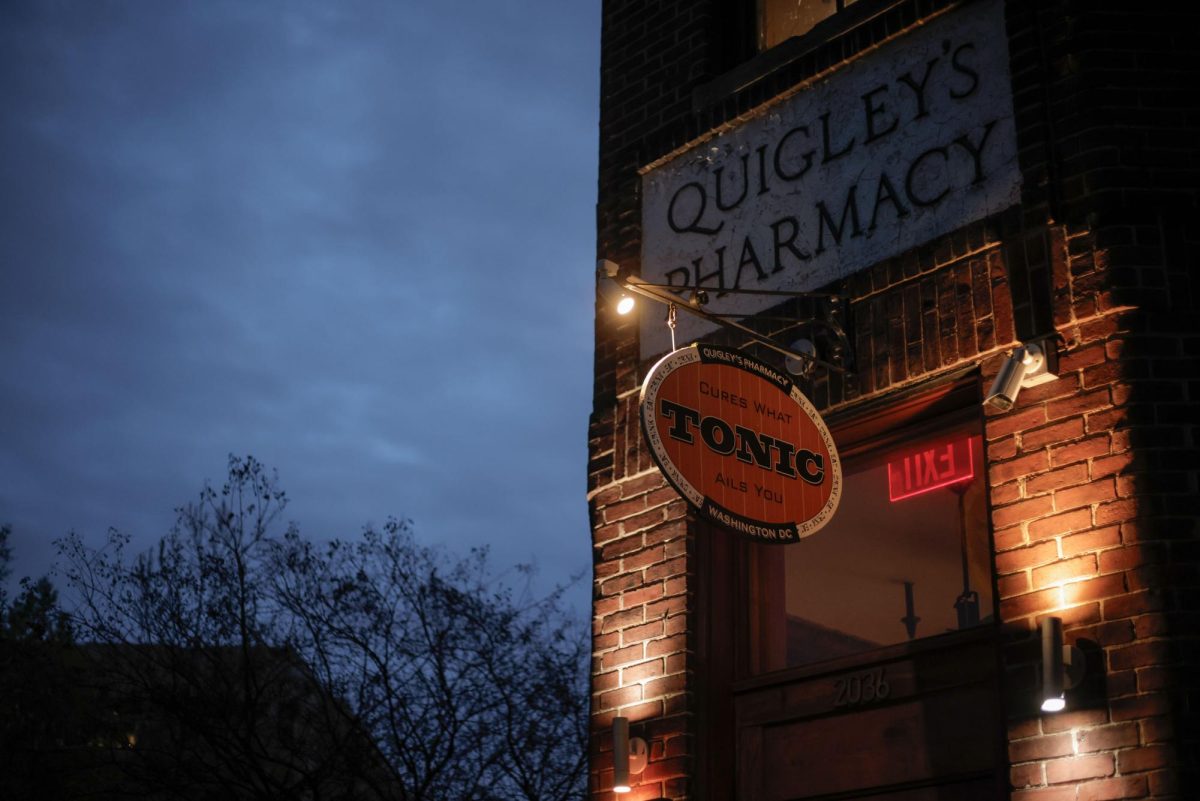
“In terms of what happened at Circa, some other restaurants and staff members are definitely on edge and worried about such things, as am I,” said Jeremy Pollok, Tonic At Quigley’s owner.
Since the federal surge began in early August, federal government statistics show officers have made over 3,500 arrests in D.C. as of Sept. 29, with 40 percent being immigration related. This hike comes in spite of D.C. Mayor Muriel Bowser’s indication that MPD would not assist in immigration enforcement after Trump’s crime emergency — which allowed him to federalize MPD for 30 days — expired on Sept. 10.
ICE raided Circa at Foggy Bottom on Sept. 24, University officials confirmed, and allegedly took or questioned between six and 15 people, according to first-hand accounts shared by the Immigrant Liberation Coalition at GW on social media.
GW owns the building the Circa is located in, and a spokesperson from the University and the restaurant’s manager declined to answer questions. A spokesperson from Circa Bistros, which operates Circa at Foggy Bottom, and ICE also did not return requests for comment.
Pollok said the raid at Circa put his staff “on edge” and left them worried if a similar raid could occur at Tonic.
“You can open up to the whole umbrella of everything that’s been going on over the last year,” Pollok said. “It has, everybody I know, for the most part, on a little bit of edge, a little uncomfortable, a little uncertain.”
Pollok said soon after Trump’s inauguration the Restaurant Association of Metropolitan Washington reached out to share resources and literature explaining employees’ rights and emergency contact information. He also explained how to interact with officers, like advising staff not to run.
Pollok said since Trump’s inauguration, he has conducted training with his staff and shared information sheets about what to do if ICE comes to the restaurant.
Foggy Bottom business owners in May said they were preparing for the possibility of immigration enforcement visiting their establishments after ICE said they delivered 187 notices of inspections to restaurants across the District, warning they intend to verify immigration statuses at the given locations.
Pollok also said Tonic’s sales have decreased about 10 percent since Trump deployed the National Guard, which he attributed to people who live in Virginia and Maryland and work in the District opting not to go out to eat or drink in D.C. due to feelings of unease related to federal presence.
Pollok said the ongoing government shutdown could exacerbate the decline in sales. He said Tonic usually experiences around a 15 percent decrease in sales during government shutdowns — the most recent was in 2019 — and is preparing for a further drop off by offering a “shutdown special” to attract and support federal workers. Pollok said federal workers receive one free beer with a burger.
The Congressional Budget Office estimates about 750,000 federal employees are currently furloughed due to the shutdown, with another portion working without pay and a smaller number stopping work entirely.
“The thinking was that, ‘They’re not working, so they might as well have a drink, right?'” Pollok said.
The decline in foot traffic comes as D.C. restaurants struggled to regain pre-pandemic sales levels amid increased operating costs and declining revenue. Local restaurant owners in April said Initiative 82, a measure to raise the tipped minimum wage to match the regular minimum, put upward pressure on labor costs and federal layoffs led to slower business, causing them to raise prices and cut labor.
Restaurant owners in August said they cut staff and slowed hiring to compensate for increased labor costs and tariffs enacted by Trump. They said the D.C. Council’s decision to slow I-82’s implementation did not ease those pressures.
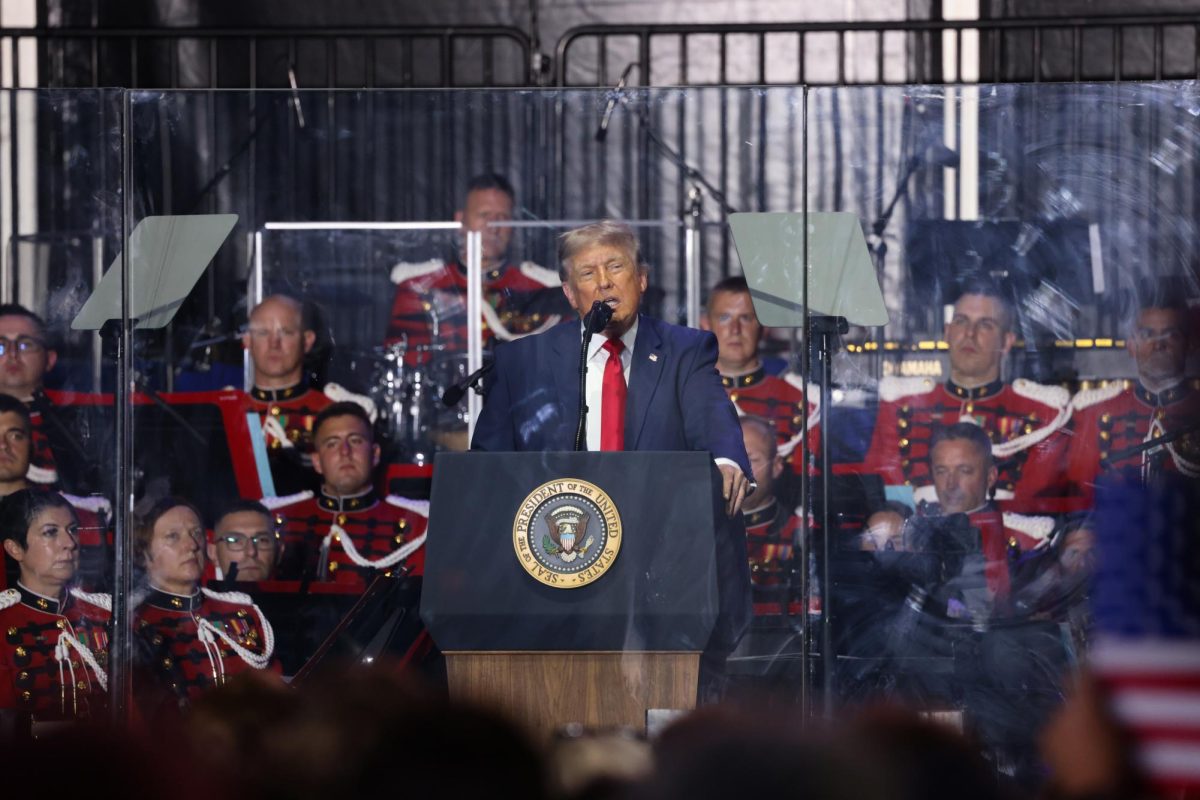
Gabriel Pio, general manager of Bodega Taqueria y Tequila on I Street, said he began training his staff for what to do if immigration enforcement enters the building after Trump’s military parade in June. He said he instructed them not to allow ICE to access the back of the establishment, which is where he said to go should they feel unsafe.
“We saw more ICE officers and the National Guard started to trickle in,” he said. “Those conversations started to happen more frequently.”
He said despite using E-Verify — which allows employers to verify employee status against government records and is offline due to the shutdown — to ensure all of his staff are properly documented, he is worried by recent reports of racial and ethnic profiling by immigration enforcement.
As troops patrolled the District in August, restaurant bookings have also dropped across the city. Some restaurant owners in Foggy Bottom said a decrease in sales in Foggy Bottom reflected a broader drop in the District, but business has begun to recover as students returned to campus in August.
He said while immigration enforcement has not visited his establishment, his staff has reported seeing them drive around.
Pio said Bodega has seen a decrease in sales since Trump deployed the National Guard in August. He said widespread anxiety among customers, who have become increasingly hesitant to visit the area due to a surge in police checkpoints where officers try to verify immigration status, contributed to the decline.
He said sales have improved since August, but he thinks a portion of would-be patrons drive directly to and from work, not stopping to eat or drink because they want to reduce exposure to checkpoints and enforcement.
“Our business kind of reflects people’s state of mind,” Pio said. “When people feel unsafe coming into the city, unfortunately, it does affect our workers and our bartenders and our cooks because we don’t have business and we don’t have shifts.”

Chief Leader at Arepa Zone in Western Market Genesis Marcus said she told employees to have their immigration papers with them at all times and prepare to show them to officers if they approach.
During the first weeks of the crime emergency and increased ICE presence, Marcus said she noticed a shift in the time Latino customers would visit, which she attributes to a fear of being profiled and questioned by authorities.
“Fifty percent of our customers are American and another 50 percent are Latin people,” Marcus said. “The Latin people did not arrive within the regular times during the first two or three weeks.”
She said customer traffic — particularly with the return of students to campus in August — has regularized weekday sales over the past month, though weekend sales still lag behind.
David Beltran, manager of Alitko in Western Market, said immigration authorities have not visited his establishment, but employees are trained to follow guidance showing how to spot a fake warrant and display cards indicating they don’t wish to speak to officers.
He said he’s noticed a slight but consistent decrease in both visitors and workers since August, which he attributed to fears about encountering immigration officials.
“Most of them already kind of know,” Beltran said. “I just wanted to remind them.”