
Officials balanced the Student Health Center’s hours for the 2025-26 academic year by creating a more consistent closing time throughout the week, Student Government Association President Ethan Lynne announced at a meeting Monday.
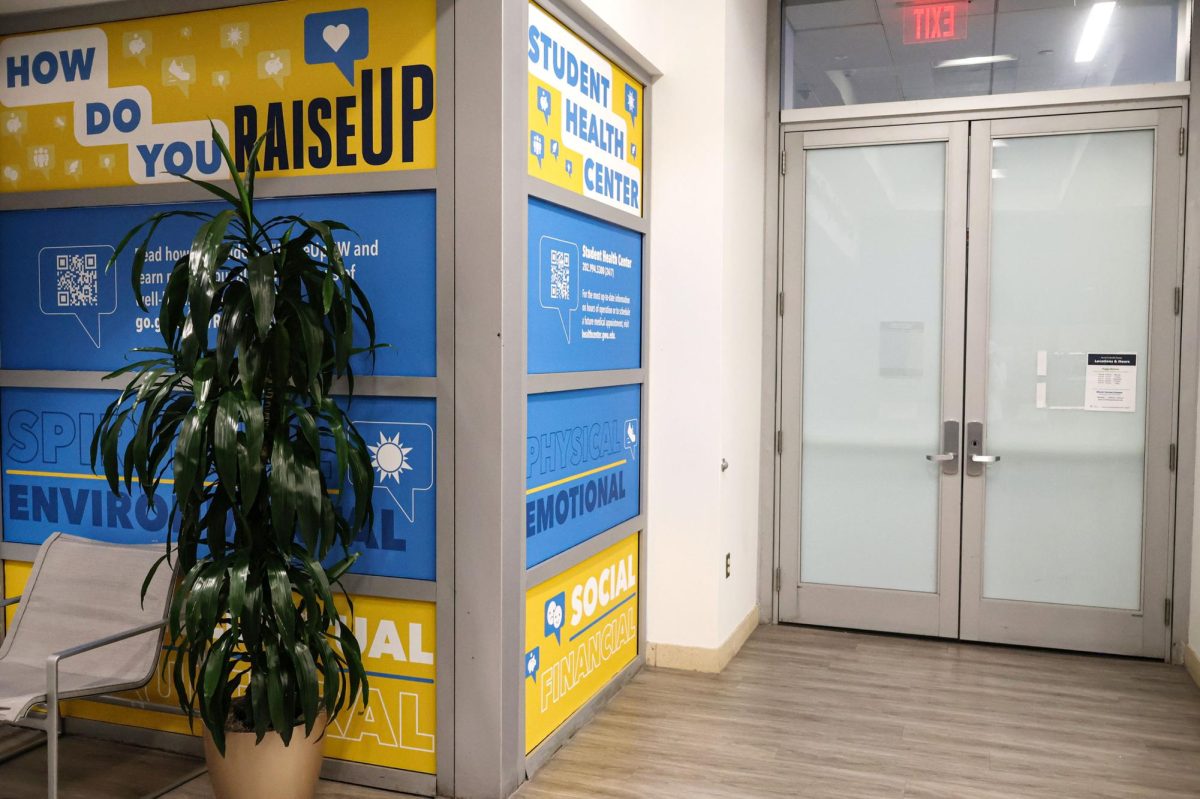
The Student Health Center on the Foggy Bottom Campus will now remain open from 8:30 a.m. to 6 p.m. Monday through Thursday — adjusting the center’s hours to close an hour later on Monday and Thursday and an hour earlier on Tuesday and Wednesday — after what Lynne said was “months of coordination” with SHC officials to reach the changes. The SGA also approved an amendment to the body’s constitution to add an anti-harassment provision, which students will vote on via a referendum during next April’s elections.
Lynne, who campaigned on reforming the SHC after its physicians failed to diagnose his appendicitis last year, said the adjusted hours reflect a “huge increase” in accessibility to reliable health care for GW community members.
“While this is a big win, we still have a lot of work to do, and I’m committed to continuing to work on this alongside VP Stoddard and my health policy team,” Lynne said.
The SHC previously operated from 8:30 a.m. to 5 p.m. Monday, Thursday and Friday, and 8:30 a.m. to 7 p.m. Tuesday and Wednesday during the 2024-25 academic year, according to web archives. The SHC will still close at 5 p.m. on Friday, according to Lynne. The total number of hours the Foggy Bottom center is open will not change despite the shuffled hours.
The SHC on the Mount Vernon Campus will also be open from 10 a.m. to 6 p.m. on Mondays only throughout the year, expanding by two hours from last year’s 4 p.m. closure.
The SHC last expanded its hours in 2023, when it hired new staff members and began remaining open until 7 p.m. on Tuesdays and Wednesdays.
Lynne also pledged during his campaign to commission an anonymous survey to identify patterns in student experiences with the SHC and to form a “student advisory board” to provide regular feedback to the center’s leadership.
Lynne announced over the summer that students will be able to preschedule appointments and choose clinicians for counseling and psychological services through their student health portal this fall. Lynne said the change will give students “greater access” to clinician background information by allowing them to preview their area of focus, allowing students to find the right care for them.
SGA senators also unanimously passed two pieces of legislation amending the SGA Constitution at Monday’s meeting.
The first, sponsored by SGA Sen. Sophie Munson (CCAS-U), would add a clause to the constitution prohibiting harassment among SGA members based on “protected characteristics” like race, gender, sexual orientation, religion and legal status. It also incorporates the GW Code of Student Conduct’s definition of harassment, which bars discrimination on those grounds, into the SGA Constitution.
The amendment would strike the existing clause in the SGA Constitution which states SGA members must treat all members of the GW community “with respect,” regardless of their characteristics and replace it with “not engage in harassment or discrimination” based on the list of protected characteristics.
The bill would also add language to the SGA Constitution requiring any SGA member who violates the new harassment policies to face disciplinary proceedings as recommended by the Committee on Ethics, including censure and impeachment and to be reported to University officials for further review.
“Adding this clause to the SGA Constitution would ensure that there is a defined process of what occurs when SGA members experience harassment by other SGA members,” Munson said.
Munson’s amendment must be approved by students as a referendum during the SGA elections in April.
The other amendment — co-sponsored by SGA Sen. Sofio Kipiani (ESIA-U), the chair of the Women’s Caucus, and SGA Sen. Levi Todd (CPS-G), the Graduate Caucus’s chair — permanently adds one representative from the Women’s Caucus and one from the Graduate Caucus to the Governance and Nominations Committee. The committee oversees SGA constitutional amendments and bylaws and the screening of candidates for Senate vacancies.
Former SGA Senate Pro Tempore Amy Cowley created the SGA Women’s Caucus, which first met in 2023 with the goal of creating tangible policy items within the SGA “for women, by women” and address gender disparities within the SGA and on campus.
Lynne and SGA Vice President Liz Stoddard also read individual statements condemning the federal government’s takeover of the Metropolitan Police Department and deployment of National Guard troops throughout D.C. starting Aug. 11.
Lynne said he and his staff will remain “consistently engaged” with campus stakeholders, the Faculty Senate and Staff Council leaders to “press” administrators for answers and guarantees on ensuring students’ protection on GW’s campus.
Lynne and Stoddard released a joint statement on Aug. 12 stating they are “actively confronting” the federal government’s actions by working with University leadership and “pressing” federal lawmakers for answers. The statement says the federal government’s actions threaten the University’s community and that the SGA will not “sit on the sidelines.”
“We are working relentlessly to gather facts, understand the ramifications for the student body and make sure your voices are impossible to ignore in every room, where decisions about your future are being made,” the statement reads.
Officials updated a GW campus advisories website on Aug. 17 stating the University does not anticipate a “direct impact” to operations at this time but recommends students carry their government and student identification at all times.
“It’s more important than ever for us to stand together, protect each other and stand united against the blatant federal overreach happening in D.C. right now,” Lynne said. “As student leaders, it is not just our role, it’s our responsibility.”
Stoddard said administrators share responsibility with students in making GW’s campus feel safe and welcoming. She said SGA Senators should listen to their constituents and validate their concerns and fears about the federal government’s takeover and increased law enforcement presence in D.C.
“Let me be clear, we’re not imagining this. We’re not overreacting. This is not normal,” Stoddard said. “As student leaders, we are in a pivotal position. We don’t need to be on our high horses, but we do need to help.”
The SGA will hold its next meeting on Sept. 15 at 7 p.m. in the University Student Center Grand Ballroom.