

Updated: May 12, 2025, at 12:09 p.m.
Officials last month suspended Students for Justice in Palestine for a year, citing unapproved events in March — the group’s fourth conduct-related suspension since 2022.
The group, which students formed over a decade ago and reactivated in fall 2022, was part of the coalition of student organizations that organized the pro-Palestinian encampment in April 2024 and has faced sanctions from officials over the last three years for violating University policies during protests and events. Senior Marwa Al-Naser, the president of GW’s SJP, said officials’ disciplinary actions against the group over the last three years reflect a broader trend of crackdowns on pro-Palestinian organizations at universities nationwide, which intensified under President Donald Trump’s administration.
Al-Naser said the repeated suspensions officials have levied against SJP are “no accident” and reflect the University’s failure to protect students’ free speech rights, a choice driven by officials’ fear of losing federal funding under the Trump administration. She said higher education institutions, like Columbia and Harvard universities, are also weighing how to safeguard their federal funding, as cuts appear to be linked to how universities handle pro-Palestinian activism on campus.
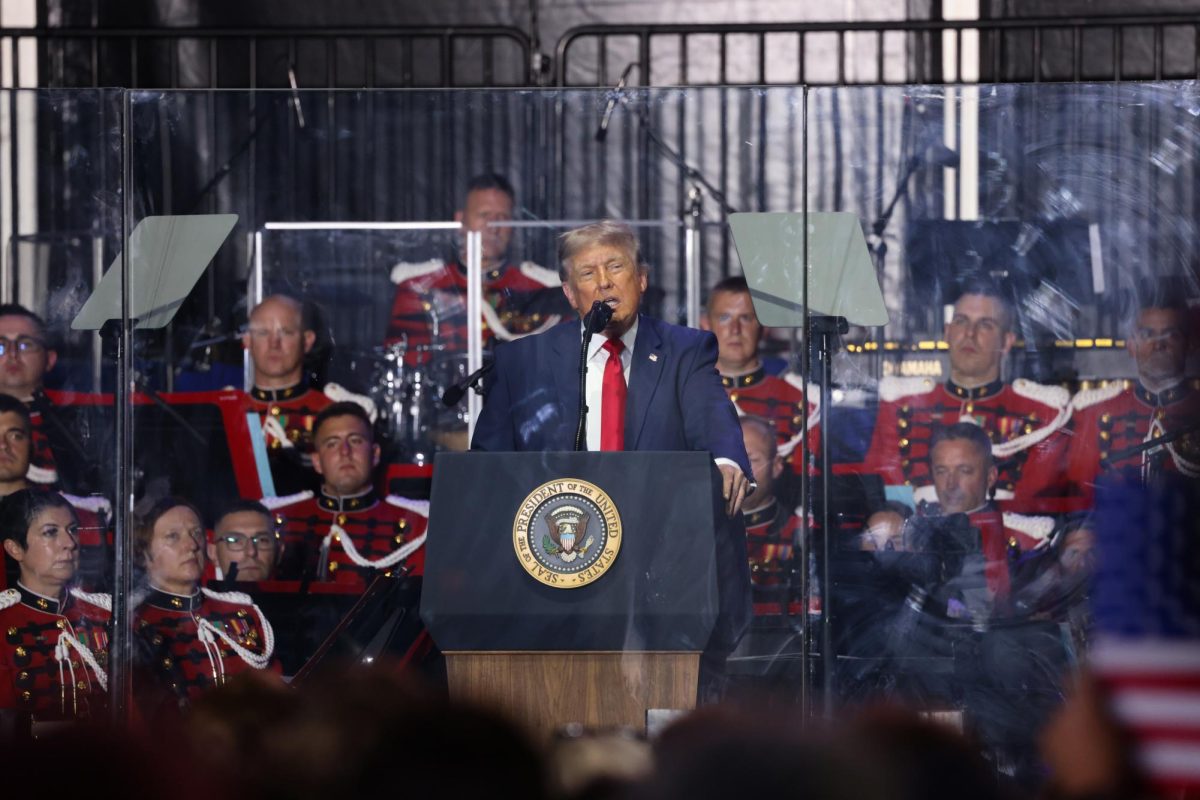
Trump has vowed to crackdown on pro-Palestinian activism on college campuses, which he described as pro-terrorist, antisemitic and anti-American. During the 2024 presidential campaign, Trump campaigned on making college campuses safe again by deporting “pro-Hamas radicals.”
“It reflects a deliberate pattern from GW, which would rather appease external pressures than protect its students, student organizations and their right to free speech and dissent,” Al-Naser said in a statement to The Hatchet.
Prior to their most recent suspension, officials temporarily suspended SJP for 21 days in early March after officials barred the group from hosting events both on and off-campus. The temporary suspension came after SJP denied Debra Bright, the vice provost of student affairs, entry to a movie screening on the first Intifada, a Palestinian uprising in the West Bank and Gaza in support of creating an independent Palestinian state, on March 4.
The group’s current yearlong suspension is the longest University officials have levied on SJP since the organization became active on campus again in 2022, according to Hatchet archives.
University spokesperson Julia Garbitt said the University does not comment on current conduct proceedings and will publish final decisions from disciplinary proceedings during the next regularly scheduled update.
A University spokesperson said when a Conflict Education and Student Accountability panel finds a respondent in violation of the student Code of Conduct, the panel — comprised of three to five full-time students and an official — will also recommend sanctions against them. The spokesperson said the CESA director or a designee reviews and levies sanction recommendations.
The spokesperson also said the Student Code of Conduct has 10 considerations for sanctioning, including the violation itself, the impact of the violation on others and maintenance of a “safe and respectful” environment for learning.
In March, the University received a letter from Senator Bill Cassidy demanding University President Ellen Granberg answer questions on SJP, including their activities on campus, the group’s funding and if the University investigated flyers calling for the firing of Joseph Pelzman, an economics professor allegedly tied to Trump’s Gaza redevelopment plan. Cassidy sent the letter to GW a day before a hearing on antisemitism in college campuses.
Al-Naser said the University has targeted SJP specifically after officials received repeated complaints about the group and their events, canceling their events and “impeding” SJP’s status as a student organization. She cited an email SJP received from a student worker in the Division for Student Affairs that alleged the University plans to restrict SJP’s events on campus and “forcing” their adviser to cancel booked events.
On March 7, SJP received the email from an anonymous student who works for the DSA, alleging they overheard DSA officials not allowing SJP events to take place on campus. The email came around the same time officials barred SJP from hosting events on and off campus and later temporarily suspended the group.
“GW has once again shown that students are not their priority,” Al-Naser said in a statement to the Hatchet. “Instead, GW operates out of fear — fear of losing funding, fear of upsetting powerful donors and the BoT, and fear of their students.”
Here’s a timeline of the sanctions and disciplinary charges SJP has faced since 2022:
November 2022
SJP and Jewish Voice for Peace organized a protest against an event at GW Hillel featuring a former Israeli Defense Forces official. The event was organized by GW for Israel and GW Mishelanu, an organization for Israeli-American students.
About 15 students stood outside of the Hillel building for the duration of the event, holding up signs condemning Hillel and chanting phrases like “occupation no more.” Protesters also hung up posters around the building with phrases criticizing Zionism.
SJP faced disciplinary charges after the organization’s protest outside Hillel, with the University charging the SJP president for “misconduct related to property” after an unknown protester defaced a bench outside the Hillel building.
The group could have also faced censure from the University and limitations on their privileges, according to a release from Palestine Legal, a pro-Palestine advocacy group.
The group allegedly defaced concrete benches outside the building by “wheatpasting” posters, or affixing posters using a mix of starch and water, to the bench, according to a November 2022 Palestine Legal release.
January 2023
Officials cleared the group of all charges after members from JVP confirmed that a member of their organization wheatpasted the poster on the Hillel benches. Officials issued JVP a “warning” for their involvement in the protest, which they accepted.
“I am relieved GW rightly recognized that Students for Justice in Palestine followed all the rules, which is what we’ve been saying from Day 1” said then-SJP president Lance Lokas in a statement via Palestine Legal.
November 2023
Members of SJP projected anti-Israel and anti-GW messages onto Gelman Library on Oct. 24, 2023, following Hamas’ Oct. 7 attack on Israel that marked the start of the war in Gaza. The messages included “End the siege on Gaza,” and “GW the blood of Palestine is on your hands.” The protesters displayed the projections for over two hours and took them down after a tense conversation with GWPD.
The University suspended SJP in November for three months following the projections, finding the group in violation of Gelman Library’s building use guidelines — which prohibits community members from displaying “offensive” posters. The University also found the protesters in violation of the University’s noncompliance policy after they initially refused to comply with officials’ directives to stop the projections.
After the group’s 90-day suspension expired in February 2024, the University continued restricting SJP’s use of GW facilities and campus events through the end of the academic year, according to a University statement shared with the Hatchet.
The statement also said SJP would be prohibited from postering on GW property until May 20, 2024.
Following the group’s suspension, students formed the Student Coalition for Palestine and protested SJP’s suspension a day after it went into effect Nov. 15. Demonstrators marched from Kogan Plaza to the F Street House, calling for the University to drop the charges against SJP.
February 2024
Members of SJP alleged the group faced misconduct charges after members participated in the coalition’s November protest, which University officials said violated the guidelines of their suspension.
April 2024
On April 11, the coalition led a protest against an event at the Elliott School of International Affairs while the U.S. Ambassador to the United Nations Linda Thomas-Greenfield spoke inside. Protesters organized the demonstration to protest Thomas-Greenfield’s voting record in the U.N., where she vetoed three U.N. Security Council resolutions calling for a ceasefire in Gaza.
Protesters draped a Palestinian flag off the roof of 1959 E Street, the residence hall next to the Elliott School. The flag hung about seven stories down the building and was removed by GWPD a few minutes after it went up.
Garbitt said at the time that the flag violated the University’s postering policy, which prohibits flags or banners being hung on the outside of University property.
Officials allegedly dropped the “vast majority” of the February charges against SJP following “public backlash,” according to a statement from Palestine Legal on April 23. The University did not confirm whether or not the charges existed and if the University dropped the charges.
Officials allegedly held a disciplinary hearing about the charges in late February, according to a statement from SJP president Lance Lokas via Palestine Legal.
A University spokesperson said at the time that Palestine Legal’s statement was “mischaracterizing” and “misleading” and did not reflect the status of SJP’s disciplinary proceedings.
Later that month, pro-Palestinian students launched an encampment in U-Yard, calling on the University to drop all disciplinary charges against SJP and student protesters and divest from weapons manufacturing companies with ties to Israel. On the first day of the encampment, University officials allegedly suspended seven students, according to a coalition Instagram post. The post alleged that officials suspended seven students with nine disciplinary violations each. The exact violations were not specified by either the coalition or the University.
The encampment lasted 13 days from late April into early May and ended after MPD officers cleared the space early in the morning on May 8.
June 2024
Over the summer, the coalition said in an Instagram post that the University charged pro-Palestinian student organizations and students who were involved with the encampment “without evidence” for the demonstration.
A representative from the coalition said when the University informed students and organizations of their charges, the list included charges for the April protest at the Elliott School and the encampment.
August 2024
On Aug. 6, officials issued suspensions and probations to eight pro-Palestinian organizations — including SJP — for either the fall semester or both the fall and spring semesters, for their alleged involvement in the encampment. The University charged the group for access without authorization, community disturbance, disorderly conduct, misconduct related to property, noncompliance and outcome and regulation violations.
The coalition said in an Instagram post the University suspended SJP and JVP for the duration of the fall semester and placed on disciplinary probation through the end of the spring semester, which was later confirmed in February 2025 with a recently updated log of student groups with conduct violations.
“These sanctions destroy our community spaces,” the post read.
March 2025
On March 4, SJP hosted an event where they denied Debra Bright, the associate vice provost of student affairs, entry because she had contributed to the “repression of students,” according to an Instagram post from SJP. This violated a policy in the Student Organization Handbook, which states DSA and other officials have “unrestricted access” to any space a student organization reserves.
The group received a directive from the University to cease on-campus activities indefinitely after denying Bright’s entry.
Later in the month, officials temporarily suspended SJP for 21 days by officials before SJP’s Palestine Liberation Week, annual programming for mobilizing and educating students about Palestinian rights. The group hosted three events that required an RSVP during the week of March 16 to March 21, along with a public protest in James Monroe Park.
April 2025
The University officially suspended SJP for a year on April 14 following a CESA student conduct panel, according to a CESA decision obtained by the Hatchet. Officials directed SJP to cease all activities until at least May 2026 after the group did not receive approval from their adviser to host events the week of March 16 to 21, violating one of their sanctions from their encampment-related charges.
The CESA decision imposed additional sanctions, including facing disciplinary probation for a full year after their suspension ends and completing a “return from suspension plan.” Following the end of disciplinary probation, SJP will be required to host semesterly teach-ins on University policy on free speech and expression for 10 consecutive semesters.
Al-Naser said the group submitted an appeal to the CESA decision, which he said SJP has done for all of the disciplinary sanctions they’ve received, on April 21. She said the University denied the appeal with “no reasoning” on May 9, adding that officials have never granted an appeal.
This post was updated to correct the following:
A prior version of this post used incorrect pronouns for Marwa Al-Naser. We regret this error.