

The Student Government Association Senate passed a bill to cement the Student Advocate’s Office as a permanent SGA organization, and the body’s leaders pledged to hold officials accountable for student safety after an Immigration and Customs Enforcement raid at Circa last week.
SGA senators on Monday voted unanimously to pass two measures — one establishing the Student Advocate’s Office in the SGA bylaws with stricter oversight rules and the elimination of its “student grievances” division, and another reforming the ethics committee’s bylaws to require members to disclose conflicts of interest. SGA President Ethan Lynne and SGA Vice President Liz Stoddard both condemned an ICE raid at Circa last Wednesday, calling on University officials to protect students from federal agents and maintain campus safety.
Stoddard said one of the SGA’s goals is to help students feel safe on campus, and the body will hold officials accountable for ensuring student safety, but did not specify how SGA leaders plan to push for increased protection from federal immigration activity.
“No student should ever feel concerned about their safety due to federal overreach,” Stoddard said.
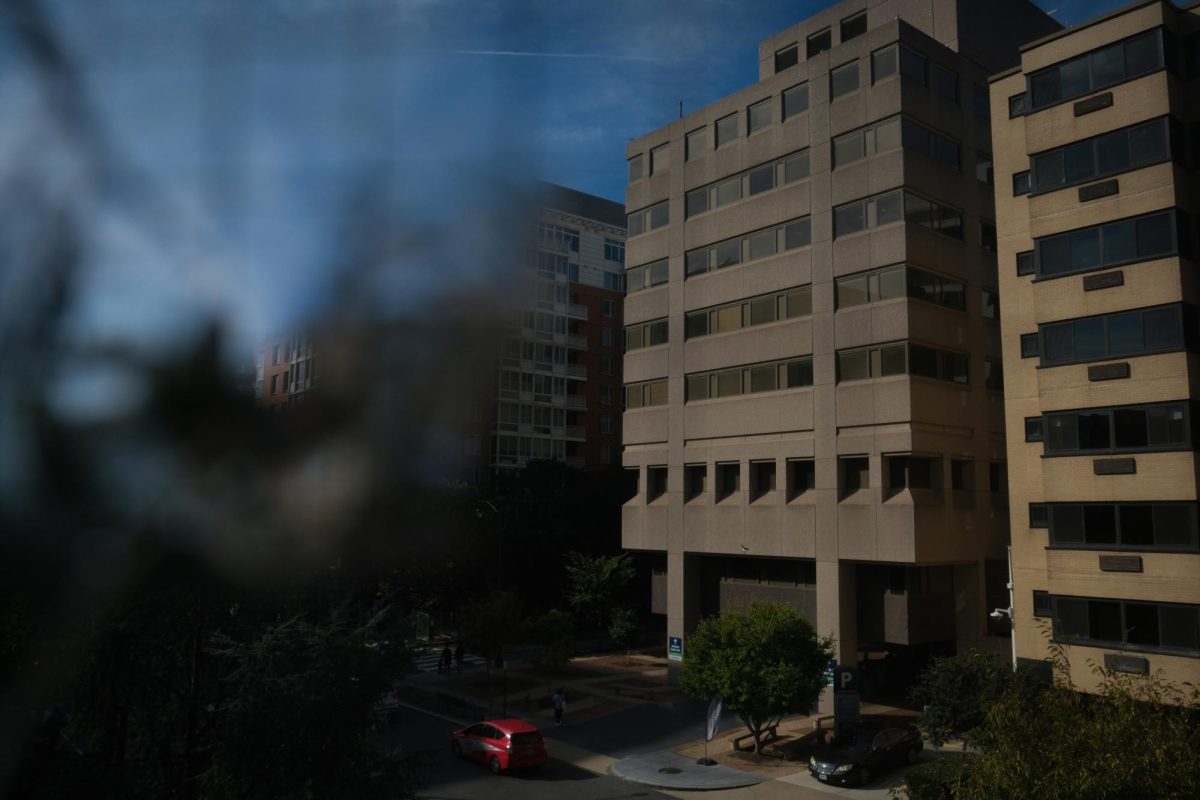
Officials said in a federal updates email last Friday that agents detained “a number of individuals” from Circa, but said they had no information suggesting any are affiliated with GW. Last Thursday, the Immigrant Liberation Coalition at GW alleged in an Instagram post that ICE pulled between six and 15 people from the restaurant during the raid, detaining some and checking the immigration papers of others.
Lynne said he and his staff are “tracking” safety concerns from students on campus and that he found the raid “deeply disturbing” and “understandably frightening” for students. He said he is communicating with University officials about the details of the raid and awaiting “further updates.”
Stoddard said passing the Student Advocate’s Office Implementation Act through the Senate ensures the office will not disappear when Lynne’s executive orders expire at the end of his term.
The Student Advocate’s Office — created by an executive order Lynne signed in August — provides specially trained student advocates who give advice and guidance to students navigating the Conflict Education & Student Accountability process.
Stoddard said the bill addressed concerns senators raised with the parts of the executive order, like not having strict enough consequences for breaching the privacy of student records and requiring the office to be more communicative with the legislative branch. The bill also creates legislative and executive Student Advocate’s Office liaisons to coordinate policy advocacy, requires the office to issue monthly reports to the SGA Senate and mandates that its deputies be confirmed by the Senate instead of directly appointed by the office’s head.
“This was born after some friends had had some troubles with the CESA process, and then came to me,” Lynne said. “It turns out this was a prevalent issue at the University, a lot of people have been asking why they were not able to have a student kind of help them navigate the process.”
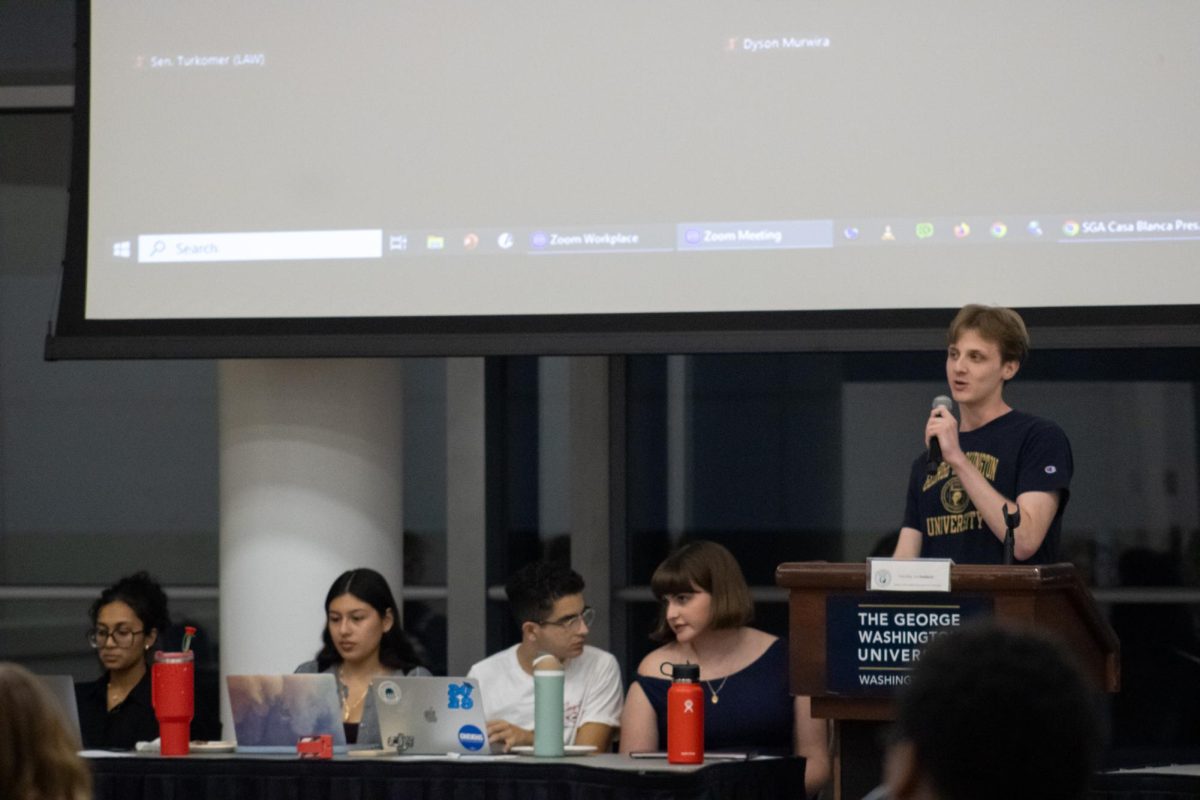
The bill eliminated the office’s division of student grievances, which would have handled requests outside the office’s other two areas, academic affairs and conduct and safety. Stoddard said the bill removes the division because SGA senators already serve as liaisons for student grievances, and it is unnecessary to have additional student advocates dedicated to that purpose.
Stoddard said, like in Lynne’s initial order, the legislative and executive branches of the SGA will not have access to the sensitive documents the Student Advocate’s Office handles, but liaisons will help address policy issues the agency may face. She added that all members of the office will now be under the SGA Ethics Committee’s jurisdiction and are subject to removal if they are found in violation of any ethics rules.
The SGA Senate also voted to pass the Ethics Committee Bylaws Reform Bill. The bill, sponsored by SGA Sen. Cheydon Naleimaile-Evangelista (CCAS-U) and SGA Sen. Sophie Munson (CCAS-U), aims to correct oversights in the committee’s existing conflicts of interest policies, which only required declarations from the committee chair and not public members.
The Committee on Ethics, which consists of both SGA members and public members outside the SGA, has the power to launch internal investigations and publish reports on members who commit ethical conduct violations.
Munson said the bill would also require the SGA President to publicly distribute an application to the student body to join the Ethics Committee as a public member instead of making direct appointments and now requires the committee to have one graduate student member. She said the bill requires committee members to report any conflicts of interest and recuse themselves from cases where they cannot be impartial, and members who fail to follow the new regulations could be removed.
Naleimaile-Evangelista said the senators made the changes to the committee because they wanted to “clarify” the language used in the committee’s bylaws on conflicts of interest and set a clear process for committee members whose impartiality might be questioned.
Senators also voted to fill seven vacancies with newly-confirmed SGA Sens. Yusra Faheem (SEAS-U), Kwirirai Muguti (SEAS-G), Saviour Msopa (SEAS-G), Muhammad Ibraheem (CCAS-G), God’s Mercy Wainwright (ESIA-G), Yasmin Hussien (MSPH-G) and Kasaundra Bonanno (MSPH-G).
Senators voted to appoint Naleimaile-Evangelista and Josh Bailow, a freshman in CCAS, to serve as representatives on the University-Wide Program Fund, a joint fund between the SGA and GW that allocates funding to student organizations to host campus-wide events. Senators also voted to confirm Ben Weiser, the Student Advocate’s Office acting Chief Student Advocate, to the permanent position.
The next SGA meeting will be held Oct. 13 at 7 p.m. in the University Student Center Grand Ballroom.