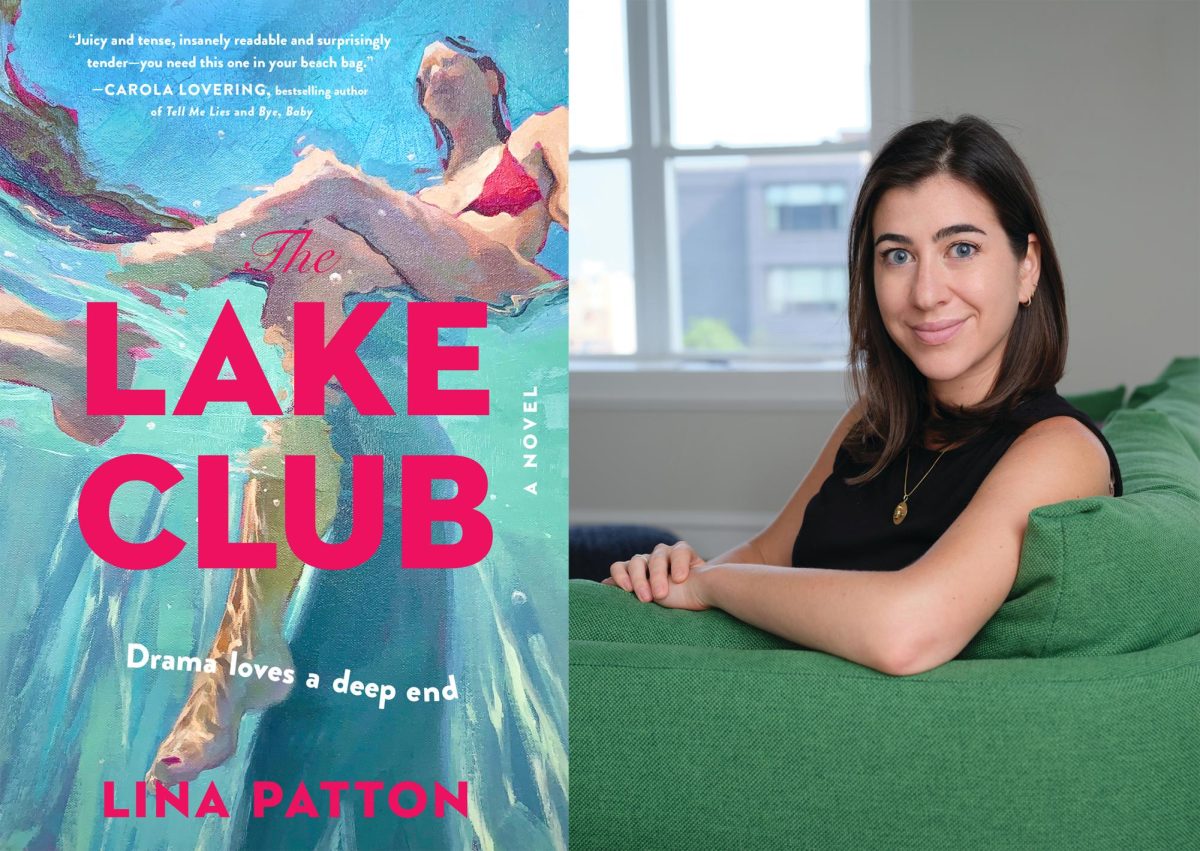

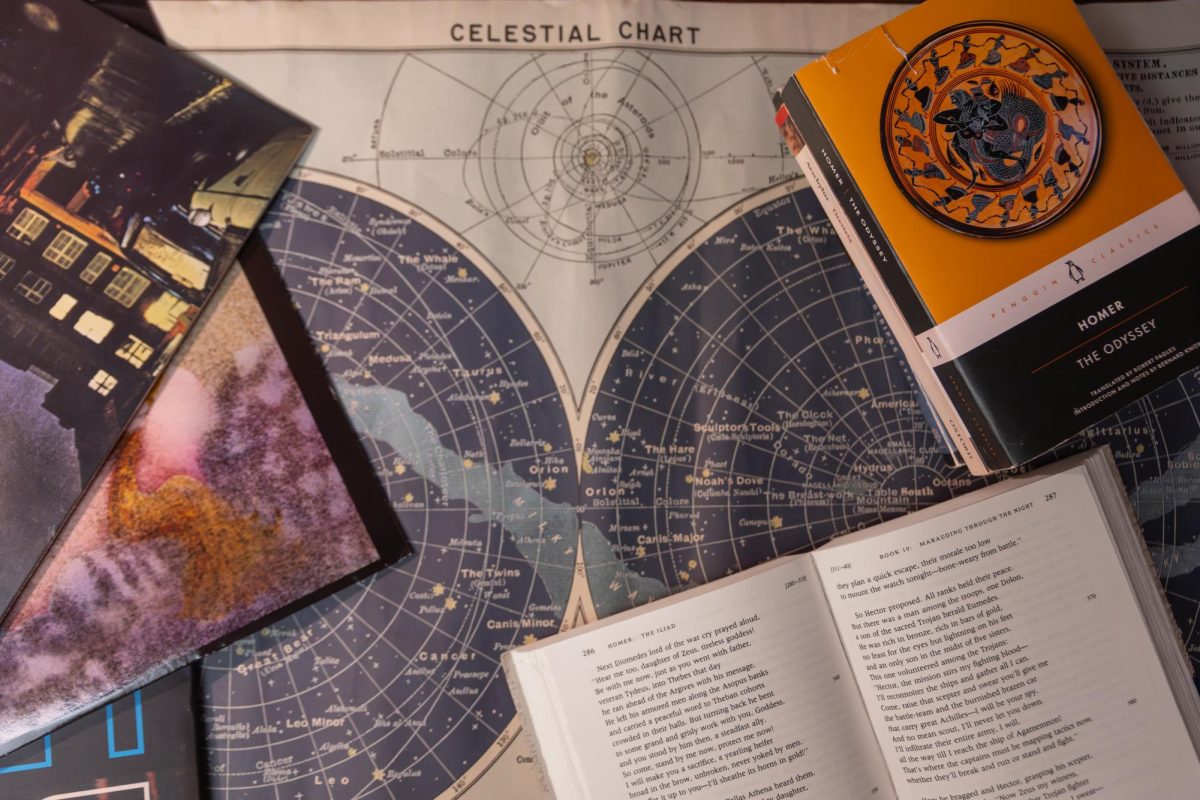
After falling in love with “Ulysses” by James Joyce at age 17, writer and adjunct professor Samuel Ashworth knew he wanted to one day teach a class dedicated to the seminal novel — now, his course is one of many specialized classes offered at GW.
With add-drop period in full swing, allowing students to join a class on GWeb until Sept. 7 and with an RTF-EZ until Sept. 19, many available courses offer hyper-specific dives into out-of-the-ordinary topics. Professors and students from these classes said by registering for an atypical elective or two, students can seize the opportunity to expand the breadth of their education, applying knowledge from other sectors toward their career goals and explore interests beyond their specific major requirements during their undergraduate years.
Outside of the 1000s level political science courses taken by seemingly every GW student, the University’s fall schedule of classes houses an eclectic range of electives from departments across disciplines. Options range from Washington, D.C. in the history of punk rock music, which covers the District’s centrality in the punk movement, to sociology of the sex industry, a sociological analysis of the industry and related international and domestic policy.
Ashworth said he developed James Joyce and Ulysses, which is being offered for the first time this semester, after he heard about other classes offered through the English department that centered around “slow reading,” encompassing detailed analysis and close reading, like slow reading Virginia Woolf. He said “Ulysses” — a stream-of-consciousness narration of one day in the lives of three characters in Dublin that mirrors Homer’s “Odyssey” — is a book that requires a full semester and is best read communally.
“The joy of a Joyce class is, really, when you have 15 people all reading it together, that’s 15 brains full of information that they are bringing to bear on the material,” he said. “And they’ll see things that other people won’t see.”
Ashworth said distinctive courses like his are offered through every department and are focused on subjects that professors are fascinated by, despite not fitting “neatly” into a specific major or requirement. He said the opportunity to deep dive into these topics, like a specific novel or musical genre, in a classroom setting diminishes postgrad, and students should take the opportunity to explore their niche interests as undergraduates.
“The more offbeat, weird passion courses you can take now, the more you will be grateful that you did decades from now,” he said.
He said to prepare for teaching the course he has been running a once-weekly “ad hoc” online reading group with around 14 adults, where they read and discuss the novel. He said after acquaintances heard about his upcoming GW course, they told him they’ve always wanted to read “Ulysses,” so he started the group and promoted it via social media. He said it’s been “fun” to observe older individuals’ reactions to the book and is excited to translate the class to undergraduates.
Ashworth said “Ulysses” is often perceived as “forbidding” and full of puzzles due to its length and structure, when in reality, it is a comedy that centers around human life, emotion and ambitions. He said he hopes this class, which recently filled its 15 seats but has 40 available waitlist spots, will help students find meaning in the book through analysis, creative writing imitations and studying corresponding scholarly materials — especially for non-English students.
“You don’t want people who just know how to read, like English majors,” he said. “You want as many people from as many different walks of life as you can. And that’s the beauty of Joyce, is that a lot of people love him who are not writers.”
Elise Friedland, professor of Ancient Art of the Roman Empire since 2008, said many of her students aren’t classical and ancient Near East studies or Corcoran School of the Arts & Design art history majors, despite the course being a requirement for both programs. She said students who take the course as an elective are often happy to have it as an aspect of their “general humanities education” because it helps them understand and contextualize historically significant artwork.
She said one former student from her Ancient Art of the Bronze Age and Greece class sent her an email after visiting the Louvre in Paris letting her know how helpful the course was in both understanding and appreciating the displayed art.
“He said he ‘had an amazing time seeing pieces so similar to what I spent a semester learning,’” Friedland said. “‘As a student with no art history background, yours was the only art history course I took in college. I am so grateful that you shared your love of Greek art with us and made it possible for me to have such an incredible experience at the Louvre today.’”
Friedland said taking an art history class helps students to learn visual literacy, a skill that is necessary for interpreting art of all mediums and time periods. She said Ancient Art of the Roman Empire, which has six open seats, includes recent discoveries and discourse and helps students to recognize Roman influences in the modern world.
“Pick a famous work of art, Western art, that you know,” she said. “The David, right? Michelangelo’s David? You can’t understand Michelangelo’s David unless you understand Greek and Roman art.”
Rylie Hocker, a 2025 classical studies and English graduate, said Friedland’s class was the first class she attended at GW.
She said one assignment that stood out to her was creating her own museum label, which involved going to the Dumbarton Oaks museum and conducting research in order to synthesize historical information. Although initially intimidating, she said the class transformed the way she viewed classical studies due to the stimulating conversations had and Friedland’s extensive knowledge of ancient art.
“I’m a Latin teacher now, so obviously that panned out for me, and not everyone is going to come out of that with a deep love and appreciation for the Romans,” she said. “But honestly, it was a great class for even people who were not classical studies or even art history people.”
Outside of the humanities, economics professor Vincy Fon teaches economics of Outer Space, a class Fon said, as far as she knows, does not exist elsewhere. She said the course, which has five openings for the Tuesdays and Thursdays section, outlines the history of space exploration and its financial technicalities, a topic she started exploring during the COVID-19 pandemic after wanting to teach something new.
“The field is not well developed, and I need to write some papers to get other economists interested in it,” Fon said. “So it is actually a course to help them think through some current events.”
She said the course, which requires the principles of economics prerequisite, combines the field of economics with the complexities of space travel. She said examining topics like private space exploration, space debris from satellites and the competition to go to the moon is important and increasingly relevant, given companies like SpaceX and Blue Origin.
Indy Nair, a senior finance and economics student, said she was drawn to the name of Fon’s space-themed class when deciding which economics elective to brave. She said, despite going in without much knowledge on the subject, she ended up learning a lot about the two seemingly disconnected topics.
“It was cool to see the history of space, and how the economics behind it was a big driver behind space exploration,” Nair said.