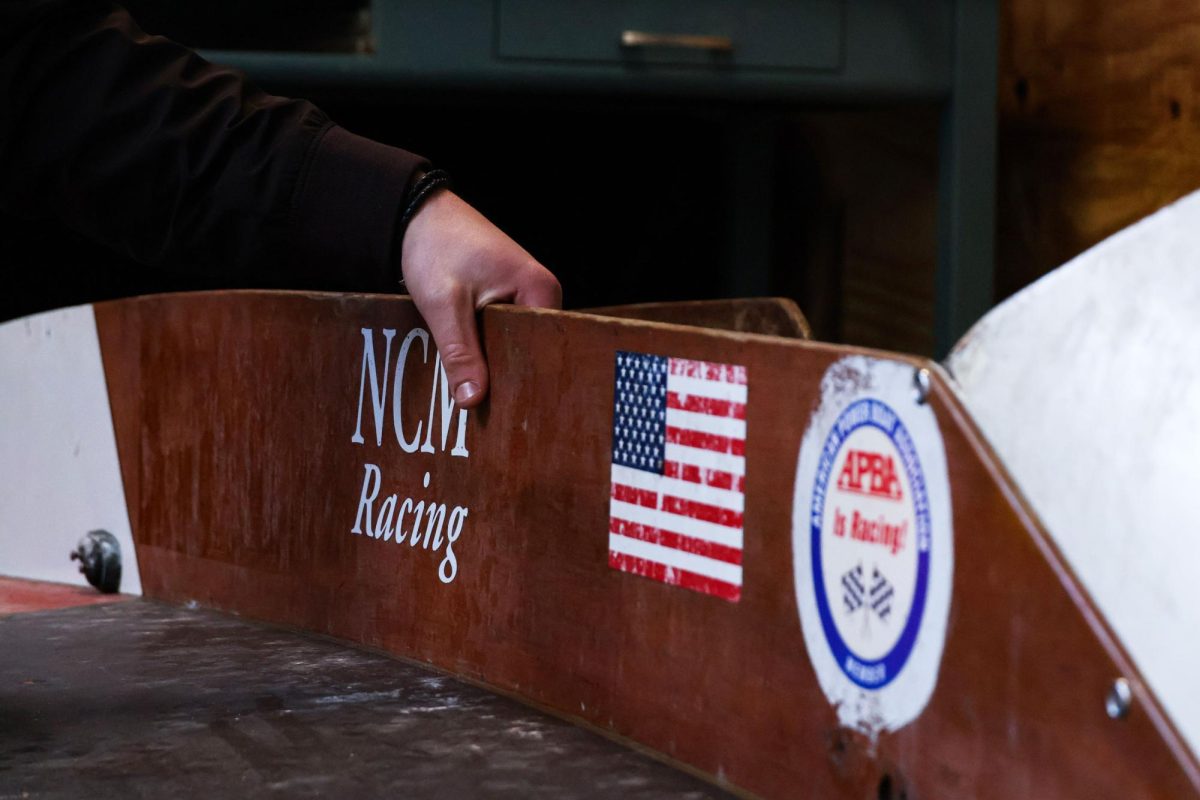

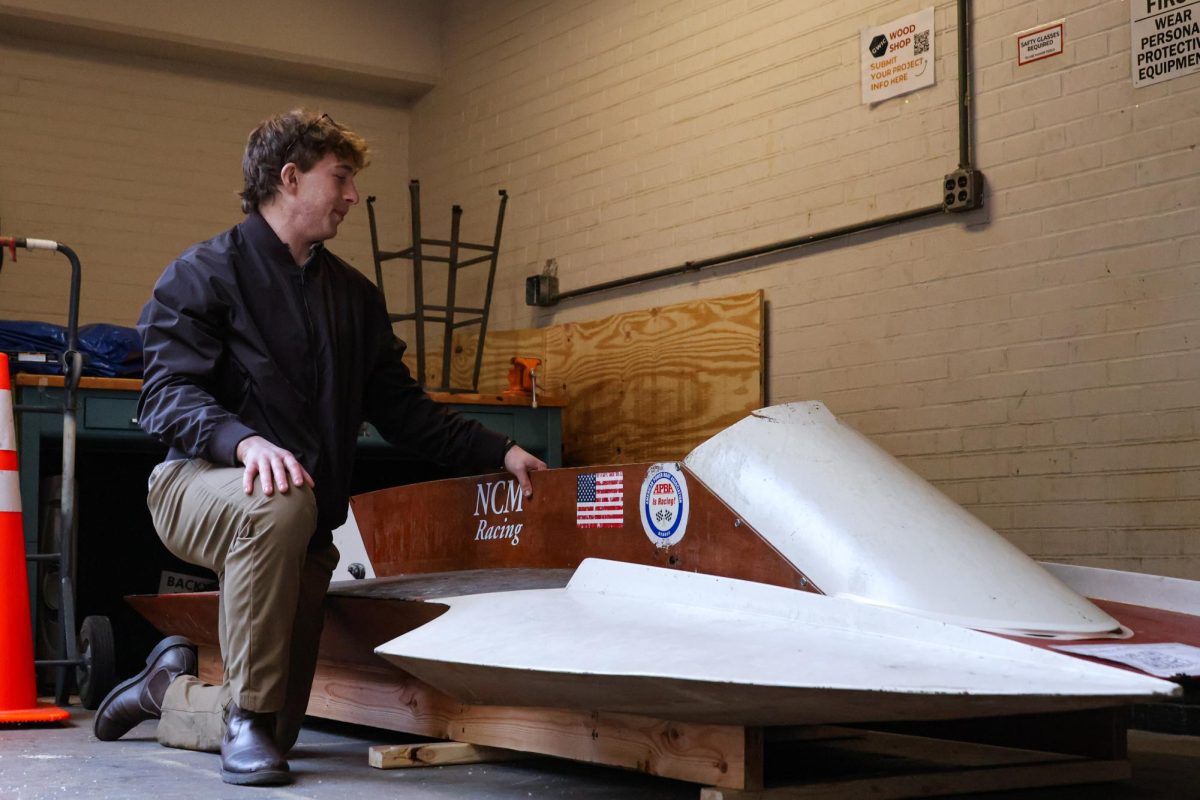
A group of mechanical engineering students are working together to create an electric boat to take part in an electric watercraft competition this semester.
GW Electric Yacht, an unofficial student organization, is designing and manning a speedboat that will compete in an electric watercraft competition this spring in Virginia, hosted by the American Society of Naval Engineers. Kaya Alper-Nocera and Adam Newman, junior mechanical engineering majors, said they had been toying with the idea of forming the organization since fall 2024 to give School of Engineering & Applied Science students the opportunity to work in naval engineering, since GW already has off-roading car- and rocket–building teams.
Newman said when he and Alper-Nocera submitted their club’s constitution to the University to become an official student organization in fall 2024, they were told by officials the club would not be approved because of safety concerns and that it was “unrealistic and expensive.” After the group rewrote the constitution and applied to become an organization a second time this past summer, Newman said officials denied their application amid GW’s yearlong pause on the formation of new student organizations.
Since SEAS itself cannot form new student organizations without the approval of the Division for Student Affairs, Alper-Nocera said that he and Newman approached SEAS faculty for alternative options to get the group up and running. That’s when SEAS Interim Dean Jason Zara pledged financial backing for the organization, Newman said, adding that Erica Wortham, the director of the GW Innovation Center has, too, pledged her support.
“The administrative offices really showed no enthusiasm for helping us,” Newman said. “But what did help was Dr. Wortham then stepped in, saw this as an opportunity to promote sustainability. And with her help, we were able to get this building space by the Innovation Center.”
Newman said as a former member of the GW Rocket Team, another student organization that designs and launches a 20-foot rocket, he learned to build a hydrocarbon-powered rocket — an experience that helped him gain practical skills in engineering and design, which he wants to translate to Electric Yacht.
He said Electric Yacht is a unique offering because it gives undergraduate students access to designing marine transportation outside of academic projects.
“It’s a huge industry,” Newman said. “It’s one of the three main modes of transportation — ground, sea and air. You need engineers to do that, and students are interested in that. GW doesn’t offer any classes in that, other than basic fluid mechanics.”
He said the American Society of Naval Engineers hosts an annual competition every April in Virginia where participants build electric boats to show support for the future for alternative fuel options in the maritime industry.
The competition, Promoting Electric Propulsion, sponsored by the U.S. Navy’s Office of Naval Research and ASNE, will take place from April 14 to 16 at Portsmouth City Park, Virginia. The competition is divided into six races based on distance and whether or not the vehicle is manned.
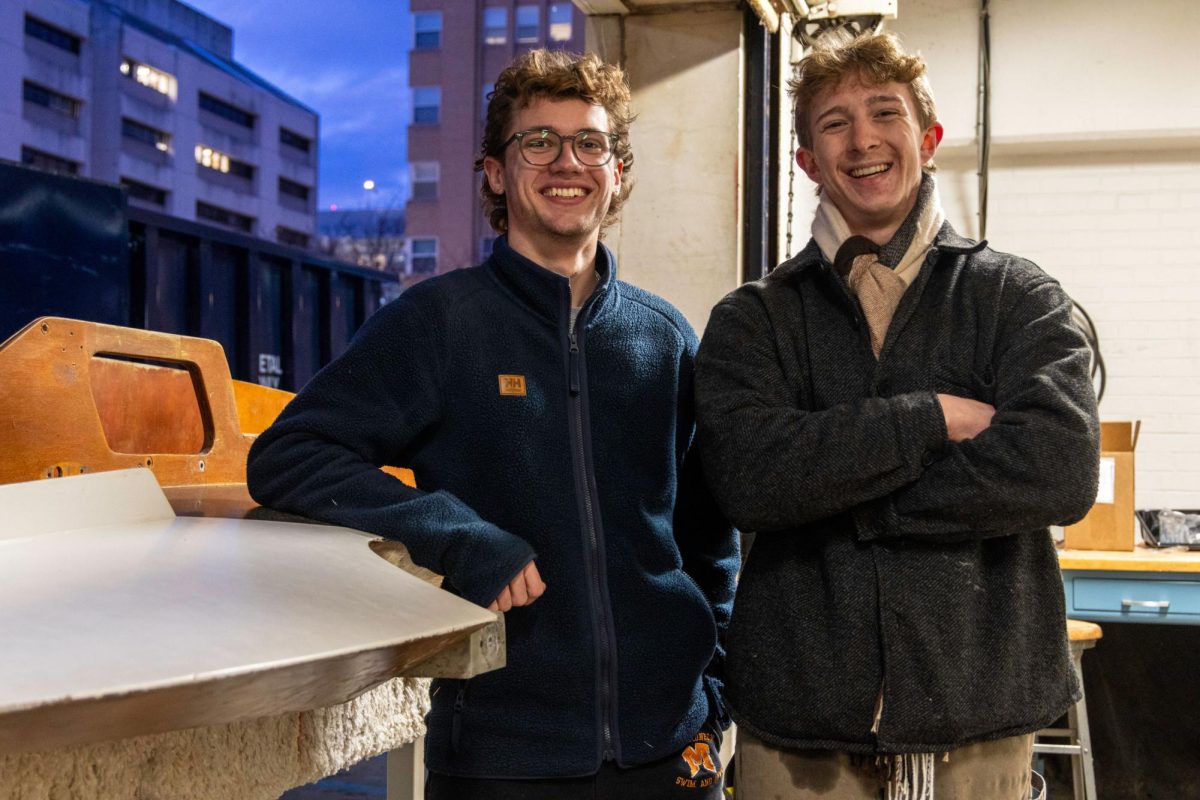
“They are using college students as a vector to promote electric propulsion in boats,” Newman said.
In its first year, Newman said Electric Yacht will participate in the crew planning division, which requires crew members on board to navigate the boat. Crew planning teams will complete a five-mile race with one person piloting the boat, and they are prohibited from purchasing a premade motor or using a gasoline engine or sails.
Newman said they chose the crew planning division because Electric Yacht is a new organization, and having the opportunity for students to man the craft will excite potential new members.
“It is difficult to get traction as a new org,” Newman said. “It’s difficult to get people interested, especially when there’s nothing to show from the past. And so our idea was basically to make it as exciting as possible.”
Alper-Nocera said Electric Yacht has about 30 members — primarily sophomores and first-years — who help for two hours each week, either taking parts off the boat for improvement or cleaning it.
He said first-years are sometimes “isolated” by team leads in other design clubs and are unable to make decisions or contribute to the project but said Electric Yacht is trying to change that by offering students greater input on the boat’s construction.
“People are definitely very interested in the idea that they can produce something themselves and see it, compete and see it win, which unfortunately is not to be said for a lot of other design teams,” Alper-Nocera said.
Without the ability to become an official organization, Alper-Nocera said they decided to become a subsidiary of the GW chapter of the American Society of Mechanical Engineers, which students formed before the pause.
“These design teams are really the lifeblood of the engineering school,” Alper-Nocera said. “People don’t come here to get a Harvard engineering education. They come here because students are running all of these teams, and they’re able to take a more hands-on project.”
He said Electric Yacht is looking for individual sponsorships to help fund the construction of the boat and Zara promised $4,000 for construction costs. He added the American Society of Naval Engineers gave Electric Yacht $7,000 to help them build their first boat and that if the group continues competing next year, ASNE will provide them $4,000 — something they do for all returning teams each year.
Alper-Nocera said his goal for the next few years of Electric Yacht is to work at the intersection of “beauty and performance” given that yacht design combines creativity and functionality.
“In terms of legacy, I want to instill that same belief into every other engineer that comes through is that, when you’re engineering these things, you’re not just creating a solution to a problem. You’re making art to solve a problem,” Alper-Nocera said.
Nnamdi Felix-Ugorji, a sophomore studying mechanical engineering, said he works with Alper-Nocera on the naval architecture team, helping build the boat’s strucutre.
He said the group has faced setbacks when it comes to ordering products, given they can take months to ship because of long manufacturing times, but maintained they’re still making progress and don’t expect major delays.
“We should be on pace to still wrap up in time for competition,” Felix-Ugorji said.