

In the wake of Charlie Kirk’s assassination last month, students are reestablishing Turning Point Foggy Bottom, the GW chapter of the national organization, for both students and community members.
At the group’s first event Tuesday, where over 20 students watched a live stream of Kirk, Turning Point USA’s co-founder, posthumously receiving a Presidential Medal of Freedom, the group’s executive board said they hoped to cement Turning Point’s presence at GW after previous attempts to establish and maintain a chapter at GW fizzled out. The leaders, all of whom are GW students, said they want to promote political debate and discourse on campus, opting to avoid endorsing specific politicians and instead encouraging discussion across the political spectrum.
Turning Point Foggy Bottom is the GW chapter of Turning Point USA, a nonprofit organization co-founded by Charlie Kirk — who was assassinated by suspect Tyler Robinson last month at a TPUSA event in Utah — and Bill Montgomery — a conservative activist who was a mentor to Kirk. TPUSA aims to educate students about fiscal responsibility, free markets and limited government.
Logan Sedran, the president of Turning Point Foggy Bottom, said students at GW have shown a lot of interest in the organization since Kirk’s assassination, adding he was shocked to learn 13 students individually applied to TPUSA to form a chapter at GW. He said once some of the students realized they were all applying to form a chapter at GW, they worked together to establish the group on campus.
“Most of the applicants and most of the people who are interested in joining the club are freshmen and sophomores, so it’s very interesting to see,” Sedran said. “Typically, younger people are vastly more liberal.”
Students attempted to found a Turning Point chapter at GW last fall, but officials denied the group official organization status because they said it was too similar to College Republicans and would not garner sufficient interest on campus.
Officials paused the formation of new student organizations over the summer, not accepting applications for any new groups for the entirety of the 2025-26 academic year, but Sedran said the organization would apply for official status once applications reopen, despite the previous iteration being rejected for official status.
GW last had an active Turning Point chapter in 2022, which protested Sen. Bernie Sanders (I-VT) speaking at a town hall event on campus in 2017 and the retirement of GW’s Colonials moniker in 2022 with a postering campaign. Turning Point protested the retirement of the Colonials moniker because they believed it was “another example” of political correctness gone too far.
It is unclear why the previous Turning Point chapter went inactive, but the group was last active on social media in 2022.
Sedran said he hopes to boost membership by encouraging students from other right-leaning organizations, like GW Students for Life, GW College Republicans and GW Young Americans for Freedom, to join Turning Point Foggy Bottom as well because they will focus more on political debate rather than specific political candidates or issues.
“With College Republicans, it gets tricky because they support candidates, and we don’t,” Sedran said. “But Students for Life, Young Americans for Freedom and other activist clubs, obviously, we support their issues, so we’d love to help and work with any of them.”
Sedran said he hopes to host more events in the future with “bigger name” speakers, but he is currently unable to provide specifics until events are booked. He added that the group is still determining what events to host and how often they will happen because they lack official status with the University and have to work with College Republicans to host events and book space on campus.
Sedran said the club is focused on boosting membership by promoting the organization on social media. As a senior, Sedran said he wants the club to continue after he leaves GW, adding he believes the organization’s board of sophomores and juniors will “carry on the torch” of Turning Point.
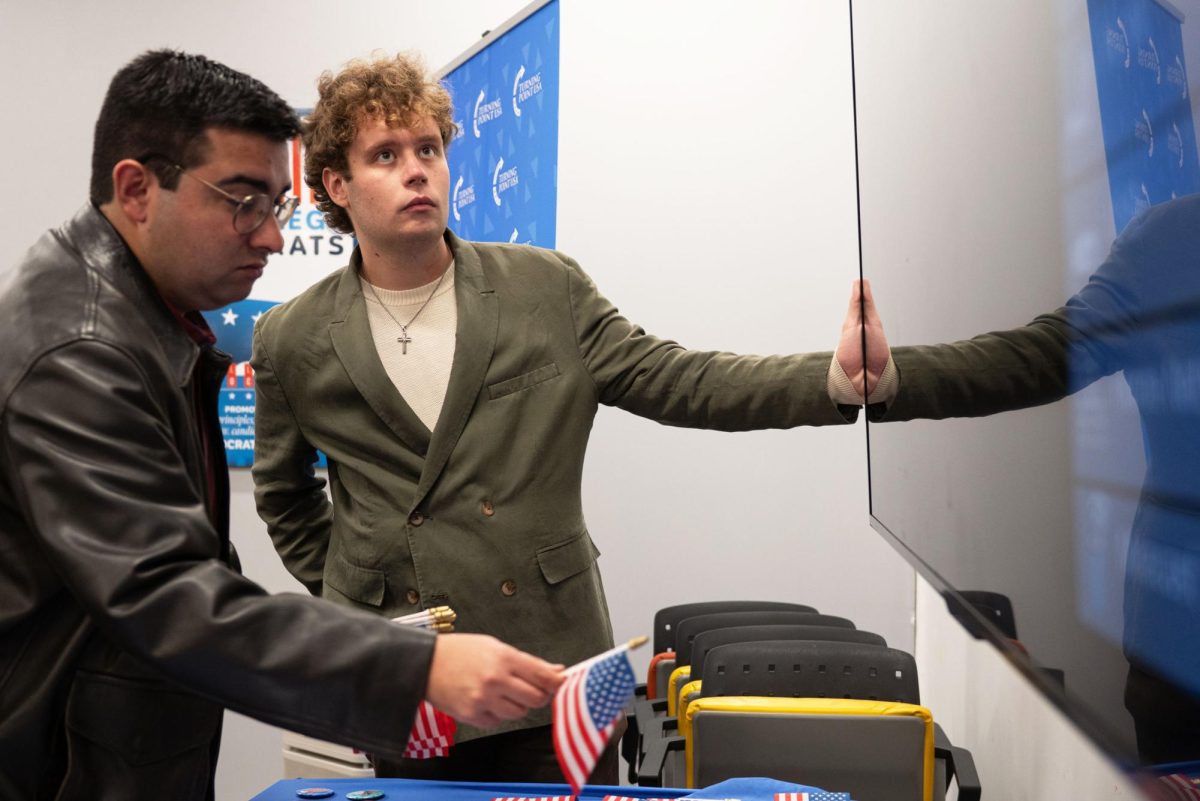
“Our main mission right now is to get as many people involved and to have a solid chapter that doesn’t fizzle out in the spring,” Sedran said.
Abigail Weldemicael, the treasurer of Turning Point Foggy Bottom, said she joined the organization because it specifically promotes free speech and encourages debate amongst its members, instead of other organizations that focus on partisan politics in addition to debate, something she appreciates about America after moving here from Eritrea, which she said was under a dictatorship.
“The whole point of a totalitarian state is that there is no conversation,” Weldemicael said. “So it doesn’t matter what you believe, whether you’re a Democrat, Republican, conservative, nonconservative, it doesn’t matter because you won’t talk about it.”
Weldemicael said Turning Point Foggy Bottom focuses more on principles and beliefs, like limited government, rather than specific political candidates or parties, and will promote debate and civil discourse among students on conservative ideas that may not be commonly discussed on campus, like free trade.
“It’s just to offer something that is not widely agreed upon, and to just debate and kind of understand, ‘Why do you believe this?’ and ‘Why do I believe that,’” Weldemicael said.
Ryan Van Slingerland, the vice president of Turning Point Foggy Bottom, said members have connections with other D.C. organizations, including the D.C. Young Professionals Society — a professional development and networking organization — which will help bring in a wider array of conservative speakers and drum up interest in the organization on campus.
“We want to support other kind of conservative and like-minded chapters as best we can on campus, and whether that’s just collaborating with them for events, giving them resources, getting them speakers and whatnot, because Turning Point’s got a good amount of pull,” Slingerland said.
Ben Tumulty, Turning Point Foggy Bottom’s secretary, said the organization may follow the same model as the Socialist Action Initiative as they look to expand membership on campus because they’ve seen the group promoting itself in public places throughout GW.
He said SAI’s tabling outside of high traffic areas on campus allows the organization’s members to discuss and explain why they support their beliefs in a friendlier setting, rather than a “tense” argument in a classroom setting and could be a model for Turning Point as they look to engage with more students on campus.
“It would be fantastic because we’re not here to argue with people,” Tumulty said. “We just want to hear their perspective.”