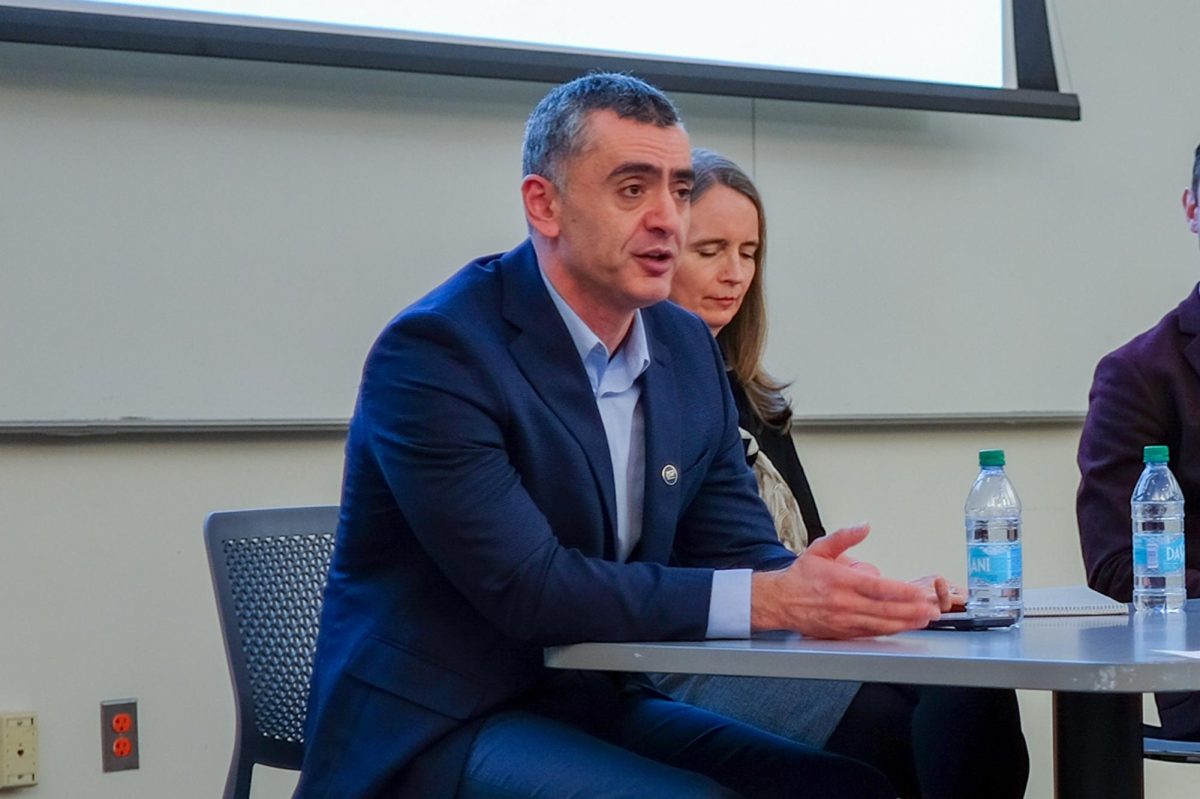


A lineup of speakers, including Glenn Kirschner, a former prosecutor who teaches criminal law and justice courses at GW, and Aleksandr Yampolskiy, CEO of cybersecurity company SecurityScorecard, discussed the future of government, technology and political advocacy Saturday at the 2026 TEDxFoggyBottom conference.
Ten speakers across a range of academic disciplines presented speeches at the event, covering topics like education, social justice and technological development, relating their presentations back to this year’s theme of “Two Steps Forward.” TEDxFoggyBottom, which hosted the conference, is a student-run group licensed to hold events independently of TED, following the larger organization’s guidelines and format, which consists of talks under 20 minutes.
TEDxFoggyBottom has hosted 16 annual conferences, with past themes including “Please Do Disturb” in 2025 and “The First Fold” in 2024.
In his opening remarks to kick off the event, Toby Keith Jr., a D.C.-based poet and scholar and the conference’s host, said this year’s theme represents the conscious decision to confront challenges in fields like education, technology and social connection, reminding people that it is impossible to make progress without taking action.
“Y’all, just remember that progress is not necessarily a straight line,” Keith Jr. said. “Sometimes it looks like a poem, sometimes it looks like a voice finally being heard and sometimes it looks like believing that you are deserving of taking steps forward.”
Kirschner, who formerly worked as a legal analyst for NBC News, spoke about the role of the Bill of Rights as a “brick wall” protecting the American people from politicians, police and prosecutors.
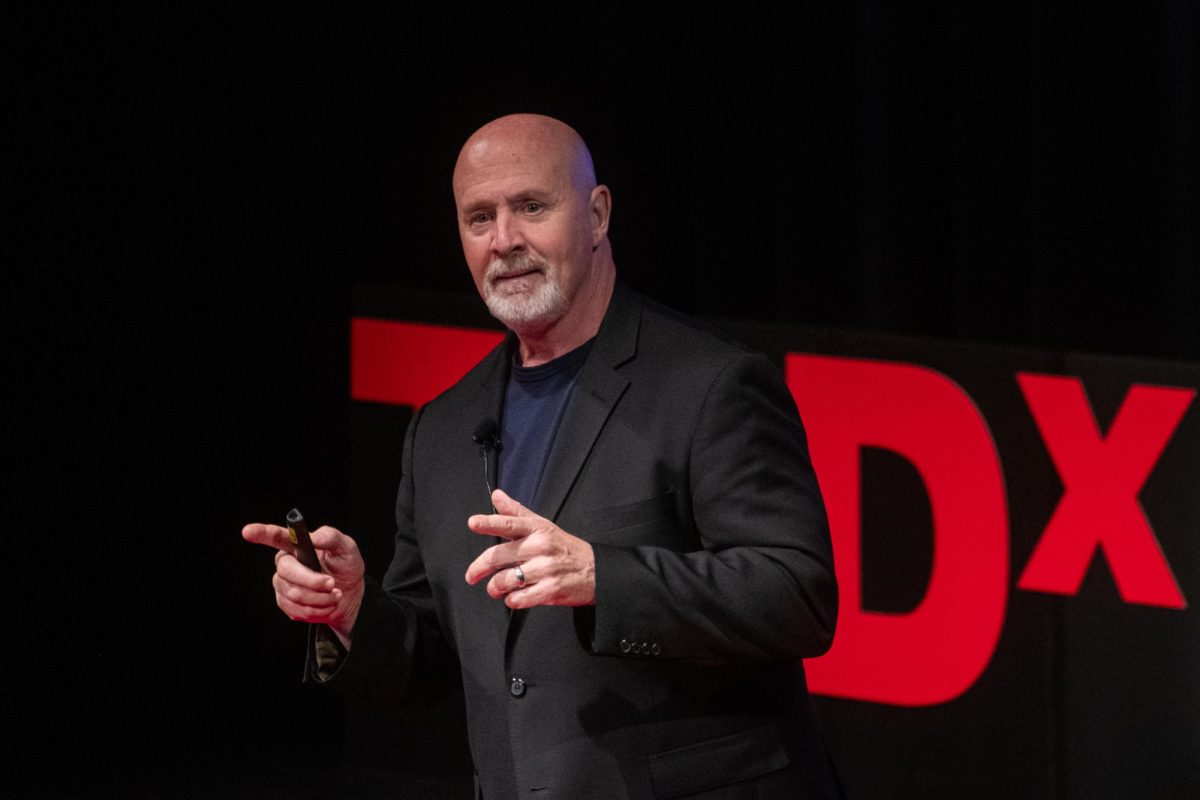
(Brady Eagan | Photographer)
“So in today’s America, question: is that brick wall standing straight and strong, or is it beginning to weaken?” Kirschner said. “Is it beginning to waver?”
Kirschner said Kilmar Abrego Garcia, who U.S. Immigration and Customs Enforcement mistakenly deported in March 2025 and returned to the United States three months later, and Sean Dunn, who threw a sandwich at a federal officer in August 2025 and was found not guilty of assault in November, “planted their feet” and resisted abuses of the rule of law. He said this act of “feet-planting” can greatly affect the health and survival of U.S. democracy.
“And we, you and I, make rule-of-law-driven feet-planting decisions every day, but the decisions that we make usually involve things like speeding, stopping at stop signs, paying for parking,” Kirschner said.
Elizabeth O’Donnell, who founded Aaliyah in Action, a nonprofit providing support for families after pregnancy and infant loss, spoke about leaving her job teaching public school after her district told her she no longer qualified for paid family leave after experiencing a stillbirth. She said her daughter Aaliyah’s stillbirth provided her with “clarity” and led her to post on social media explaining how her district rescinded her paid leave.
“You reach a decision point,” O’Donnell said. “You can allow that grief to shrink you, or you can allow it to sharpen you.”
O’Donnell said the positive responses she received from the post led her to found the nonprofit and successfully advocate for paid family leave laws in D.C. to include families who have experienced stillbirths. In October 2021, lawmakers changed D.C.’s Universal Paid Leave Act to clarify stillbirths and miscarriages are eligible for medical leave in as a result of O’Donnell’s advocacy.
“So let me ask you, what are you currently tolerating in life that clarity is trying really hard to expose to you?” O’Donnell said. “And what would change for you in all areas of your life if you stopped negotiating with it?”
Cassandra Dahnke, co-founder of the Institute for Civility, a nonprofit seeking to promote bipartisanship and civil dialogue in government, workplaces and schools, said she defines civility as caring for one’s own identity and beliefs without degrading someone else’s. She said civility allows for human connection and helps people understand why they hold certain beliefs, helping them heal and build “fresh” relationships.
“It tends to open you up to knowing how someone else may have a very different experience and belief system than your own, but one that has just as much value and legitimacy as yours does,” she said.
Natasha Latouf, an astrobiologist researching methods of discovering planets outside of the Earth’s solar system for NASA’s Habitable Worlds Observatory — a telescope capable of detecting habitable planets in other solar systems — said technological innovation is a result of asking big questions.
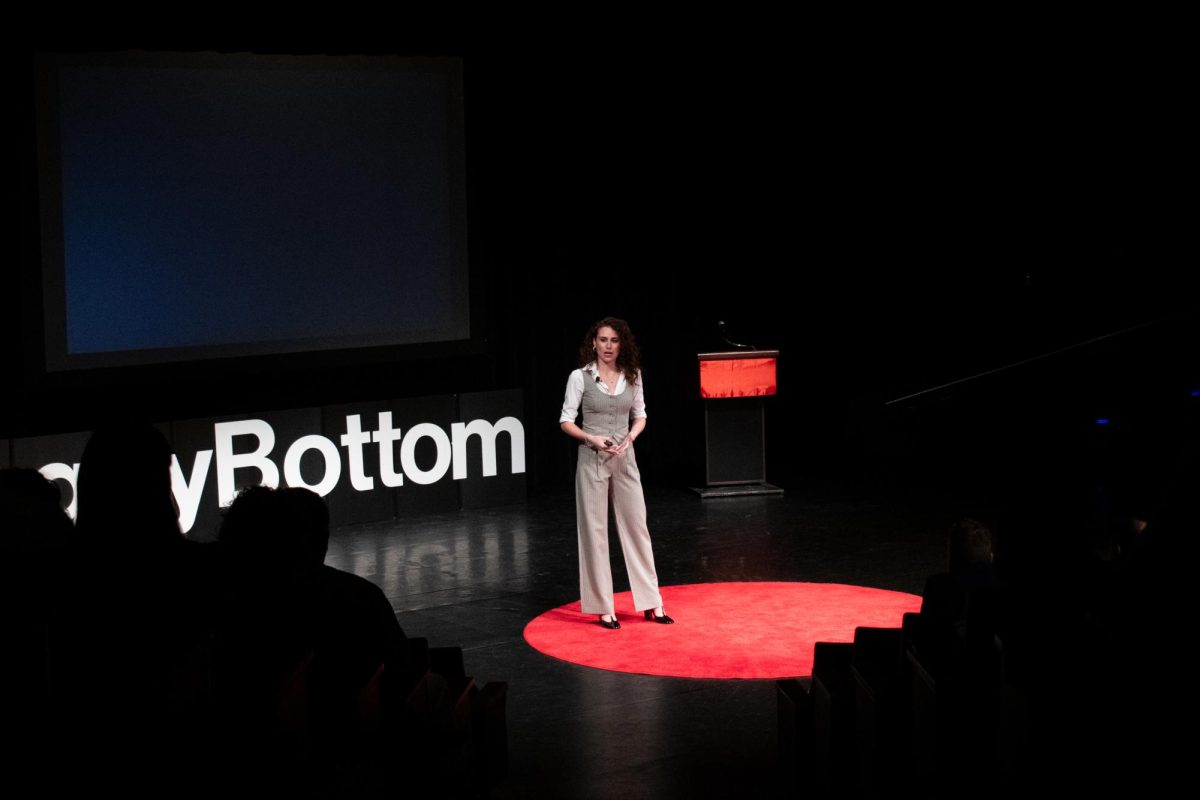
Latouf said “groundbreaking” technology and research, like her own Bayesian Analysis for Remote Biosignature Identification on exoEarths, or B.A.R.B.I.E., project, which seeks to identify planets through searching for molecules common to habitable planets, only come to fruition when people choose to embrace their natural curiosity.
“When you set out to build a telescope that is answering questions that have never before been possible, it necessitates the invention of technologies, processes and new ideas, like B.A.R.B.I.E., to make it happen,” Latouf said.
In her speech, Latouf said humans have always wanted to understand space, referencing prehistoric cave art about constellations and NASA’s recent Artemis II mission earlier this month, which launched astronauts to record distances from Earth. She said she attributed humans’ persisting fascination with space to their desire to understand how they fit into the universe, and she hopes to continue that tradition of exploration with her own project.
“The light from other worlds has been traveling to us for billions of years, and we are finally ready to contextualize what secrets, and maybe life, it holds,” Latouf said.
Other speakers included Nathalie Blais, founder and CEO of Coach Academy, a life coaching company that teaches students social connection skills they can apply to the workforce and their personal lives, and Joe Wong, vice president of sales at Tektronix, a company that manufactures advanced measurement equipment.
Yampolskiy said resilience is one of the most valuable skills for everyone living through an age of increased technology. He mentioned the “digital butterfly effect” — the phenomenon of minor flaws in software having widespread consequences on cybersecurity — both in the context of hackers being able to tear down entire companies after finding a single vulnerability in software design, and also in people choosing to adopt safe cybersecurity practices as a result of flawed software.
“Resilience does not start with perfect systems; it starts with clear-eyed people who refuse to trust blindly,” Yampolskiy said. “Because cybersecurity in a digital age moves quickly, one question, one action, one company choosing transparency, the small decisions in one place can reverberate through networks, companies and even countries.”