
Universal Health Services’ forthcoming deal with GW over the Medical Faculty Associates represents what healthcare experts say was likely the only viable path to stabilize the medical enterprise and relieve the University of its financial support.
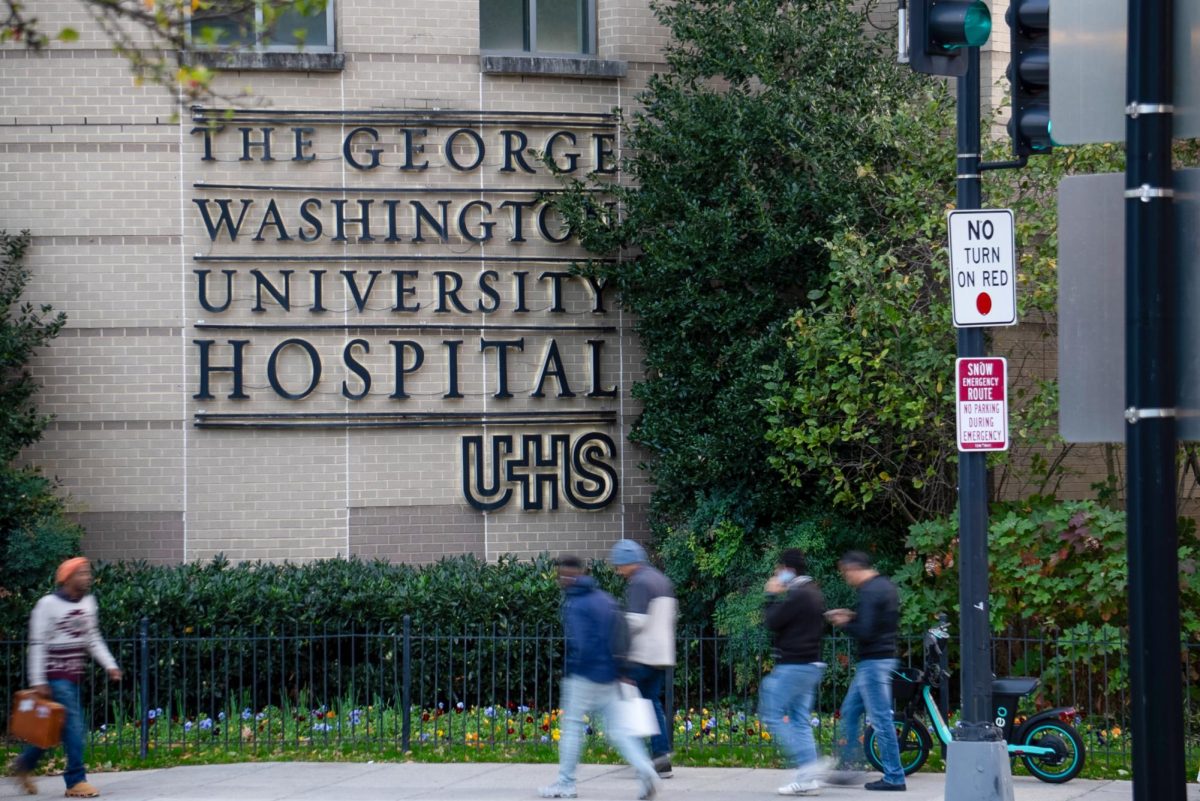
Officials anticipate finalizing an agreement with UHS, GW Hospital’s owner and operator, to end the University’s financial support for the MFA, building on an initial October deal that had already halved GW’s financial responsibility while negotiations continued. Following six consecutive years of losses that have led GW to loan the enterprise more than $370 million, half a dozen healthcare experts agreed GW could not have stabilized the MFA alone, making UHS — a for-profit hospital with a longstanding relationship with the University — a logical partner to restructure its operations as its resources can overhaul the enterprise’s ineffective management.
Healthcare experts said UHS’ differing management practices as a for-profit company can ensure cost-cutting measures and restructuring that could stabilize the MFA’s books. But they warned restructuring could also lead to physician layoffs — a less favorable outcome to reach financial stability.
The Hatchet directed questions to Chief Financial Officer Bruno Fernandes regarding the University’s decision to engage with UHS to end its financial support for the MFA, but a University spokesperson returned the request, saying GW, UHS and the MFA continue their “complex negotiations” over the future of the MFA’s operations. The spokesperson said the parties are prioritizing achieving a sustainable financial model for the MFA and the long-term stability and excellence of GW’s medical education mission, though declined to answer The Hatchet’s questions further, citing ongoing negotiations.
UHS did not return a request for comment about why they entered into negotiations with GW and the company’s plans for the MFA following a finalized deal with the University.
Martin Gaynor, a professor emeritus at Carnegie Mellon University specializing in health care competition, said sustained losses like the MFA’s are ultimately unsustainable without management changes, adding that a new hospital operator like UHS could introduce new leadership that is better equipped to stabilize the MFA’s finances.
GW in 2018, under former University President Thomas LeBlanc, restructured its relationship with the MFA, granting the University expanded administrative authority over the physician’s practice. The changes gave GW the authority to manage the MFA’s budget, approve its CEO, amend its bylaws and appoint members to the Board of Trustees.
But since the restructuring, the MFA has suffered six consecutive years of losses since its first full year under GW’s control, wracking up $100 million in losses in FY2025, $107 million in FY2024, $78 million in FY2023, $78 million in FY2022, $48 million in FY2021 and $43 million in FY2020. GW has loaned the MFA more than $370 million since 2022 — when officials first began to report the loans — to keep the practice afloat.
The MFA wavered in profitability before GW brought it under its wing, also facing deficits in 2015 and 2016, which pushed GW to lend the MFA $20 million in 2016 after the enterprise spent $61 million more than its revenue in FY2015. Officials forgave that $20 million line of credit in 2019, which former GW CFO Mark Diaz said at the time was to increase the MFA’s stability and to help the group through its fiscal turbulence — though GW’s loans to the MFA have since exponentially increased by tens of millions of dollars.
“Something needs to change, and whoever is managing them now is not getting it done,” Gaynor said.
Officials pledged numerous times that bringing in healthcare executive Bill Elliott as the MFA’s CEO in May 2024 would help them solve the MFA’s debt issues. Elliott has served in the role of CEO for over a year and a half, during which the medical enterprise saw its second-highest loss ever on record.
Elliott said in March 2025 officials’ changes to solve the MFA’s “operational issues” implemented during the first half of FY2025 would be reflected in the MFA’s performance in the second half of the fiscal year, projecting lesser losses. But the enterprise lost more in the second half compared to the first half of the year, totaling roughly $52 million lost.
Gaynor said structural reforms under new management could result in physician layoffs but cautioned officials need to handle workforce changes carefully to avoid driving away top MFA physicians who also provide services to the hospital. He said if the UHS restructures in a way that drives away the best doctors, they would lose their most valuable assets.
The spokesperson declined to comment whether officials anticipate layoffs or other workforce reductions among MFA faculty or staff following a finalized agreement with UHS.
“You want to retain the best people,” Gaynor said. “But again, it sounds like some things are going to have to change, and it’s not going to be easy.”
Matthew Gillmor — a director and equity research analyst with the financial services firm KeyBanc Capital Markets, who has researched UHS — said he thinks GW and UHS’ deal will provide financial security to the MFA, given both parties having incentives to ensure its stability as GW has an interest in maintaining its clinical education, and UHS owns GW Hospital. He said GW and UHS’ finalized deal likely won’t be profitable for UHS, though it will provide stability to the physician group and the services it provides GW Hospital.
In 2022, GW sold its 20-percent minority stake in GW Hospital to UHS, making the company the sole owner of the hospital. The move left the MFA and SMHS as the sole clinical institutions under the University, though then-University President Mark Wrighton said the parties, including the MFA, SMHS and UHS, would continue to work together to provide opportunities for academic and medical research at GW.
Prior to the agreement, GW and UHS jointly owned and operated GW Hospital, which UHS had held an 80 percent stake in since July 1997.
Gillmor said it’s common for nonprofit organizations, like GW, to partner with a for-profit company, like UHS, to bring scale, expertise and capital to its operations. He said GW and UHS have worked together for a long time, and it makes sense for their relationship to continue.
“Both UHS and GW have an incentive to make sure that that physician group is stabilized,” Gillmor said.
A University spokesperson declined to comment whether GW considered alternatives to working with UHS, like internal restructuring, partnering with another health system or implementing budget cuts. They declined to comment on whether GW’s previous engagements with UHS, including with GW Hospital, influenced their decision to work with the company.
Richard Priore, a professor of healthcare financial management and managerial economics at Tulane University, said UHS will likely focus on improving the MFA’s efficiency of business operations and cutting down costs when they gain control of some or all of the MFA’s operations. He said physician associations like the MFA provide referrals to tests, scans and surgeries to the hospital, which in turn generates revenue that GW Hospital relies on.
“The downstream referrals of all the tests, procedures, admissions, everything that comes out of that, that the hospital bills for, far outweighs the loss of the practice,” Priore said.
Robert Town, a professor of economics at the University of Texas at Austin who studies health economics, said UHS could help GW when taking over the MFA’s financial responsibilities because officials could implement cost-cutting strategies. He said UHS can make the MFA profitable through restructuring its staff, since staff salaries account for most of the cost of running the enterprise.
The University spokesperson declined to comment on their awareness of UHS’s plans to return the MFA to profitability.
Officials announced in late October said UHS will establish a new nonprofit physician practice group to directly hire MFA employees if negotiations to cease GW’s financial support for the medical enterprise succeed. The framework would allow UHS to directly employ clinical and non-clinical staff and faculty at the MFA.
“There can easily be a lot of people who would prefer not to have that restructured because it adversely affects them,” Town said. “I could see that obviously being a point of tension.”