

Updated Oct. 27, at 5:51 p.m.
Community members praised the GW Police Department’s heightened communication and efforts to begin implementing recommendations from a third-party investigation about six months after its release but want more clarity on how officials are enacting the reforms.
An investigation by the law firm Willkie Farr & Gallagher, released in March, found officials failed to adequately consult the community before arming GWPD officers and confirmed allegations of gun safety violations during the arming rollout. GWPD Chief Victor Brito, who started in August, said the department is addressing the report’s recommendations by reforming training practices, consolidating safety operations and rebuilding trust with the GW community but more than six months later, some faculty and students feel the University should provide more consistent updates about its progress in addressing the report’s recommendations.
The third-party investigation confirmed allegations by former officers of safety violations during the arming of about 20 GWPD officers. It recommended abandoning the planned hybrid model in favor of arming all officers, hiring a dedicated training officer, creating mental health and rapid response units and strengthening ties with outside law enforcement.
Associate Vice President of Campus Safety Katie McDonald said in an interview that the University adopted some of the report’s recommendations — like combining safety functions under the leadership of Brito — but decided against some, like arming all of the force’s officers. McDonald confirmed that the department has armed eight officers to date, and officials are not considering arming more.
McDonald said the University intends to hire a dedicated training officer and unify training across safety organizations but did not specify a timeline for hiring. Officials also made changes in 2023 for GWPD officers to refer mental health-related dispatches to GW Emergency Medical Response Group instead of intervening directly, which can be “overwhelming” for the subject, which McDonald said addressed the report’s mental health recommendations.
“The organization is new since January, and the chief has been here just not even two months, right? Just about two months,” McDonald said. “So a lot of it is, we’re still kind of working through that.”
University spokesperson Julia Garbitt said in an email last month that GW has implemented several changes to campus safety and security in recent years, including the establishment of the assistant vice president of university resilience role and the Campus Safety Advisory Committee, a group that shared safety input with officials on campus safety matters.
“The department is continuing to develop an effective engagement strategy, making adjustments as needed to ensure and improve our community safety overall,” Garbitt said.
The Board of Trustees directed GWPD to arm about 20 officers in April 2023 — a decision met with student protests, dissenting letters from faculty, criticism of the lack of community input from staff and faculty demands to see the data that backed their decision.
Community members say now they largely appreciate the progress made since the third-party report’s March release, like improved communication. But they said they want officials to clearly communicate the change they’re making in response to the report, including through consistent University-wide updates from officials about the status of arming officers.
Scott White — an associate professor and director of cybersecurity programs and member of the Faculty Senate’s facilities and public safety committee — said he believes the officials have increased transparency by providing updates during Faculty Senate meetings and the Senate Standing Committee on Physical Facilities and Campus Safety as well as facilitating student and faculty involvement in campus safety planning.
“I think we should be satisfied with the efforts of the University,” White said.
White said communication between administrators, the GWPD chief and the Faculty Senate has improved significantly since the report’s release, with campus safety officials regularly attending Faculty Senate meetings to answer questions and share updates. Vice President of Safety and Operations Baxter Goodly attended September’s Faculty Senate meeting, where he fielded a question about recent flooding in Science and Engineering Hall.
“Many of my colleagues on that committee have had concerns and have made it very clear that we expect transparency from the university,” White said. “So again, I think they’ve fulfilled that obligation to the Senate and thus the community at large.”
Dwayne Kwaysee Wright, a member of the Campus Safety Advisory Committee and professor of higher education administration, said the University had made progress rebuilding trust through initiatives like adding the new assistant vice president of university resilience role and hiring McDonald.
“That could be just because it was such a low bar, but they’re doing a lot better than they were,” Wright said.
Wright said the University should continue to build trust through practices former GWPD Chief James Tate embraced like bringing officers to meetings of the GWU Black Men’s Initiative.
Wright said officials worked to implement some of the report’s recommendations but that the University should revisit the arming decision altogether, though officials have said they don’t plan to reconsider it. He said he would like to see trustees hold a public forum with students about the arming policy rather than leaving those conversations to administrators. Wright said he opposes arming police in general as he believes armed force does not make communities safer.
“I just don’t think police force makes us safer,” Wright said. “This has been reemphasized in the federalization of D.C. I’ve never felt more unsafe in D.C. than in the last three weeks.”
Philip Wirtz, a professor of decision sciences and member of the Faculty Senate, said he is “not aware” whether the University has followed through on many of the report’s recommendations. He said GWPD has not appeared to be more visible on campus since the report was released and that he hasn’t noticed officers establishing robust relationships with other law enforcement agencies — both of which the report recommended.
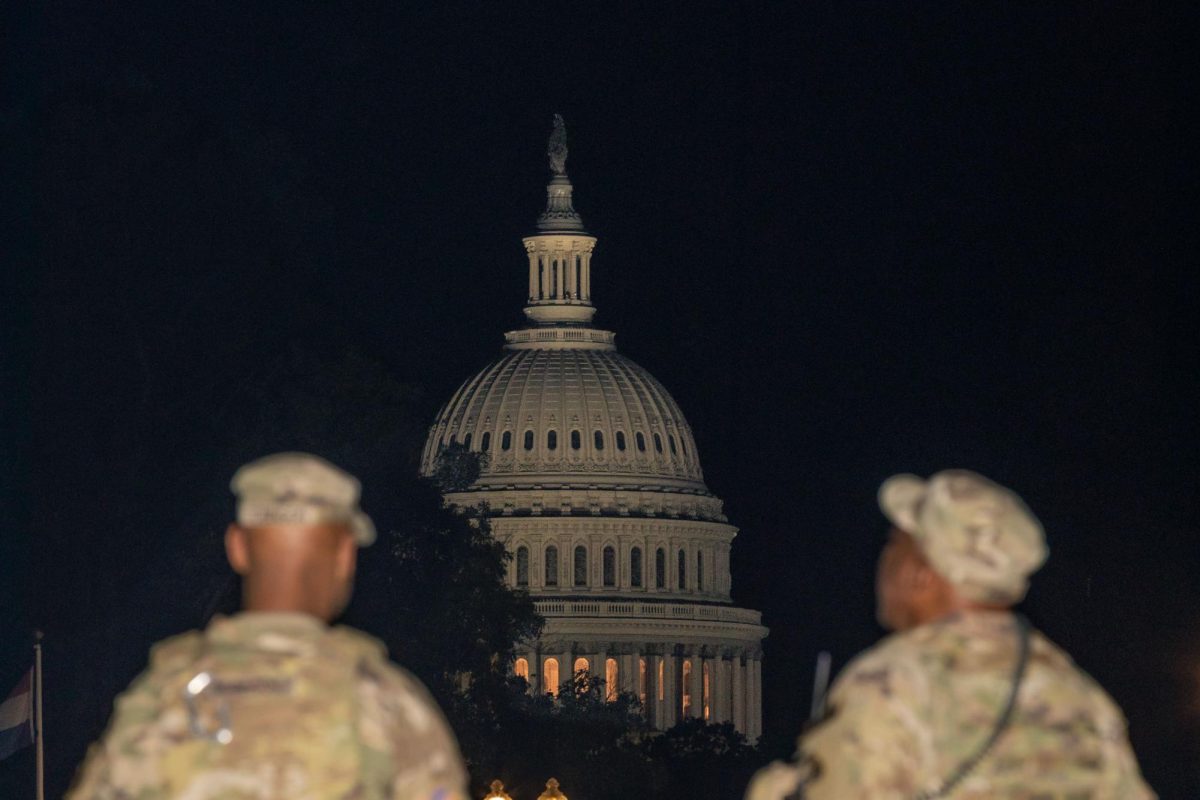
“I am more aware of the National Guard on campus than of a more visible GWPD presence,” Wirtz said in an email.
He said he wants to see clearer communication from administrators about how they’ve implemented the reforms so far — including whether the University has hired a training officer, created a mental health response team or improved collaboration across safety units, a step the report recommended to streamline oversight.
Wirtz said he appreciated University President Ellen Granberg recognizing in a community letter and at a Student Government Association meeting GW’s failure to involve the community in the decision to arm GWPD officers, but the Board’s decision not to revisit the decision was a “missed opportunity” to reengage stakeholders.
“The central administration nevertheless deliberately declined to revisit the decision – with adequate community participation – to arm GWPD officers,” Wirtz said.
Eli McCarthy, a peace studies lecturer and a member of the Campus Safety Advisory Committee — which identifies positive safety practices and safety challenges on campus — said he thinks GW has made some efforts to better engage the community on the topic of arming but that there is still progress to be made.
“We still need to take the research data seriously and adjust our policies to be consistent with the evidence, which shows arming police generally does not increase safety,” McCarthy said in an email. “We also need to better equip the GW community in active bystander intervention and deescalation skills, improve mental health resources and early prevention and better institutionalize civilian response teams.”
McDonald said that Captain Ian Greenlee is working with McCarthy to bolster deescalation training in line with the third-party report recommendations.
McCarthy said he would like to see GWPD express a willingness to reduce the number of armed police on the GW campus. He said at a minimum, the arming process should be stopped.
SGA President Ethan Lynne said officials are taking steps to increase transparency in recent months by allowing him to meet with Brito and Goodly. He said he is working with GWPD to provide more insight into their training by allowing observers to watch sessions in the department’s training simulator.
“We’re also working with them on creating some sort of logistical way that we can open up the training simulator demonstrations to the public,” Lynne said.
Brito said at a September SGA meeting that he would be open to allowing community members to observe trainings, though he was unsure of the logistics of doing so at the time. Lynne said the University can never be too transparent, and they should provide a “mid-semester” update to the community on the status of GWPD and campus safety.
“It is around the time that they should start to email out a nice mid-semester update to the community about where things are with GWPD and campus safety writ large, with everything going on,” Lynne said.
He said communication between him, Brito and Goodly has been positive, and they have been responsive to his concerns around the recent uptick in guard presence on campus.
“We’ve been happy with the communication channels that we’ve had thus far,” Lynne said. “But obviously a lot of things are still being established.”
This post has been updated to clarify the following.
This post has been updated to add additional context to Dwayne Kwaysee Wright’s thoughts on arming police to clarify that Wright said he opposes armed police force.