
The Student Government Association Senate has spent nearly three and a half hours in private meetings with officials this year at the University’s request — a contrast from last term when the body never met with officials in executive session.
Since the start of the SGA’s 2024-25 term in May, the body has motioned on five occasions to remove members of the public from the room during biweekly public meetings to talk with top University officials, according to SGA meeting agendas. These private conversations, which SGA senators say the University requests, have ranged from 25-minute presentations to hourlong Q&As, marking a shift from previous years when officials met with the SGA during public meeting time and executive sessions were absent from meeting agendas.
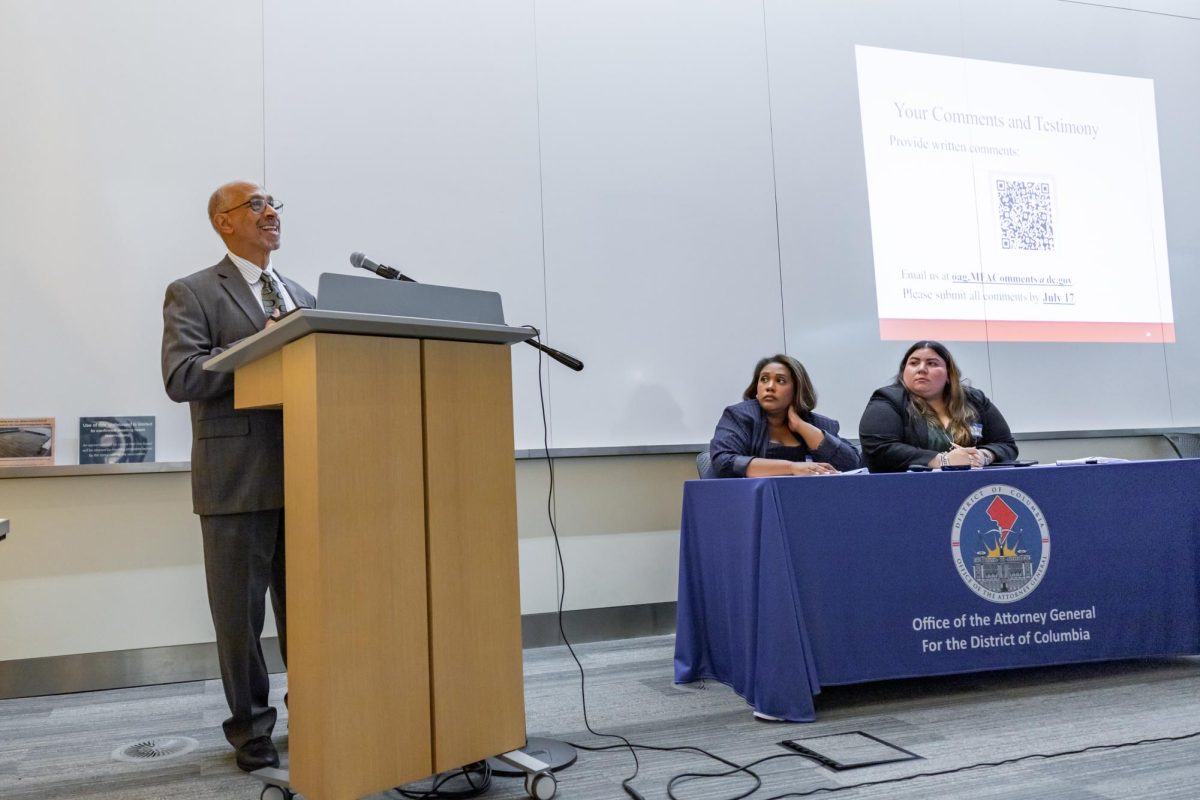
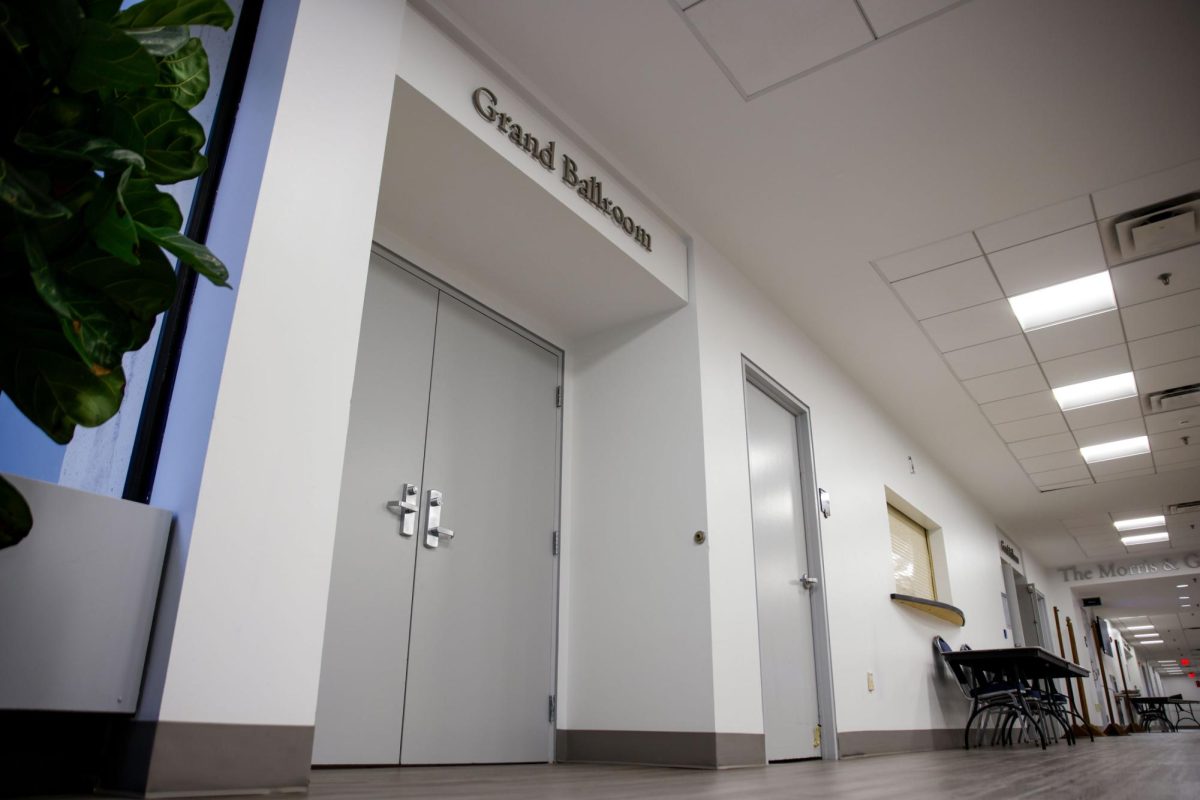
The SGA has convened executive sessions during public meetings this term to meet with officials, like Associate Vice Provost for Diversity, Equity and Community Engagement Jordan West, Dean of Students Colette Coleman, Vice Provost for Enrollment and Student Success Jay Goff and Senior Vice President and Chief of Staff Scott Mory. During executive sessions, all members of the public in attendance — including Hatchet reporters — must exit the University Student Center Grand Ballroom. Any information discussed in executive session is confidential, according to SGA bylaws.
The SGA spent about 15 minutes in executive session on three separate occasions in the body’s 2023-24 term, which SGA senators used to deliberate and vote on legislation. Last year, the body moved to a 30-minute executive session to discuss a bill to form a graduate student assembly within the body, which failed following a vote by secret ballot. The SGA did not disclose these executive sessions in agendas before the meetings but disclosed the sessions in the public minutes published after adjournment.
GW officials like James Tate, the former GW Police Department chief, and Baxter Goodly, the senior associate vice president of facilities planning, construction and management, discussed the cost of arming GWPD officers and upcoming residence hall projects at public SGA Senate meetings in September and November 2023, respectively.
University officials have attended five of the SGA’s 13 Monday senate meetings this term in executive sessions after SGA senators motioned to move into executive session at the officials’ request. Some officials including Mory and Coleman began their presentations in a public format before moving into an executive session for the remainder of the meeting.
A University spokesperson said closed forums are sometimes “necessary” for conversations between officials and the SGA about confidential information.
A University spokesperson declined to comment on what factors officials consider when deciding whether to request an executive session and what officials are involved in the decision-making process. The spokesperson also declined to comment on the contents of West, Goff and Coleman’s conversations in executive sessions.
“In collaboration with administrators, the SGA decides on the topics and scope of these discussions,” a University spokesperson said in an email.
SGA Senate Pro Tempore Liz Stoddard said executive sessions are approved through a motion that a senator presents to the SGA Senate, meaning any senator can object to the private discussion, which has yet to occur this term. If objected, the vote is then decided by a two-thirds majority of all SGA senators present.
Stoddard said the SGA tries to “minimize” the use of executive sessions but grants them to University officials if they explicitly request the condition before the meeting. She said executive sessions can be “mutually beneficial” to the University and SGA when officials want to solicit student input on initiatives and avoid prematurely sharing information with the public about initiatives that are not “fully formed.”
“If the administration comes to us, we sit in there, they request for executive session, all is great, all is good, that conversation stays there,” Stoddard said. “No one’s going around and gossiping about it.”
Stoddard said the body also holds executive sessions to provide “administrative updates” to SGA senators about upcoming events or to remind senators about general senate procedures and rules they must uphold. She said the body also utilizes executive sessions to discuss candidates for midyear vacancies in brief executive sessions before they bring candidates to a vote.
“What we don’t want to do is have a blunt conversation about their merits and their demerits publicly or in a way that would be reflected in the minutes,” Stoddard said.
SGA Vice President Ethan Lynne said Goff gave a “fascinating” presentation to SGA senators at the Nov. 18 meeting about GW’s applicant pool and admissions, information presented to the SGA before it was made public to the GW community in December.
Goff presented the enrollment data, which showed a rise in admitted underrepresented minorities despite the U.S. Supreme Court’s decision to end race-conscious admissions, at the Dec. 13 Faculty Senate meeting, nearly a month after he shared the data with the SGA Senate in executive session.
“It’s normally just done in case there’s sensitive information that isn’t ready for the whole GW public to see,” Lynne said.
Lynne said the SGA is planning on officials attending every SGA Senate meeting for the rest of the term, which he said will mean the body hosted the most administrative presenters in SGA history.
He said Goodly, Executive Director of Dining Douglas Frazier and Associate Vice President of Business Services Seth Weinshel are scheduled to present to the SGA at the Feb. 24 meeting. Lynne said he believes presentations will be held during public meeting time, but he said that officials are still permitted to request an executive session.
“I think that’s the whole purpose of us being student leaders here is the ability to connect students to administration,” Lynne said.